How to Choose the Right Glass Juice Bottle: A Complete Buyers Guide
Glass juice bottles are much more than containers. They affect safety, shelf life, transport cost, filling efficiency, recyclability, and how your brand feels in consumers’ hands. Because changing formats later is costly and disruptive, it is worth deciding carefully from the start.
This guide walks through each key choice: beginning with your juice product and processing method, then moving to bottle design, closures, safety and regulations, branding, production, logistics, and supplier cooperation.
Start from the Juice Product
Before looking at any catalog or design sketch, define what will go inside the glass Juice bottle and how it will be processed. The liquid and the process determine many of the technical requirements.
Juice type and processing
Common categories include:
- Cold pressed or HPP treated juices for chilled distribution.
- Pasteurized or hot filled juices for ambient storage.
- NFC juices positioned as more natural or premium.
- From concentrate juices and blends for mass market volume.
Cold filled and HPP products usually run through chilled distribution and focus on flavor preservation. Glass clarity and label design play a big role in communicating freshness. Pasteurized and hot filled products need bottles with reliable thermal shock resistance and caps that seal securely while the product is hot.
Product properties
Key parameters include:
- Acidity level
- Sugar content and viscosity
- Presence and amount of pulp or particles
- Sensitivity to light and oxygen
These factors influence foaming during filling, whether the product separates in clear glass, and how the bottle shape should manage pulp zones. Highly light sensitive juices may need tinted glass or strong secondary packaging to protect color and vitamins.
Shelf life and distribution plan
- Fresh short shelf life versus long ambient shelf life.
- Local or regional distribution versus national or export shipments.
- Use of chilled or ambient storage in the supply chain.
Longer shelf lives and complex logistics increase pressure on cap integrity, glass strength, and pallet stability. Short shelf life local products can focus more heavily on visual appeal and premium feel, with slightly less pressure on extreme transport conditions.
Filling and preservation method
Possible options include:
- Cold filling into prewashed bottles
- Hot filling at elevated temperatures and controlled cooling
- HPP processing after filling in suitable containers
- Carbonation for sparkling juice drinks
Each approach imposes different demands. Hot fill requires strong resistance to rapid temperature changes. Carbonation adds internal pressure, so the bottle must be rated accordingly. HPP requires bottles that tolerate compression and recovery inside the pressure vessel without damage.
Key Design Parameters of Glass Juice Bottles
Once the product and process are clear, you can define bottle features with more confidence.
Capacity and serving size
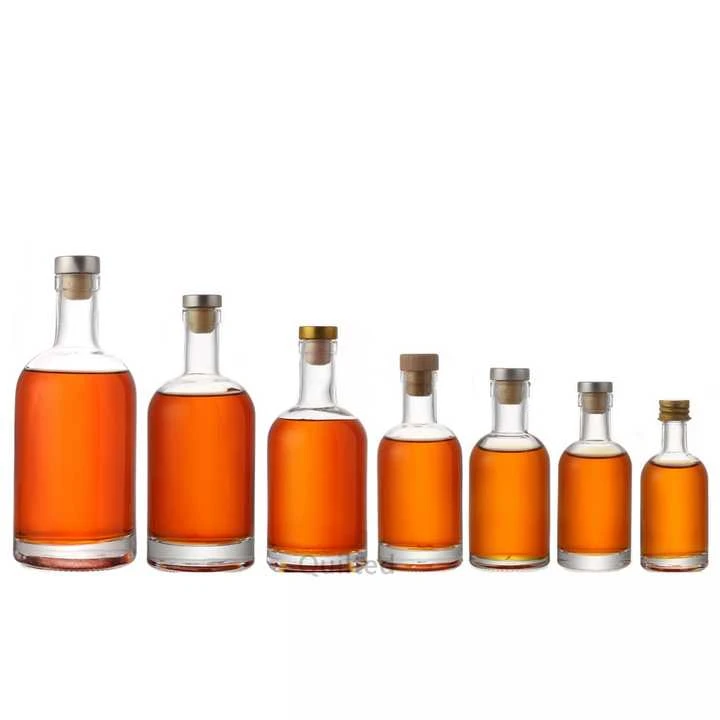
Glass juice bottles are commonly available from small shot sizes around 50 to 100 milliliters through typical 200 to 350 milliliter single serve formats up to one liter or larger multi serve family packs. The right capacity depends on:
Typical usage occasion
- Target retail price and margin
- Local consumption habits
- Shelf space and display strategy
Table 1. Typical capacities and common uses
| Capacity range | Typical use case | Notes on perception |
| 50–100 ml | Functional shots, ginger or vitamin boosts | High price per liter, strong premium signal |
| 150–250 ml | Small single serve, kids portion, tasting packs | Compact, good for cafes and airlines |
| 250–350 ml | Standard single serve bottle | Common for convenience and retail chillers |
| 500–750 ml | Large single serve or small multi serve | Often used for breakfast or shared use |
| 1 liter and above | Family pack or catering pack | Focus on value and pouring comfort |
Capacity selection also affects carton packing, pallet layout, and overall logistics cost, so marketing and operations teams should agree on this decision early.
Neck finish and opening size
The neck finish controls which caps can be used and how easily the product pours. Common standards include continuous thread finishes for twist caps, lug finishes for typical juice and sauce caps, and crown finishes for carbonated drinks.
Points to consider:
- Neck diameter wide enough for foamy or pulpy juice.
- Comfortable drinking experience if consumers drink directly from the bottle.
- Full compatibility with existing capping equipment.
- Availability of tamper evident solutions for the chosen finish.
Shape, base, and ergonomics
Bottle shape contributes both to handling and visual identity. Typical options:
- Round bottles that run easily on most filling lines.
- Square or rectangular bottles that improve shelf density.
- Slim shapes that sit well in the hand and in cup holders.
From a practical angle, shape affects:
- Stability on conveyors and in accumulation areas.
- Ease of labeling and orientation.
- Strength at the shoulder and base.
- Carton packing efficiency.
Smooth transitions and balanced proportions usually reduce the risk of stress concentrations that could lead to breakage.
Glass color and light management
Glass color influences both branding and technical protection.
Table 2. Glass colors and typical positioning
| Glass color | Light protection level | Visual message | Typical juice applications |
| Clear flint | Low | Fresh, transparent, natural, modern | Cold-pressed juices, NFC products, shots |
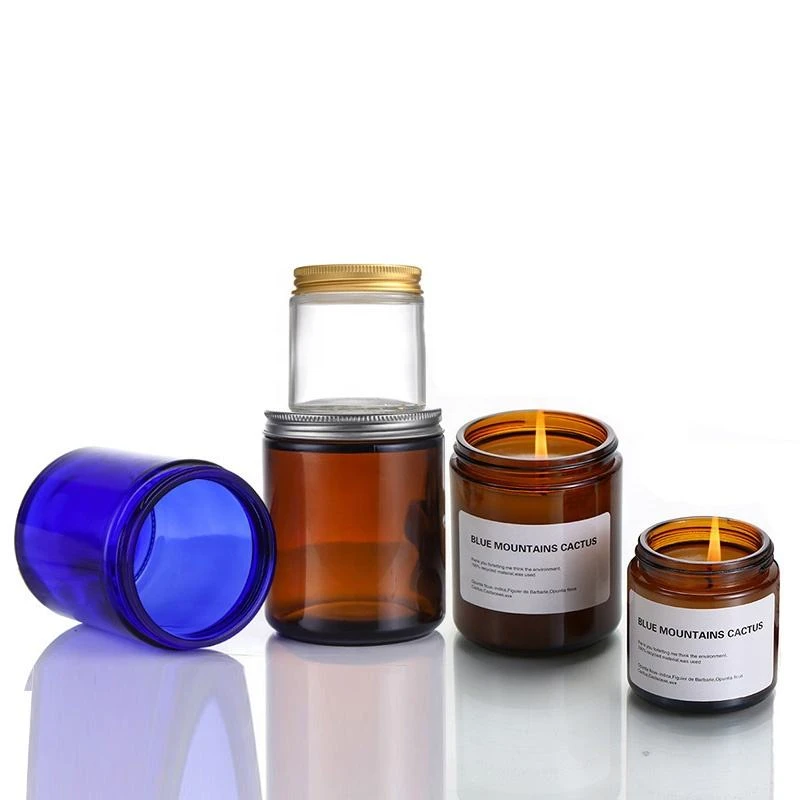
| Amber | High UV protection | Apothecary, functional, herbal focus | Functional blends, sensitive ingredients |
| Green | Medium | Natural, classic, traditional | Citrus blends, vegetable and fruit mixes |
| Blue or tints | Varies by shade | Lifestyle, trendy, limited edition | Specialty juices and brand extensions |
Clear flint glass is ideal when color and pulp should be visible, but it offers little protection against UV light. Industry groups highlight that glass can be infinitely recycled without loss of quality, and colored cullet can help maintain performance while supporting recycling goals.
Wall thickness, weight, and strength
Heavier bottles often feel premium and robust in the hand, but they cost more to manufacture and transport. Lightweight bottles reduce glass usage and freight impact but may offer narrower safety margins against impact or top load. Key parameters include:
- Nominal gram weight of the bottle for a given capacity.
- Top load strength for pallet stacking.
- Internal pressure resistance for carbonated products.
- Impact resistance on the filling line and in distribution.
Work with suppliers to find a balance between premium feel, performance, and sustainability. Optimized geometry can allow relatively light bottles to perform well in real world conditions.
Matching Bottle Type to Application

With design basics in mind, it becomes easier to match bottle types to specific product and channel requirements.
Fresh chilled juices
Cold pressed or chilled juices aim to communicate freshness and natural quality. Common characteristics include:
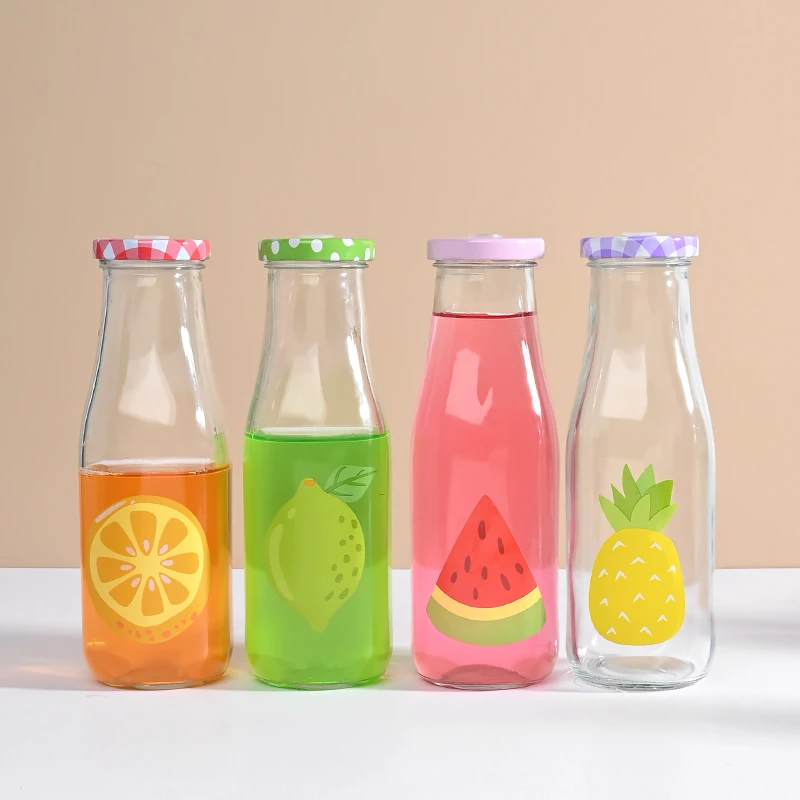
- Clear glass to showcase color and pulp.
- Slim or slightly curved shapes that feel modern and easy to grip.
- Strong tamper evident caps for consumer confidence.
- Label designs that tolerate condensation in chillers.
Since these products move through the cold chain, shelf life depends more on processing and storage conditions than on barrier properties of the bottle. Visual appeal and convenience play a large role.
Hot filled and pasteurized juices
When juices are filled hot and cooled later, the bottle must tolerate fast changes in temperature. Suitable bottles typically have:
- Glass formulations and wall distributions designed for thermal shock resistance.
- Shoulder and base shapes optimized to manage internal stresses.
- Closures that seal reliably while hot and maintain vacuum or closure integrity during cooling.
Validation with real line conditions is essential because slight differences in heating and cooling curves can lead to cracks or breakage if glass is not matched correctly.
Juice concentrates and syrups
Concentrates and syrups are often thicker and used in multi serve formats. Bottle requirements include:
- Wider mouths for a clean pour and easier cleaning at home.
- Reliable resealability for repeated opening and closing.
- Strong shoulders and bases to support higher bottle weights and frequent handling.
Decor can be simpler and focus on clarity of information such as dilution instructions and dosage.
Sparkling and carbonated juice drinks
Carbonation introduces internal pressure, so the bottle must be designed and tested for this extra load. These bottles normally have:
- Heavier walls and reinforced bases.
- Crown caps or pressure-rated screw caps.
- Specific internal pressure test values defined with the supplier.
Using a standard non-carbonated bottle for a sparkling recipe can be dangerous, so never shortcut the pressure rating step.
Single serve versus multi serve
Single-serve bottles favor slim shapes and easy drinking. Multi-serve bottles focus on:
- Comfortable pouring from fridge shelves.
- Cap designs that are easy to open repeatedly without rapid wear.
- Strong bases to handle repeated use over the life of the product.
Table 3. Application and recommended bottle characteristics
| Application type | Key process demands | Recommended bottle focus |
| Fresh chilled juice | Cold filling, chilled chain | Clear glass, modern shape, TE closure, strong label |
| Hot-filled ambient juice | High fill temperature | Thermal shock resistance, robust shoulder, lug cap |
| Concentrates and syrups | Viscous, repeated opening | Wider neck, strong reseal, substantial feel |
| Sparkling or fizzy juice | Internal pressure | Heavy glass, pressure-rated cap, validated strength |
| Juice shots and wellness | High value small portion | Mini bottles, distinctive design, premium decoration |
Closures and Sealing Systems

A good bottle needs a cap that matches it perfectly. Closure choice affects shelf life, product safety, consumer experience, and regulatory compliance.
Common closure types
Main closure categories used for glass juice bottles include:
- Metal twist caps with continuous thread finishes.
- Metal lug caps are commonly used in sauce and juice applications.
- Crown caps for carbonated drinks and retro styles.
- Plastic screw caps with or without tamper-evident bands.
Each category has variants with different liner materials and venting options. For example, hot fill compatible liners must maintain seal integrity at elevated temperatures, while carbonation liners must withstand internal pressure.
Compatibility with neck finish and equipment
When selecting a closure, confirm:
- Exact neck finish standard and tolerance levels.
- Cap diameter, thread profile, and torque requirements.
- Line speed capability of your existing capper.
- Availability of tamper-evident systems that match retailer expectations.
Cap suppliers can often assist with torque targets and application windows, which should be validated on trial runs.
Liner materials and food contact safety
Liners, coatings, and cap materials are part of the food contact system. In the European Union, food contact materials, which include glass and closures, are governed by the framework Regulation (EC) 1935 2004 along with related rules on good manufacturing practice. These regulations are designed to prevent substances that could be harmful to health or negatively alter flavor or scent from coming into contact with food.
Requirements for materials that may come into contact with food, including packaging elements like container materials and closures, are set by the Federal Food Drug and Cosmetic Act and associated regulations in Title 21 of the Code of Federal Regulations in the United States.
Ask closure suppliers for documentation that demonstrates conformity with the regulations relevant to your markets, including any specific positive lists or food additive approvals for liner compounds.
Safety, Quality, and Regulatory Aspects of Glass Bottles
Glass has long been considered an inert packaging material for food and beverages. However, producers still need to actively manage safety and quality.
Food contact compliance
For juice brands that export, compliance must be documented region by region. Typical actions include:
- Confirming that bottle glass composition meets the expectations of local food contact rules.
- Verifying that coatings and decoration layers are suitable for contact with food or are applied in a way that prevents contact.
- Ensuring that closures, liners, and inks have suitable approvals or clearances.
Third-party laboratories and specialized consultants often assist with migration testing or risk assessments when required.
Mechanical safety and performance testing
Glass bottles should pass appropriate mechanical tests, such as:
- Dimensional checks for neck finish, height, and ovality.
- Internal pressure tests for carbonated products.
- Top load tests to confirm pallet stacking strength.
- Drop tests representing worst-case handling events.
These tests reduce the chance of breakage on the line and in the hands of consumers.
Factory inspection and incoming quality control
Before bottles reach the filling line, suppliers normally inspect them for visual defects such as stones, blisters, or cracks. Many juice plants also carry out their own incoming quality checks. Working with suppliers to agree on acceptance criteria and sampling plans helps prevent disputes and improves long term reliability.
Branding, Decoration, and Shelf Impact
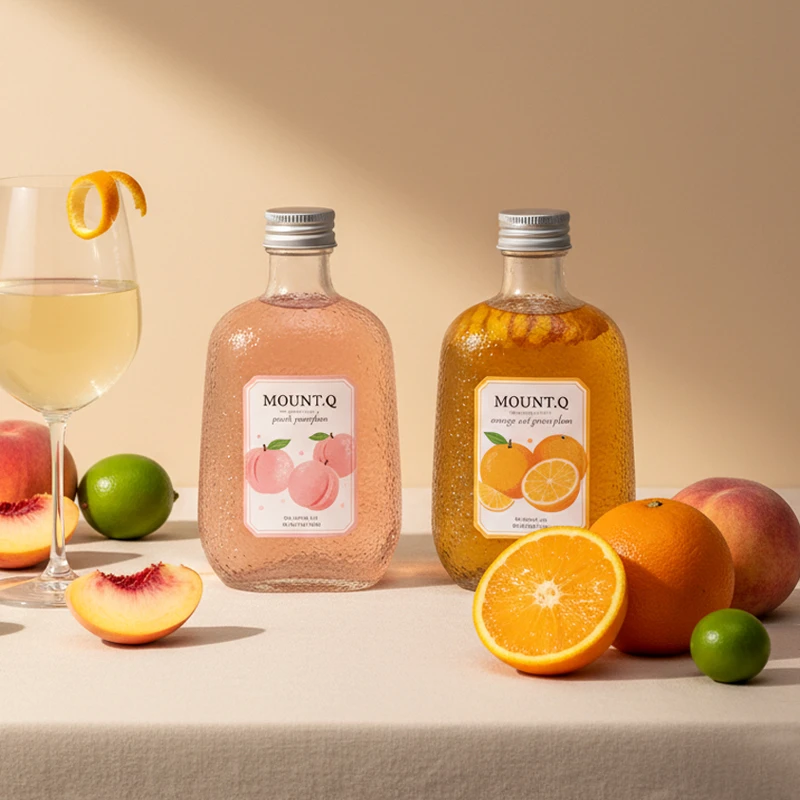
A glass juice bottle is a physical expression of brand positioning. Shape, color, decoration, and closure all contribute to the overall impression.
Shape as a branding tool
Visual cues that glass can communicate include:
- Tall and slim bottles suggesting active, health-focused drinks.
- Short and wide bottles that feel solid and traditional.
- Geometric shapes conveying modern, minimalist style.
- Curved or embossed details suggesting craft or heritage.
The same capacity can look completely different depending on proportions. Early mockups and shelf simulations are useful to ensure that the bottle stands out without creating handling problems.
Label and decoration choices
- Paper labels with a wide range of textures and print finishes.
- Film labels that tolerate humidity and condensation.
- Shrink sleeve labels cover most of the bottle surface.
- Direct ceramic or organic printing onto the glass.
Each decoration method has its own cost, minimum order size, and recycling implications. For example, full body sleeves may need to be perforated for easy removal in recycling streams, while direct printing can be attractive for returnable bottle systems.
Embossing and debossing
Designs formed directly in the glass, such as logos, brand names, or grip patterns, can enhance identity and tactile feel. Embossing also remains visible even if labels change over time. On the other hand, extensive embossing requires more complex molds and may limit future repositioning of the brand.
Harmonizing primary and secondary packaging
Primary packaging is only part of the story. Bottles, caps, labels, trays, cartons, and shrink wrap all appear together in retail and logistics. Alignment across these elements delivers a more coherent appearance and can optimize cost. For example:
- Bottle shape that nests efficiently in cartons reduces transport volume.
- Label orientation that matches shelf-facing expectations simplifies store handling.
- Carton and tray designs that allow easy scanning and date code reading support retail operations.
Production and Filling Considerations
A bottle may look perfect on the designer screen, but still cause trouble on the filling line. Production aspects must be considered early.
Line compatibility and integration
For a smooth installation, check:
- That bottle height and diameter fit existing rinsers, fillers, and cappers.
- That star wheels and guides are compatible or can be changed economically.
- That rinsing or sterilization systems can handle the internal volume and neck size.
It is good practice to run mechanical dummy bottles or preproduction samples through the line before mass orders are placed.
Conveying stability and accumulation
Instability on conveyors results in breakage and unplanned downtime. Stable bottoms, correct guiding, and gentle transfers are critical, especially for tall slim bottles. Accumulation tables and pressureless combiners must be tuned to bottle characteristics.
Washing and sterilization
Even new bottles may carry dust or particles from production and transport. Depending on product risk and legal requirements, plants may use:
- Air rinsing with filtered compressed air.
- Water or product rinses.
- Sanitizing rinses with suitable food contact grade chemicals.
These operations must be integrated with the chosen filling and capping process so that bottles remain clean until they are closed. In the United States, relevant food contact substances used in cleaning or packaging fall under the same general safety standard as food ingredients under Food and Drug Administration oversight.
Breakage control and line hygiene
Despite careful design, occasional breakage is inevitable with glass. Production lines should incorporate:
- Shields and guards that prevent glass fragments from spreading into clean areas.
- Clear procedures for stopping, cleaning up, and restarting after a break event.
- Inspection points to detect cracked or chipped bottles before filling.
- Effective breakage management protects consumers and reduces product loss.
Logistics, Storage, and Cost
The bottle you select exists in a logistic chain long before and after it carries juice.
Packaging formats for empty bottles
- Bulk pallet loads with layer pads and shrink wrap.
- Cartons with dividers.
- Reusable plastic crates are used in certain markets.
Each format has pros and cons in storage density, handling time, and breakage risk. Bulk pallets offer high density, but depalletizing equipment is needed for efficient unloading. Cartons offer better protection but add cost and waste.
Weight, freight, and handling
Glass is heavier than many alternative packaging materials. Total cost per bottle delivered to the filling plant depends on:
- Bottle weight
- Distance from glass plant to filler
- Use of road, rail, or sea transport
Lightweighting can reduce freight emissions and costs, but must be balanced against breakage rates and perceived value. Studies on glass recycling show that using recycled glass cullet in manufacturing also reduces furnace energy and associated emissions, which can support sustainability claims.
Minimum order quantities and lead time
Standard catalog bottles usually come with lower minimum order quantities and shorter lead times than fully custom designs. However, large volume buyers may negotiate standing orders or shared forecasts with suppliers to secure capacity. When planning promotions or seasonal launches, build sufficient lead time for both glass production and decoration.
Hidden and indirect costs
The cheapest bottle on paper can be expensive in practice if:
- It increases line downtime due to instability or breakage.
- It leads to higher returns from customers because of appearance issues.
- It does not fit well with standard cartons or pallets, increasing shipping complexity.
Total cost of ownership must include all these factors, not only price per unit of empty glass.
Sustainability and Environmental Performance
Sustainability is now a central part of packaging decisions in many markets.
Recyclability and circular economy
Industry associations claim that glass is a permanent material that can be recycled many times without losing quality. In addition to lowering the need for fresh raw materials like sand, soda ash, and limestone, high recycling rates can drastically reduce the amount of energy needed to melt glass.
To leverage this in marketing and compliance:
- Design bottles and labels with local recycling streams in mind.
- Consider standard colors and compositions that match common cullet streams.
- Make it easy for consumers and retailers to understand how bottles should be disposed of or returned.
Lightweighting and resource efficiency
Reducing glass weight per bottle lowers raw material consumption and freight emissions, and modern furnace and forming technology often allows significant reductions without compromising strength. However, very aggressive lightweighting can make bottles more sensitive to abuse, so extensive testing is essential.
Reuse and refill systems
In some markets, returnable glass bottle systems are gaining renewed interest. For juice brands considering this route, bottles require:
- Durable designs that withstand multiple filling cycles and washing conditions.
- Decoration methods such as direct printing or reusable labels.
- Strong cooperation with distributors and retailers to manage bottle returns.
- Returnable systems reduce packaging waste but require investment in reverse logistics and washing capacity.
Working with Glass Bottle Suppliers
Success with glass packaging depends on a strong relationship between the juice brand, the filler, and the glass manufacturer.
Preparing a clear brief
A good brief to a bottle supplier should include:
- Juice type, acidity, and processing method.
- Target markets and relevant regulations.
- Desired capacities and bottle weights.
- Outline of branding goals, including ideas for color and shape.
- Forecast volumes and phasing of launches.
The more complete the brief, the faster suppliers can provide realistic options.
Standard designs versus custom molds
Standard designs
- Lower up front cost and reduced development time.
- Easier to source from multiple suppliers.
- Offer less visual differentiation.
Custom molds
- Deliver unique shapes and possibly family ranges across sizes.
- Require tooling investment and engineering time.
- Usually make sense when volumes are high enough to amortize the cost.
A practical approach is to start with a near match from a standard range for pilot production, then move to a custom family once the business proves itself.
Sampling and industrial trials
Before full scale launch, plan a sequence of tests:
- Lab and bench testing of bottle performance
- Mechanical line tests with empty bottles to check handling
- Full production trials with filled product, including distribution simulations
Suppliers benefit from detailed feedback on breakage patterns, label wrinkles, or cap application issues so that designs or process parameters can be tuned.
Quality agreements and documentation
Many brands set up written quality agreements with bottle manufacturers covering
- Inspection and testing routines at the glass plant.
- Batch coding and traceability rules.
- Response procedures in case of a quality incident.
These agreements often dovetail with wider food safety management systems based on hazard analysis and good manufacturing practice principles.
Example Selection Scenarios
To make the principles above more concrete, consider a few typical cases.
Local cold pressed juice bar
A small company plans to sell cold pressed juices in regional cafes and its own shops. Volumes are moderate, shelves are chilled, and customers expect premium quality.
- Clear 250 or 300 milliliter slim bottles with smooth shoulders.
- Metal twist caps with tamper evident button or ring.
- Moisture resistant labels with minimalistic design.
Focus is on strong visual impact in chillers and easy handling by staff. MOQs for glass and decoration must remain manageable.
National ambient NFC juice range
A larger producer wants to launch a national NFC juice range with ambient storage and supermarket placement. Volumes are high and the bottling line runs at high speed.
- One liter and 750 milliliter flint bottles optimized for hot fill thermal shock.
- Reinforced shoulder and base to manage heating and cooling cycles.
- Shrink sleeve labels offering full body graphics and light protection.
Line trials check that the bottle runs stably and that label shrink is uniform. Supplier cooperation focuses on maintaining consistent quality over long campaigns.
Carbonated juice drink for young consumers
A brand plans a carbonated juice drink positioned between soda and juice. A playful look and safe performance under pressure are both required.
- 330 milliliter pressure rated bottles, possibly with a slight contour
- Crown caps in bright colors
- Labels emphasizing flavor and fizz
Here the pressure rating of the glass and the crown must be validated with appropriate safety margins.
Syrup range for foodservice
A company produces juice based syrups for mixing in cafes and restaurants. Containers will be opened and closed many times.
- 700 to 1000 milliliter bottles with wider necks and ergonomic grip shapes.
- Plastic screw caps with liners suited to viscous liquids.
- Large clear labels with strong branding and dosage instructions.
In this case, pouring comfort and cap durability matter more than extreme shelf impact.