8 Printing Methods for Glass Bottles
8 Printing Methods for Glass Bottles
Glass bottles are prized in industries ranging from beverages and cosmetics to pharmaceuticals, thanks to their premium look, sustainability, and chemical resistance. But raw glass alone is often not enough—brands rely on printing to communicate identity, product information, and visual appeal.
Modern printing technologies enable vivid logos, durable codes, decorative finishes, and even tactile effects directly on glass surfaces.
A Quick Comparison
| Method | Best For | Durability | Cost Efficiency | Color/Detail | Notes |
| Screen Printing | Bold graphics, logos | High | Medium (large runs) | Medium | Excellent for opaque inks |
| Digital UV Printing | Short runs, custom graphics | Medium-High | High (small runs) | Very High | Great color flexibility |
| Pad Printing | Complex or small surfaces | Medium | Medium | Medium | Good for curves |
| Continuous Inkjet (CIJ) | Dates/codes on production lines | Medium | Very High (mass) | Low | Ideal for variable data |
| Laser Marking | Permanent codes or engraving | Very High | Medium | Low | No ink, permanent |
| Ceramic/Decal Tiles | Wrap-around decorative art | High | Medium | High | Requires firing or curing |
| Hot Foil Stamping | Metallic/reflective accents | Medium | High | Medium | Decorative only |
| Etching/Acid White | Frosted, classy effects | Very High | Medium | Low | Premium aesthetic |
1. Screen Printing
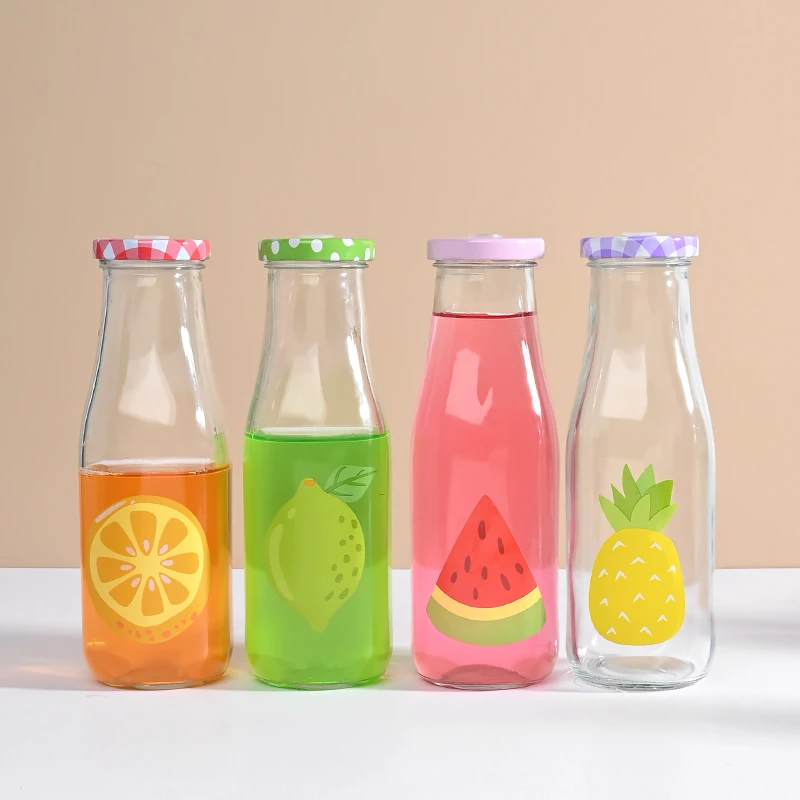
Screen printing, often referred to as silk screening, applies ink onto glass by forcing it through a patterned mesh stencil. It is a highly popular technique for adding decorative designs and brand graphics to glass bottles.
How it works: Ink is forced through screens in separate passes for each color, curing to create long-lasting designs.
| Pros | Cons |
| Excellent opacity and color strength | High setup effort for multicolor |
| Durable prints resistant to wear | Not ideal for very fine detail |
| Great for large batches | Less efficient for short runs |
| Works well with special inks | Limited photographic quality |
2. Digital UV Printing
Ultraviolet radiation is used in digital UV printing to immediately cure ink while it is printed directly onto glass. This method allows high-resolution, full-color graphics without traditional plates or screens.
How it works: Inkjet heads deposit UV-reactive inks followed by UV lamps that cure each pass immediately.
| Pros | Cons |
| High detail and precise color | Higher cost per bottle |
| Fast setup for short runs | Ink adhesion must be optimized |
| No printing plates | Gloss/finish limited |
| Works on irregular shapes | Durability medium-high |
3. Pad Printing
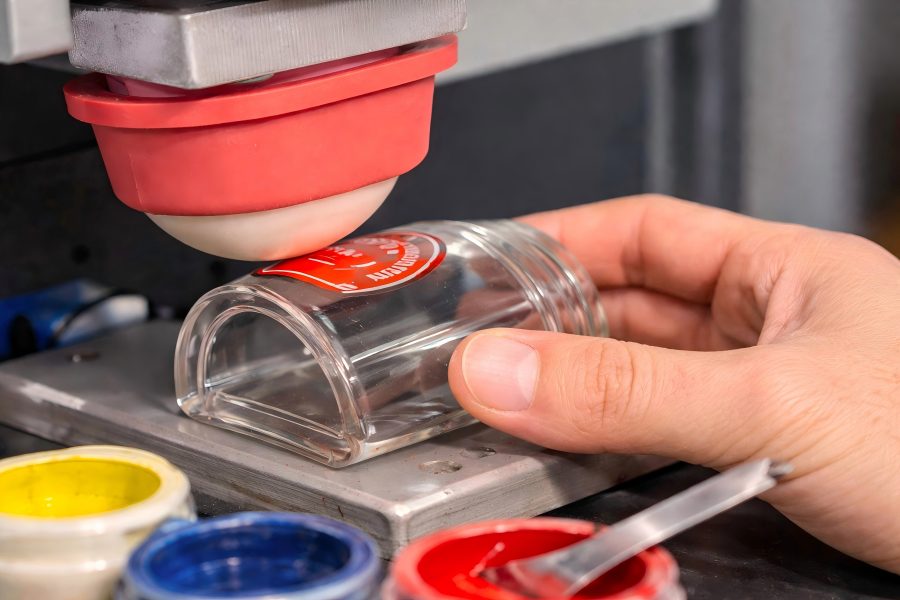
By transferring ink from an etched plate to a silicone pad, pad printing creates an image that is subsequently pressed onto the glass surface. It’s ideal for printing on necks, curves, and recessed areas.
How it works: The pad picks up ink and presses it onto the surface, effectively “stamping” the design.
| Pros | Cons |
| Good for curved or uneven surfaces | Slower than other methods |
| Can apply multiple colors | Less vibrant for large areas |
| Precise detail on small areas | Print durability varies |
| Cost-effective for medium runs | Not best for wrap-around art |
4. Continuous Inkjet (CIJ) Printing
Continuous inkjet printing is commonly used in beverage and pharmaceutical glass bottle lines to apply dates, batch codes, and simple graphic elements.
How it works: Tiny droplets of solvent-based ink are continuously fired and deflected by electrostatic plates onto the surface.
| Pros | Cons |
| Ideal for high-speed lines | Limited color/graphics |
| Can print variable data | Lower resolution prints |
| Durable marks | Not decorative art |
| Works at high production speeds | Requires solvent inks |
5. Laser Marking / Engraving
Laser marking uses focused light to alter the glass surface, either by engraving or color change, creating permanent marks without inks.
How it works: A laser beam removes surface material or induces a color change, leaving a lasting mark.
| Pros | Cons |
| Extremely permanent and precise | Limited to single-color designs |
| No consumables (inks) | Equipment cost high |
| Ideal for lot codes, logos | Slow for large decorative areas |
| Works on all glass types | Etched look only |
6. Ceramic Decal Printing
Printed designs are applied to glass and melted with heat to create ceramic decals. This is common in decorative wraps for luxury bottles.
How it works: A printed decal is applied to the bottle, then fired or cured so the design permanently fuses with the glass.
| Pros | Cons |
| Excellent wrap-around art | Requires post-application heat |
| Very durable | Slower process |
| Works with many colors | More expensive setup |
| High visual appeal | Not ideal for variable data |
7. Hot Foil Stamping

Hot foil stamping uses metallic or colored foil pressed onto the bottle surface under heat and pressure for decorative finishes.
How it works: A special foil is transferred to the bottle where heat activates an adhesive layer.
| Pros | Cons |
| Premium metallic effect | Not ideal for detailed images |
| Highly eye-catching | Setup costs can be high |
| Works well on glass labels or caps | Less durable than ink |
| Great for branding accents | Limited to simple shapes |
8. Etching / Acid White Finish
Etching gives glass a frosted, milky appearance using chemicals or abrasive methods. Although not a “print” in the traditional sense, it’s valuable for premium branding and subtle graphic effects.
How it works: Acid or abrasive media roughens the surface for a permanent matte finish.
| Pros | Cons |
| Very elegant finish | Limited graphic detail |
| Permanent and durable | Process can be hazardous |
| Works on entire surface | Higher cost |
| Adds tactile texture | Not colorful |