5 Standard Materials for Perfume Caps and Their Surface Finishes
Perfume caps may seem like small components, but they play a crucial role in brand identity, user experience, functional performance, and perceived value. From luxury glass toppers to lightweight plastics, the choice of material and surface finish directly impacts aesthetics, durability, and compatibility with fragrance formulas.
Perfume Cap Materials
Before exploring each material in depth, here is a quick comparison of the five materials and their typical properties:
| Material | Weight | Durability | Aesthetic Range | Cost | Typical Use Cases |
| Acrylic (PMMA) | Light | Medium | High | Moderate | Premium look without high weight |
| Aluminum | Light to Medium | High | Polished/Anodized | Moderate | Sleek metallic finishes |
| Zinc Alloy (Zamak) | Medium | Very High | Metallic, intricate shapes | Higher | Luxury and heavy-feeling caps |
| ABS Plastic | Light | Medium-High | Wide color range | Low | Everyday and fashion fragrances |
| Glass | Heavy | Fragile but premium | Crystal clarity | High | Ultra-luxury collectables |
Material 1: Acrylic (PMMA)
Acrylic, also known as PMMA (polymethyl methacrylate), is a transparent thermoplastic often chosen for its clarity, visual depth, and ability to mimic glass aesthetics without the associated weight and fragility. It is widely used for mid to high market perfume caps where a premium look is desired without increasing logistical costs.
| Pros | Cons |
| Crystal-like optical quality | Untreated acrylic scratches easily |
| Lightweight and cost-efficient | Chemical sensitivity with some coatings |
| Versatile color options | Requires careful specification for coatings |
| Flexible for complex and sculpted designs |
Common Surface Treatments for Acrylic Caps
Polishing and Buffing
Polishing smooths the surface to achieve a clear, glossy finish that accentuates the material’s optical quality. Buffing removes minor surface imperfections from molding.
Vacuum Metallization
This process deposits a thin metallic layer on the acrylic surface, creating finishes like chrome, gold, or brushed metal appearance. It gives lightweight acrylic a metal-like sheen while maintaining transparency in selected areas.
Color Coating
Specialized coatings allow vibrant opaque or translucent colors. Color layering techniques can produce two-tone or gradient looks, ideal for brand storytelling.
Lacquering
Lacquer layers protect acrylic from UV yellowing and minor abrasion. They also improve surface hardness and prolong aesthetic life.
Design Applications
Acrylic caps are ideal for fragrances targeting youthful, vibrant, or fashion-oriented markets. Their transparency and color layering can visually echo the perfume’s character.
Material 2: Aluminum
Aluminum perfume caps are lightweight, corrosion-resistant, and offer metallic luxury. This material blends modern aesthetics with functional performance and is popular in contemporary and minimalist designs.
| Pros | Cons |
| Metallic luster enhances perceived value | Untreated aluminum may show tooling marks |
| Corrosion resistance with oxide layer | More expensive than ABS or basic plastics |
| Easy to mill, emboss, or shape | |
| Lightweight, reduces bottle top weight |
Common Surface Treatments for Aluminum Caps
Anodizing
Anodizing thickens the natural oxide layer, improving corrosion resistance and allowing vibrant, hard-wearing color finishes. Anodized aluminum can have matte, satin, or glossy looks, depending on processing parameters.
Brushed Finish
Brushing creates fine, linear textures on the surface that diffuse reflections and add tactile sophistication. It pairs well with minimalist or industrial design themes.
Polishing
Polish brings out a mirror-like finish that feels exceptionally premium. Polished aluminum is popular in luxury fragrance lines seeking striking shelf presence.
Laser Engraving
Laser techniques etch logos, patterns, or subtle texturing directly into the metal. This creates refined branding without additional materials.
Electroplating
Electroplating lays a plated metal layer (e.g., chrome, nickel) on the aluminum substrate. It enhances gloss and wear performance and can unify the look with other metallic bottle parts.
Design Applications
Aluminum caps suit high-end minimalist brands, unisex fragrances, and designs where a sleeker metallic edge elevates the bottle’s overall aesthetic.
Material 3: Zinc Alloy (Zamak)
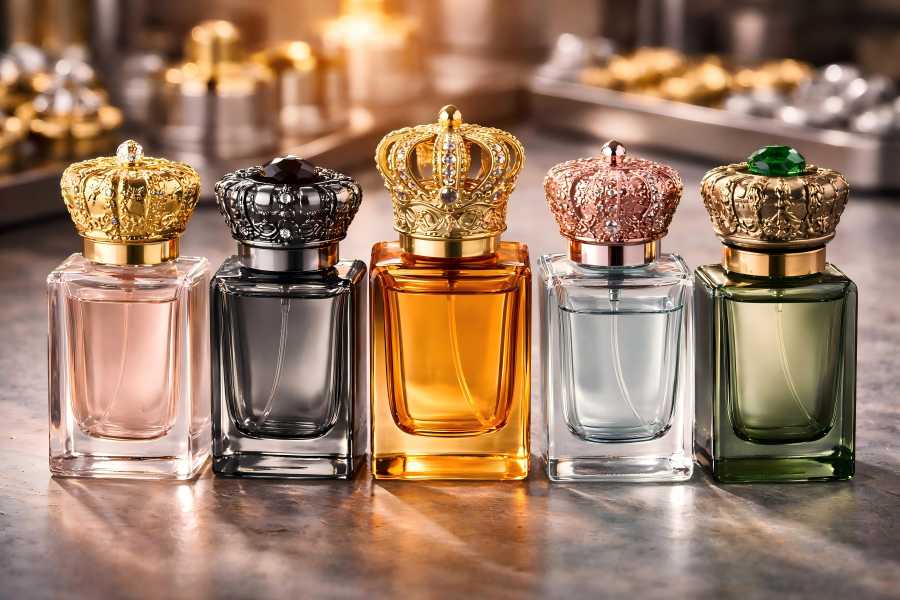
Zinc alloy, commonly known as Zamak, is a group of alloys often used in metal perfume caps for its strength, weight, and capability to capture fine detail. Zamak combines durability with design potential, making it a favorite for luxury packaging.
| Pros | Cons |
| Superior impact resistance and longevity | Heavier than substitutes made of plastic or aluminum |
| Weighty feel conveys luxury and quality | Higher material cost and complex finishing |
| Excellent mold fidelity, precise patterns | |
| Density and surface richness for deep finishes |
Common Surface Treatments for Zinc Alloy Caps
Polishing and Buffing
Initial mechanical polishing brings out a smooth base surface that reflects light elegantly. Buffing enhances shine and prepares the surface for further treatments.
Electroplating
Electroplating deposits metals like chrome, gold, rose gold, or antique brass onto the zinc alloy cap. Multiple layers can create deep, luminous finishes.
PVD Coating (Physical Vapor Deposition)
PVD adds ultra-thin, uniform metal finishes with exceptional hardness and wear resistance. It enables bold colors, dramatic visual effects, and scratch resistance superior to conventional plating.
Antique or Patina Finishes
Specialized chemical treatments produce aged or vintage effects — dark recesses, warm highlights, and depth that add character to classic or heritage fragrance lines.
Powder Coating
Powder coating deposits colored polymers onto the surface, creating bold mattes, satin textures, or vibrant opaque effects with excellent durability.
Design Applications
Zinc alloy caps are ideal for luxury and collector-oriented fragrances where heft, sophistication, and surface depth communicate premium quality.
Material 4: ABS Plastic
ABS (acrylonitrile butadiene styrene) is a versatile engineering plastic used extensively for perfume caps when cost efficiency, robust performance, and design flexibility are priorities. ABS bridges everyday practicality with strong visual appeal.
| Pros | Cons |
| Cost-effective, lower material and production costs | May lack the premium feel of metal or glass |
| Strong impact resistance under routine use | Untreated ABS shows scratches over time |
| Color and texture flexibility for bold finishes | |
| Well-understood molding and finishing processes |
Common Surface Treatments for ABS Caps
High-Gloss Lacquering
Lacquer layers bring a glassy, deep shine that enhances color richness and protects the surface from minor abrasion.
Matte Finishing
Matte coatings provide a smooth, soft look and reduce reflectivity — popular in modern minimalist branding.
Chrome-Like Coating
Using specialized coating systems, ABS can receive chrome-like metallic finishes that mimic metal without extra weight.
Pad Printing
Pad printing allows direct application of graphics, logos, or patterns onto curved ABS surfaces with sharp detail.
Soft-Touch Coating
Soft-touch finishes create a velvety, tactile surface that feels luxurious in hand and enhances grip.
Design Applications
ABS plastic is widely used in mass luxury, fashion, and designer fragrance lines where dynamic color, pattern customization, and cost-sensitive production are needed.
Material 5: Glass
Glass perfume caps convey ultimate premium quality and visual depth. With crystal clarity, weight, and refractive beauty, glass caps are often reserved for ultra-luxury or collector editions.
| Pros | Cons |
| High-end look with depth and glitter | More brittle than plastics or metals |
| Age-resistant, no yellowing or UV degradation | Requires careful post-molding processing |
| High perceived value with solid feel |
Common Surface Treatments for Glass Caps
Polishing
Glass polishing ensures smooth, defect-free surfaces that maximize clarity and brilliance.
Sandblasting
Sandblasting produces elegant matte textures or etched surface zones that contrast with polished elements.
Color Infusion
Glass can be tinted or infused with color during forming, creating rich hues and gradients.
Vacuum Metallization
Selective metallization creates mirrored surfaces or decorative metallic accents without sacrificing bulk transparency.
Screen Printing
Screen printing adds logos, patterns, or distinctive graphics onto the glass surface with high durability.
Design Applications
Glass caps are perfect for high-end fragrance collections, limited editions, and collectible bottles where visual richness and luxury storytelling are paramount.
Surface Treatment Techniques
While treatments often depend on material type, several finish techniques are commonly applied across different materials:
Lacquering
Lacquers protect and enhance surface sheen, available in glossy, satin, or matte variants.
Coating & Painting
Customized paints add vibrant colors, gradients, and unique visual narratives.
Engraving & Etching
Engraved text, patterns, or logos deepen brand recognition and create premium sensory appeal.
Metallization
From vacuum metallization to electroplating and PVD, these techniques bring metallic aesthetics and wear resistance.
Texture Finishing
Textures — matte, brushed, frosted, soft-touch — influence tactile experience and light interaction.
How to Choose the Right Material & Treatment
Selecting the ideal perfume cap material and surface treatment requires balancing several factors:
Brand Positioning
Luxury brands may favor zinc alloy, glass, or anodized aluminum, while fashion or mass-market fragrances may use ABS or acrylic with sophisticated coatings.
User Experience
Weight, tactile feel, and finish consistency shape how users interact with the fragrance every day.
Compatibility with Bottle Design
Caps must visually and physically harmonize with bottle shape, collar finish, and fragrance identity.
Durability Needs
Caps in travel-oriented markets may prioritize scratch resistance and impact performance.
Budget Constraints
Material and finish choices directly influence unit cost and production complexity.