Glass Liquor Bottles Wholesale: 50ml-750ml Complete Guide
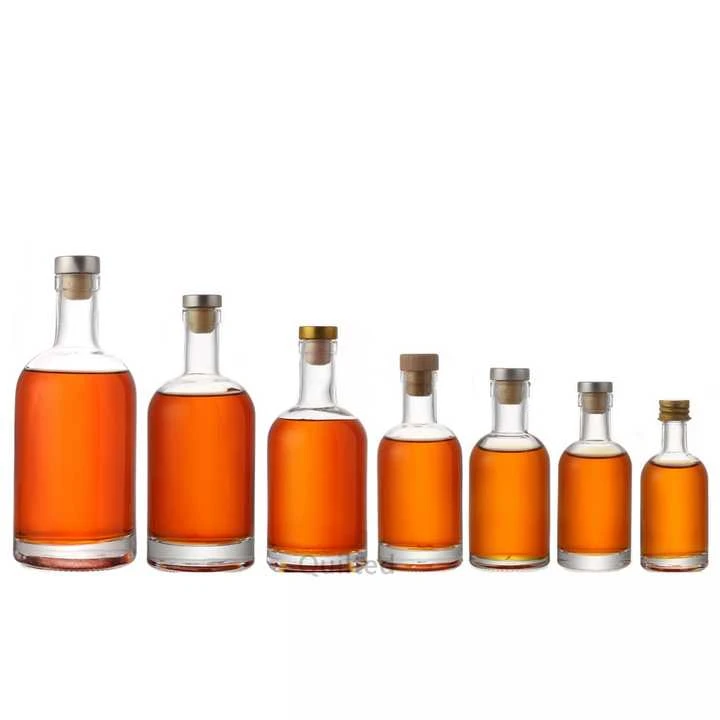
When you’re picking glass bottles for your liquor business, you’ve got to know standard sizes and how to find a trustworthy wholesale supplier. Glass liquor bottles come in six main sizes—50ml, 100ml, 200ml, 375ml, 500ml, and 750ml—each one fitting different needs, from samples to classic retail packaging.
Whether you’re running a tiny distillery or handling big distribution, bottle size matters. It affects your costs, branding, and how customers see your product.
The wholesale liquor bottle market’s pretty broad. You’ll see all kinds of materials, shapes, and ways to customize.
Picking the right size means knowing your product and finding a manufacturer that actually follows safety standards. The right bottle keeps your liquor safe and helps it grab attention on the shelf.
This guide covers all the basics of wholesale glass liquor bottles. You’ll find info on each bottle size, customization, and how to choose suppliers that fit your budget and quality needs.
Key Takeaways
- Glass liquor bottles range from 50ml miniatures to 750ml standards, each suiting different products and markets.
- Good wholesale suppliers offer customization, safety certifications, and a range of sealing methods for your brand.
- The size and supplier you pick will affect your costs, shelf presence, and overall business results.
Comprehensive Overview of Glass Liquor Bottles Wholesale
Wholesale glass liquor bottles give distilleries and beverage brands affordable packaging in lots of sizes. If you get a handle on the advantages, standard sizes, and bottle types, it’s easier to make smart choices for your spirits.
Key Advantages of Wholesale Glass Liquor Bottles
Buying glass liquor bottles wholesale cuts your per-unit costs by a lot. When you order in bulk, you might save 30-50% over small orders.
Glass spirit bottles keep your product fresh. The glass doesn’t react with alcohol, so the original flavor and quality stay put—whether it’s whiskey, vodka, rum, or something else.
Premium glass packaging builds credibility. Most people see glass bottles as a sign of quality, which gives your brand a leg up on busy shelves.
Wholesale suppliers usually let you customize. You can ask for special shapes, embossing, or even your own custom mold to make your packaging truly yours.
And glass is recyclable. That matters more and more to eco-minded customers, and it’s just better for the planet.
Popular Bottle Sizes: 50ml, 100ml, 200ml, 375ml, 500ml, 750ml
50ml mini bottles are perfect for samples or single serves—think airlines, hotels, or promo events. These tiny bottles let customers try your stuff without the commitment of a whole bottle.
100ml and 200ml bottles are great for gift sets and travel. These sizes pop up a lot in premium products or limited runs.
375ml bottles are half the standard size. They’re handy for people who want variety or don’t want a huge bottle sitting around.
500ml bottles show up mostly in international markets. Some brands use this size to stand out or because their region prefers it.
750ml bottles are the go-to for spirits. You’ll spot them everywhere, and most countries expect this size for retail spirits.
| Size | Common Uses | Target Market |
|---|---|---|
| 50ml | Samples, airlines | Trial customers |
| 100-200ml | Gifts, travel | Premium segment |
| 375ml | Half bottles | Small households |
| 500ml | Regional preference | International markets |
| 750ml | Standard retail | General consumers |
Types of Spirit Bottles Available for Wholesale
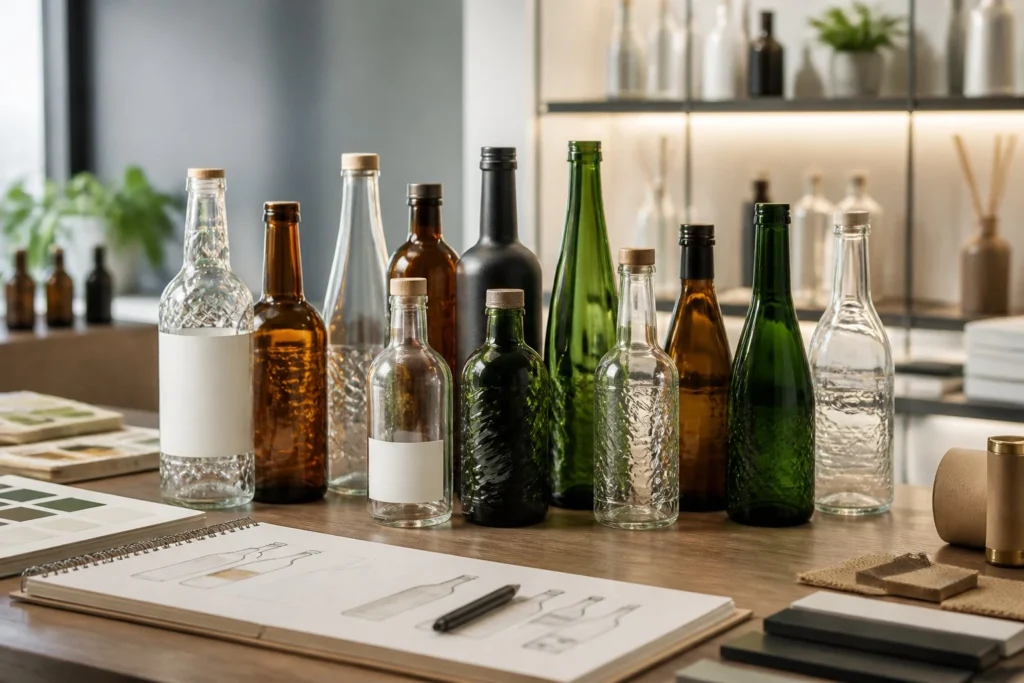
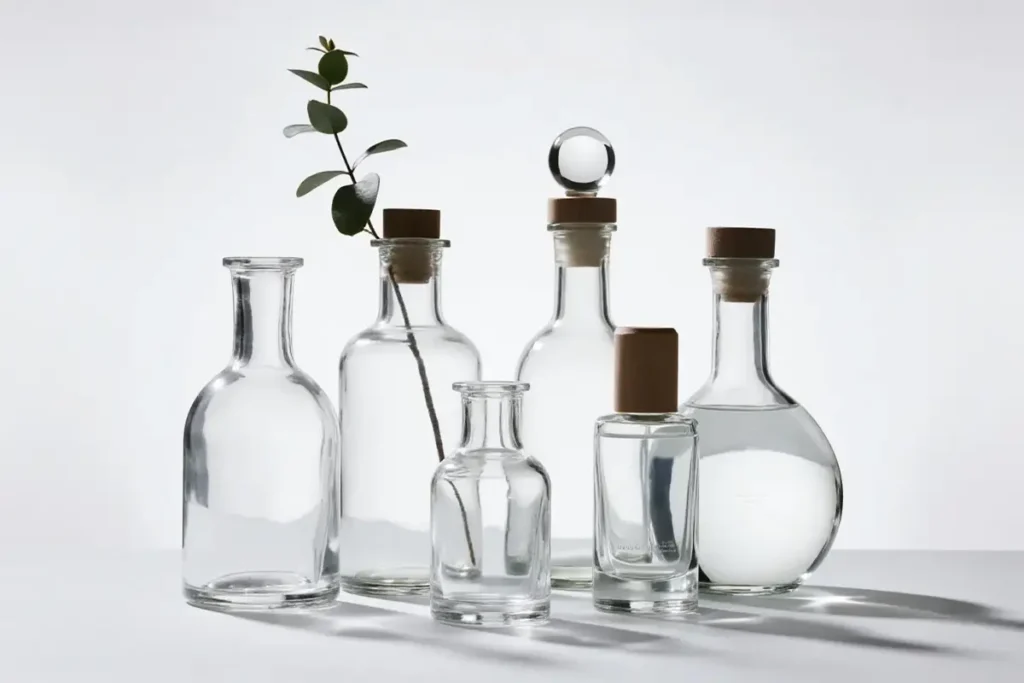
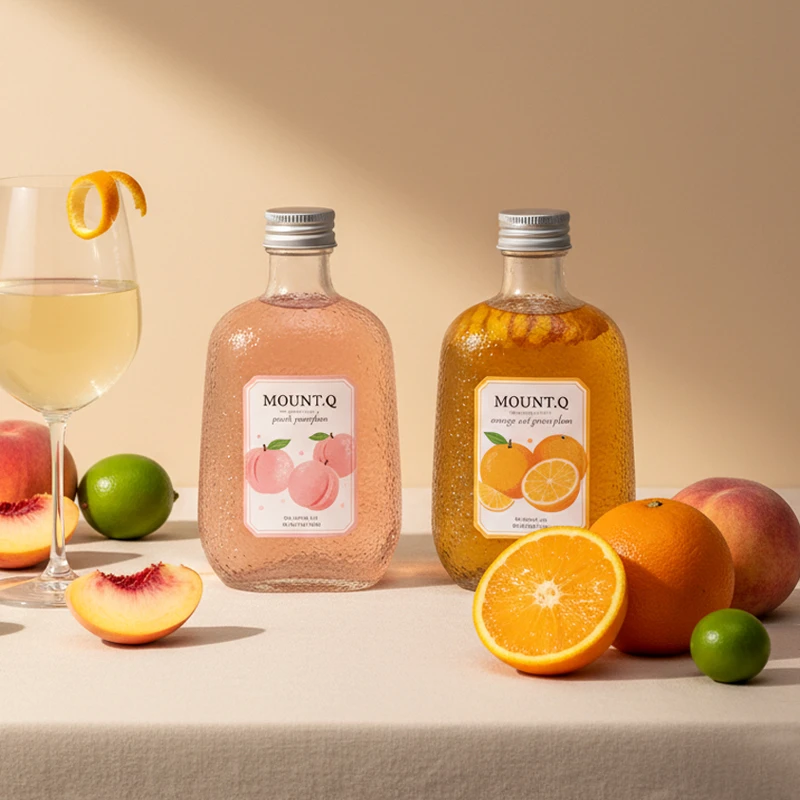
Round glass liquor bottles bring a classic vibe for vodka, gin, and other clear spirits. They’ve got clean lines and can take cork caps or screw tops—your choice.
Flask-style bottles are a staple for whiskey and bourbon. Their flat, rectangular shape adds stability and a look people remember.
Specialty-shaped bottles let you get creative for tequila, rum, or craft spirits. You can go traditional or dream up something totally new that fits your brand’s personality.
Wholesale glass bottles come with different closures. Bar top finishes fit corks and synthetic stoppers, while screw tops work with tamper-evident caps or continuous thread closures.
Whiskey bottles usually have thicker glass and wider bases for a premium feel. Vodka bottles are often tall and skinny, showing off their clarity. Tequila bottles? They might lean into Mexican traditions or go for a modern, minimalist look.
Design, Customization, and Packaging Solutions
Spirits packaging isn’t just about the bottle—it’s the whole vibe. The design, closure, label, and packaging all shape how people see your product and how easily you can ship it.
Bottle Design and Decoration Techniques
Start with standard bottles or go custom. Stock bottles get you to market fast—suppliers usually have thousands of designs ready to go. If you want something unique, you’ll need a custom mold, but then you control every detail.
Decoration boosts your bottle’s look. Silk printing puts your logo right on the glass and lasts. You can also try embossing for raised designs, acid etching for a frosty look, or painting for full-color bottles.
Mix and match techniques if you want. Maybe embossed patterns on the body, silk printing for the logo. Small runs—say, 50ml or 375ml—usually stick to simpler decoration, while big orders of 750ml bottles might justify fancier treatments.
Closure Options and Their Benefits
Continuous thread closures—aka screw caps—are the standard. These caps fit most neck finishes and seal reliably. You can pick aluminum, plastic, or composite, depending on your budget and brand style.
Cork closures scream premium. You can go natural cork, synthetic, or wood-topped. Natural cork feels classic but needs more quality checks, while synthetics are more consistent.
Glass stoppers look ultra-premium, especially for top-shelf bottles. Bar-top closures combine a cork or plastic insert with a decorative top—metal or glass. Just make sure the closure matches the bottle’s neck, since neck specs change from 50ml to 750ml.
Brand Customization and Labeling
Labels matter for looks and cost. Paper labels offer tons of design freedom and special finishes. You can use them on the front, back, or neck to share info.
If you hate labels, direct printing puts your design straight on the glass. Minimalist brands love this, and it saves money on big orders. Screen printing works for simple graphics; digital printing handles more complex stuff.
Foil stamping and embossing add texture and shine. Metallic foils catch the light and feel fancy. It’s smart to test how your labels hold up in ice buckets and bars—wet labels can get ugly fast.
Packaging and Shipping Considerations
Secondary packaging keeps bottles safe in transit and looks good in stores. Standard corrugated boxes with dividers work for most wholesale orders.
Smaller bottles like 100ml or 200ml need extra cushioning—they break easier. Gift boxes and presentation cases take things up a notch for retail. Wooden boxes, tins, or heavy-duty cardboard fit the premium crowd, though they cost more.
Palletizing helps with shipping. Most 750ml bottles ship 12 to a case, while 375ml and 500ml might go 24 per case. Your supplier should explain their breakage and replacement policies. Usually, you have to report any damage within 7 days, with photos and counts.
Finding the Right Liquor Bottle Supplier and Manufacturer
Finding a solid supplier means doing your homework and being upfront about what you need. You want the right mix of quality, price, and reliability, plus someone who can deliver the sizes and customizations you’re after.
Choosing a Reliable Wholesale Partner
Start by looking for suppliers who focus on your bottle sizes, whether that’s 50ml minis or 750ml standards. Check out their website—does it show inventory and what they can do?
How long have they been around? Where are they based? Domestic suppliers usually ship faster and are easier to talk to, but overseas factories often have better prices for big orders.
Check their ratings on business sites like the Better Business Bureau. Ask for references from other alcohol brands. A good partner will be open about their process and happy to send samples before you buy in bulk.
What to Look for in a Liquor Bottle Manufacturer
Your manufacturer should handle your order volume now and as you grow. Ask about their quality checks and safety certifications.
See if they stock common sizes or make everything to order. Stock bottles mean faster delivery and lower minimums. Ask what custom services they do in-house—embossing, silk screening, acid etching, or custom molds.
If you care about sustainability, ask about their green practices. Get their standard delivery times and return policy in writing. You want a manufacturer who’s quick and clear when you have questions.
Order Quantities, Lead Times, and Pricing
Minimum order sizes can be all over the place. Some suppliers want 10,000+ bottles per order, while others are fine with just a few hundred for startups.
Lead times are usually 2-8 weeks for stock bottles and 8-16 weeks for custom. Add more time if you’re shipping internationally. Get a full price breakdown—bottles, decoration, customization, shipping, all of it.
Ask if they give discounts for bigger orders. Make sure you’re clear on payment terms and if you need to pay a deposit up front. If you ever need a rush order, check if they can speed things up (and what it’ll cost).
Frequently Asked Questions
Wholesale glass liquor bottle orders come with specific requirements for quantities, quality, and customization. If you know the shipping costs, bottle specs, and branding processes, you’ll make better decisions for your business.
What are the minimum order quantities for wholesale glass liquor bottles of different sizes?
Minimum order quantities depend on the supplier and bottle size. Most wholesale manufacturers start at 1,000 to 10,000 units per size and style.
Smaller bottles like 50ml and 100ml often require higher minimums because they take the same production setup as larger bottles. Standard sizes like 750ml usually have more flexible minimums since they’re so common.
Some suppliers offer lower minimums if you pick from their stock bottles. Custom designs bump up the minimum order, since creating new molds and setting up production isn’t cheap.
How can glass bottle quality impact the shelf life and taste of the liquors stored in them?
High-quality glass bottles protect your liquor from light and air. That’s huge for keeping flavor and color just right.
Thicker glass walls guard against temperature swings and bumps. Premium flint glass stops chemical reactions that could mess with the taste over time.
Poor quality glass might have impurities that leach into your liquor. And if the bottle seal isn’t good, oxidation and evaporation can sneak in and ruin the product.
What are the standard dimensions and specifications for 50ml, 100ml, 200ml, 375ml, 500ml, and 750ml glass liquor bottles?
A 50ml bottle usually stands 3 to 4 inches tall, with a diameter of 1 to 1.5 inches. These little bottles work great for samples and single servings.
100ml bottles come in at 4 to 5 inches tall, with wider bases than 50mls. The 200ml size hits about 6 to 7 inches in height.
375ml bottles are around 7 to 8 inches tall and hold half the volume of a standard bottle. 500ml bottles measure roughly 8 to 9 inches in height.
The 750ml bottle is the industry standard, standing about 10 to 12 inches tall. Neck finishes vary, but you’ll often see 18mm, 21mm, and 28mm options for different closures.
Can I get customized branding on glass liquor bottles for wholesale orders, and what is the process?
You can customize glass liquor bottles with embossing, debossing, screen printing, or labeling. To start, you’ll send your design and artwork to the manufacturer.
Embossing and debossing need new molds, which adds time and upfront cost. These options give your bottles a premium, permanent look.
Screen printing puts your logo or design right on the glass. You’ll need to provide vector artwork and specify Pantone colors.
Lead times for custom bottles usually range from 30 to 90 days, depending on your design. The manufacturer will send you samples to approve before making the full batch.
What are the differences in cost between ordering small and large quantities of glass liquor bottles?
Larger orders drop your per-bottle cost a lot—sometimes by 30 to 50 percent compared to small orders. When you order more, setup costs for molds and equipment get spread out, making custom designs more affordable.
Shipping costs per unit fall as you order more, since freight gets split among more bottles. But if you go really big, you might need to think about storage and warehousing costs.
Standard stock bottles in sizes like 750ml usually offer the best price at any quantity. Unique shapes and custom designs always cost more, no matter how many you order.
How does the shipping and handling process work for bulk orders of glass liquor bottles, and what measures are taken to prevent damage during transit?
Glass bottles ship out in sturdy cardboard boxes, each one designed with dividers to keep bottles separated. Manufacturers load these boxes onto pallets and wrap everything up in protective film for stability.
They usually place each bottle in its own compartment inside the box. If there’s any extra space, they’ll add padding—foam inserts or just crumpled paper—to keep things from shifting around.
Suppliers check the quality of the bottles before they ship and make a note of your order’s condition. Many offer insurance, just in case something goes wrong during transit.
Your order arrives on pallets, ready for you to unload with a forklift or pallet jack. Good suppliers keep an eye on your shipment and send over delivery schedules and paperwork, so you know what to expect.