A Guide to Selecting Glass Sauce Bottles
Glass sauce bottles do more than hold sauces—they preserve flavor, aroma, and shelf life while boosting branding and consumer trust. They work well with a variety of sauces, from those that are oil-rich to those that are vinegar-based, because they are non-reactive.
As consumers grow more aware of packaging and sustainability, glass remains a top choice in premium and health-focused markets. This guide helps manufacturers and brands choose the right glass sauce bottle for their needs.
Types of Glass Used in Sauce Bottles
The glass type used affects durability, product safety, cost, and consumer perception. Choosing the right kind helps avoid issues like breakage, UV degradation, or flavor alteration.
| Glass Type | Description | Pros | Cons |
| Soda-lime Glass | Standard clear or green glass made from silica, lime, and soda ash | Cost-effective, transparent, widely available | Less heat and thermal shock resistance |
| Borosilicate Glass | Glass enriched with boron for superior durability and thermal resistance | Excellent for hot filling and pasteurization | Higher cost and heavier weight |
| Flint Glass | A refined soda-lime glass that’s extremely clear | High transparency, shows sauce colors well | Minimal UV protection |
| Amber Glass | Brown-tinted glass ideal for protecting light-sensitive ingredients | UV protection extends product shelf life | Obscures product visibility |
For highly acidic, heat-processed, or light-sensitive sauces, borosilicate or amber glass provides greater performance.
Popular Shapes of Glass Sauce Bottles
The shape of the glass bottle plays a key role in usability, branding, labeling space, and manufacturing efficiency. Certain shapes are traditionally associated with specific types of sauces and can affect how easily the bottle integrates into filling lines and shelf displays.
Round Sauce Bottles
Round bottles are the go-to format for ketchup, mayonnaise, and general-purpose dressings. Their symmetrical design allows for easy capping, labeling, and stacking during production and distribution.
Woozy Bottles
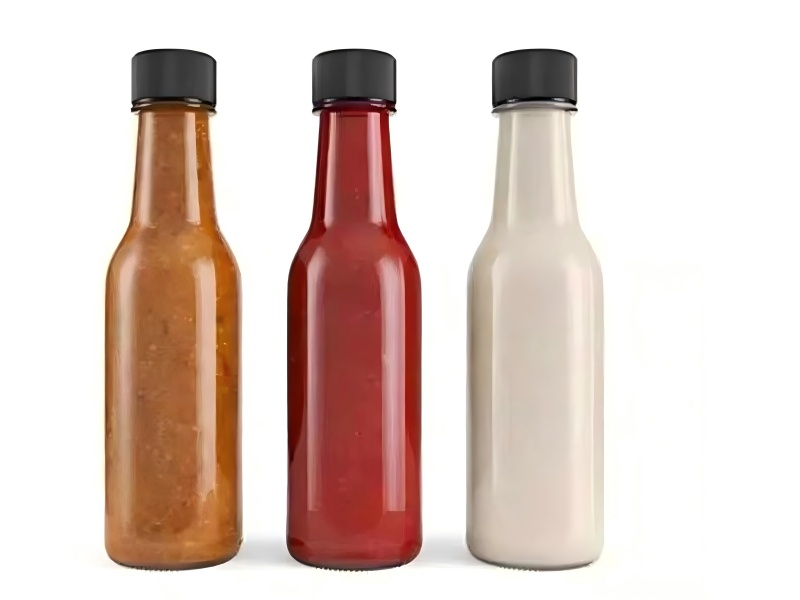
These slender, long-necked bottles are most common for hot sauces and pepper-based liquids. They allow for precise pouring and are often paired with dropper inserts or flow restrictors.
Oval Bottles
Oval bottles offer a refined aesthetic and are typically used for gourmet sauces or artisanal condiments. Their non-round shape gives brands a distinctive shelf presence.
Flask-Shaped Bottles
Flat and wide, these bottles are excellent for thicker sauces like BBQ or marinades. Their wide face also allows for larger label designs or branding embossments.
Square and Rectangular Bottles
These bottles maximize storage efficiency and create a strong visual impact. Often chosen for premium or export products, they can stack tightly in cases and cartons.
| Shape | Typical Use | Advantages | Limitations |
| Round | Dressings, ketchups | Easy handling, affordable, stackable | Common appearance |
| Woozy | Hot sauces | Controlled flow, sleek profile | Narrow neck can limit filling speed |
| Oval | Gourmet sauces | Premium look, ergonomic feel | Labeling may require customization |
| Flask | BBQ, thick sauces | Wide face for branding, compact | Not ideal for thin sauces |
| Square | Exports, gift sets | Premium appeal, packing efficiency | Slightly harder to grip |
Bottle Capacities and Volume Considerations
Glass sauce bottles come in various volumes to serve different market segments—from tasting samples to foodservice bulk formats. Volume affects portion control, shipping weight, pricing, and shelf strategy.
| Capacity | Applications | Notes |
| 50–100 ml | Trial sizes, gift packs, premium hot sauces | Small, portable, perfect for limited editions |
| 150–200 ml | Standard retail sauces | Popular for hot sauces and specialty lines |
| 250–350 ml | Mainstream ketchup, salad dressings | Most common size for household use |
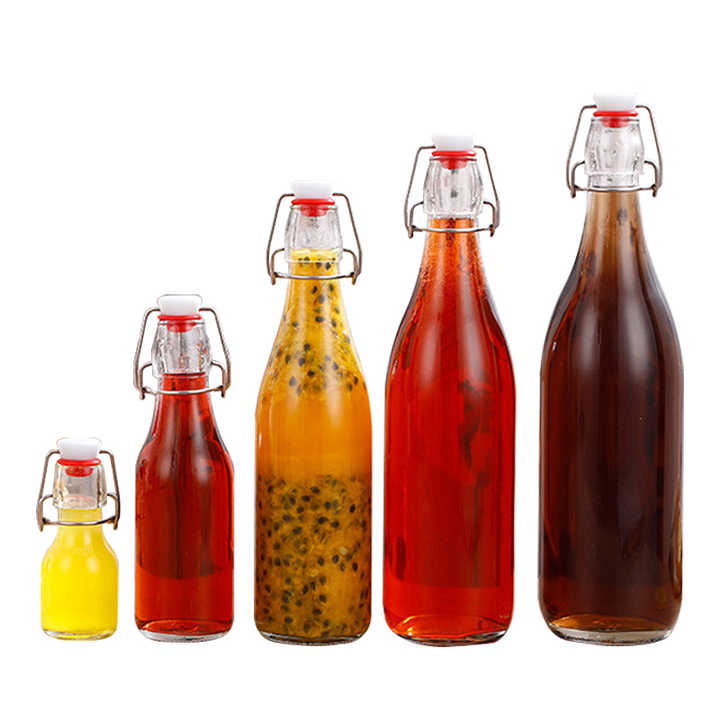
| 500 ml – 1 L | Restaurant or foodservice packs, family-size formats | Requires stronger glass and tight sealing |
Selecting the correct volume ensures regulatory compliance (e.g., net contents) and supports marketing strategies like bundling or shelf-space optimization.
Closure Types for Sauce Bottles
Closures affect product freshness, safety, and consumer experience. They must be compatible with the bottle neck finish and suit the viscosity and application method of the sauce.
Screw Caps
These are reliable and commonly used across a wide range of sauce types. They provide good resealability and are easy to source.
Lug Caps
Often used in vacuum-sealed or heat-processed sauces, lug caps provide a tight seal and are ideal for extending shelf life.
Dropper Inserts
For very spicy or concentrated sauces, dropper inserts or flow restrictors are added to limit pouring and improve safety.
Tamper-Evident Caps
These are required for most retail sauces and signal freshness and product integrity to the consumer.
Flip-Top Closures
Useful for consumer convenience, especially for one-handed use. Often paired with squeeze bottles, but also available for some glass bottle designs.
| Closure Type | Best For | Main Advantage |
| Screw Cap | General-purpose sauces | Easy to open and reseal |
| Lug Cap | Pasteurized sauces | Air-tight and secure |
| Dropper Insert | Hot sauces | Controlled dosage, avoids waste |
| Tamper-Evident | Retail-packaged sauces | Safety and compliance |
| Flip-Top | Squeeze-style sauces | User convenience |
Labeling and Decoration Options
Glass bottles offer a canvas for powerful branding. The choice of labeling method impacts product perception, production cost, and compliance.
- Paper Labels: Common, budget-friendly, and versatile in design, but they can peel off in moisture.
- Shrink Sleeves: Full coverage, water-resistant, and ideal for curved or irregular bottles.
- Screen Printing: Permanent, elegant, and good for high-end branding—requires precise application.
- Embossed/Debossed Glass: Premium tactile experience, built directly into the mold for lasting impact.
Before choosing a shape, ensure there’s adequate flat surface area for legally required information like ingredients and batch codes.
Heat Treatment and Food Safety Requirements
Glass sauce bottles must often undergo high-temperature filling or pasteurization, especially for products with lower pH or long shelf life.
- Hot-Fill Compatibility: Bottles must endure 85–95°C without breaking, warping, or weakening the closure seal.
- Thermal Shock Resistance: Bottles should withstand rapid cooling post-fill without cracking.
- Food Safety Certifications: Materials should be FDA, EFSA, or similar certified to ensure safe contact with consumables.
- Compatibility with Caps: When exposed to heat, liners in caps must not melt or distort.
Testing with your sauce under production conditions is highly recommended before mass procurement.
Sauce Type and Glass Compatibility
Different sauce compositions—acidity, viscosity, oil content, or active cultures—demand specific glass and closure combinations to preserve quality and prevent degradation.
| Sauce Type | Key Challenges | Recommended Bottle Features |
| Tomato-Based | High acidity | Acid-resistant glass (e.g., soda-lime or borosilicate) |
| Vinegar-Based | Corrosiveness, smell retention | Airtight closures, chemically inert glass |
| Oil-Based | UV degradation, rancidity risk | Amber or tinted glass for UV protection |
| Hot Sauce | Dripping, strong odors, color separation | Woozy bottles with flow-control inserts |
| Creamy/Mayonnaise | Requires wide-mouth access, separation risk | Round/flask jars with wider necks for scooping or pouring |
| Fermented Sauces | CO₂ buildup, live bacteria | Pressure-tolerant glass, vented lids or one-way valves |
Matching bottle and sauce compatibility ensures shelf life, regulatory compliance, and consumer satisfaction.
Transportation, Storage, and Breakage Risk
Glass offers premium protection but is inherently more fragile than plastic. Packaging engineers must consider protective solutions during warehousing and transit.
- Bottle Wall Thickness: Thicker glass reduces breakage risk, especially for export.
- Uniform Neck Finish: Helps automate capping and reduces breakage during sealing.
- Pallet Configuration: Optimize layout to avoid bottle-to-bottle contact.
- Dividers and Inserts: Carton designs should include inner dividers to prevent shattering.
- Shrink Wrapping or Vacuum Seals: Secure bottles tightly during shipping to reduce rattling.
Consider partnering with bottle suppliers that offer protective packaging solutions, including shrink-wrapped trays or molded pulp inserts.
Regulatory and Food Safety Labeling
Proper labeling protects consumers and complies with food safety laws. Glass bottles provide a high-end look but may require specific label adhesives and placement strategies.
Mandatory Elements:
- Product Name and Net Quantity
- Ingredient List (descending order by weight)
- Nutrition Facts Panel (as required per country)
- Batch Number / Lot Code for traceability
- Manufacturer or Distributor Details
- Country of Origin
- Expiry Date or Best Before Date
Regulatory bodies such as the FDA (USA), EFSA (EU), CFIA (Canada), and FSSAI (India) require strict adherence to food packaging guidelines.
Customization and Branding Potential
Customized glass sauce bottles can significantly enhance brand value and shelf visibility. From tactile surfaces to unusual silhouettes, personalized packaging adds uniqueness.
Customization Options:
- Embossed or Debossed Branding: Logos molded directly into the glass for premium appeal.
- Color Variants: Tinted glass in amber, green, or black can create identity and improve UV protection.
- Special Shapes: Unique bottle silhouettes make products instantly recognizable.
- Foil Stamping and Metallic Inks: Eye-catching details that reflect luxury.
- Custom Closures: Colored or logo-embossed caps further differentiate products.
Be aware that custom molds typically require higher MOQs and upfront tooling costs.
Sustainability and Environmental Impact
As environmental concerns grow, consumers and retailers prefer packaging that minimizes carbon footprint. Glass has significant advantages for sustainability:
- 100% Recyclable: No quality is lost throughout endless recycling.
- Inert and Non-toxic: No microplastics, leaching, or contamination.
- Reusable: Often repurposed by consumers in households or for refills.
- Supports Circular Economy: Many regions incentivize returnable glass bottle programs.
- Perceived Eco-Friendliness: Enhances brand image and loyalty among eco-conscious buyers.
Manufacturers can highlight these features in marketing materials and on-product labels to increase appeal.
Cost Considerations and Budgeting
While glass sauce bottles are more expensive than plastic sauce bottles, they offer returns in brand positioning, consumer trust, and longer shelf life. Understanding the cost components helps brands plan accordingly.
| Cost Factor | Details |
| Bottle Material | Flint glass is cheaper than amber or borosilicate |
| Bottle Design | Custom molds and embossing add upfront costs |
| Closure Type | Flip-top and tamper-evident caps cost more than basic screw caps |
| Decoration/Labeling | Silk-screen printing and shrink sleeves cost more than paper labels |
| Logistics | Glass weight increases freight cost and packaging needs |
| MOQ and Tooling | Custom projects often require higher minimum orders and tooling fees |
Cost can be optimized by choosing stock bottle designs or sharing molds with other brands via cooperative manufacturing.
Regional Preferences and Market Standards
Different geographic markets have unique expectations for sauce packaging. Exporters must account for these cultural and regulatory differences.
| Region | Preferred Bottle Type | Notes |
| North America | Woozy bottles for hot sauce, flint glass | Strong shelf branding, tamper-evidence expected |
| Europe | Amber glass for organic/vegan sauces | High environmental regulation and labeling standards |
| Asia-Pacific | Tall narrow bottles for soy sauces | Consumers prefer elegant, functional shapes |
| Middle East | Flask/square bottles for multi-use sauces | Bulk formats are popular due to family-style consumption |
| Latin America | Round bottles with spice-resistant closures | Colorful labels and multilingual info are often required |
Compatibility with Filling Equipment
An often-overlooked aspect of bottle selection is its integration into your processing and filling systems. Incompatibility can slow production and cause costly downtime.
Considerations:
- Mouth Diameter: Should match nozzle heads for clean, fast filling.
- Neck Finish: Must be consistent with capping machinery.
- Body Shape: Rounded bodies work better with conveyors than odd shapes.
- Height and Width: Ensure bottles fit on existing fill line guides and labeling stations.
- Hot Fill or Cold Fill: Ensure glass tolerates production temperature changes.
Request technical drawings or samples from your supplier before committing to bulk purchase.
Selecting a Glass Sauce Bottle Supplier
A reliable supplier is key to ensuring bottle consistency, timely delivery, and quality control. Choosing the right partner also allows flexibility in scale, customization, and support.
What to Look For:
- Certifications: ISO 9001, HACCP, and food-contact compliance.
- Product Range: Wide selection of stock bottles and caps.
- Customization Capabilities: In-house mold and decoration services.
- MOQ Flexibility: Suitable for both small batches and large-scale production.
- Lead Time & Shipping: Especially important for imported bottles.
- Breakage Guarantees: Suppliers may offer replacement policies for defective shipments.
Request samples and test runs before scaling up production.
Emerging Trends in Sauce Bottle Packaging
Packaging trends continue to evolve, driven by consumer demand, sustainability goals, and innovation. Brands can stand out by tapping into current movements.
- Minimalist Design: Clean labels and clear glass align with “clean label” ingredient trends.
- Smart Packaging: Interactive storytelling and origin tracking are made possible by QR codes and NFC tags.
- Hybrid Caps: Glass bottles with plastic pour tops enhance usability.
- Reusable and Refillable: Supported by refill pouches or bulk containers.
- Textured Glass: Matte finishes and embossing deliver tactile and visual appeal.
Staying on-trend can improve product positioning and gain shelf space in competitive retail environments.
Case Studies: Real-World Bottle Choices
Case 1: Artisan Hot Sauce Brand (USA)
The brand chose a 150 ml woozy bottle made of flint glass with a dropper insert and black tamper-evident cap. A shrink-sleeve label provided full-body branding. This helped the product stand out on shelves and increased sales by 30% in three months.
Case 2: Organic BBQ Sauce (Germany)
Used a 250 ml flask-shaped amber glass bottle with embossed logo and swing-top ceramic closure. The rustic look appealed to eco-conscious consumers. It allowed reuse and was sold in organic and zero-waste stores.
Case 3: Export Soy Sauce Brand (Japan)
Utilized tall, rectangular bottles with a 200 ml volume and screw caps. Clear flint glass highlighted product clarity and tradition. Labels were printed in English, Chinese, and Arabic to serve international markets.
Tips for First-Time Sauce Brands
Launching your first sauce line? Consider these key tips:
- Start with Standard Bottles: Use stock options to minimize cost and risk.
- Test Your Sauce in the Bottle: Check for separation, reaction, and flow.
- Match Cap and Neck Finish: Don’t assume all 38 mm caps fit all 38 mm bottles.
- Don’t Skimp on Label Design: A great label is your best shelf salesman.
- Consider Reusability: Bottles that can be reused or refilled enhance eco-appeal.