Common Sizes of Glass Beverage Bottles Across Industries
Glass remains the gold standard for many beverage brands thanks to its chemical inertness, premium look and feel, and recyclability. But when you move from concept to production, one of the earliest—and most consequential—decisions is bottle size. Capacity affects everything from ingredient costing and line speed to cap standards, shipping weight, shelf blocking, and brand positioning.
How “Size” is Defined in Glass Beverage Bottling
Before diving into industry-by-industry norms, a few sizing terms help avoid missteps:
- Nominal capacity: The labeled volume (e.g., 12 oz, 500 mL) intended for marketing, pricing, and regulatory fill requirements.
- Brimful capacity: The total internal volume filled to the very top of the finish; always higher than nominal. Engineers use this for headspace calculations.
- Headspace: The intentional volume left unfilled to accommodate thermal expansion, carbonation, or hot-fill.
- Finish / neck finish: The standardized neck geometry that dictates closure type and thread detail (e.g., 28-410, 38-400, 26-600 Crown).
- Tare weight (glass weight): Impacts freight, CO₂ footprint, and line handling. Lightweighting saves cost but can reduce impact resistance.
A useful conversion: 1 US fl oz ≈ 29.57 mL. Common marketing sizes therefore map like: 8 oz ≈ 237 mL, 12 oz ≈ 355 mL, 16 oz ≈ 473 mL, 25.4 oz = 750 mL.
Common Marketing Sizes
| US Size | Metric Approx. | Typical Use Cases |
| 6 oz | 177 mL | Shots, elixirs, baby juice, bar samples |
| 8 oz | 237 mL | Single-serve juice, dairy, cold brew |
| 10 oz | 296 mL | Premium sodas, mixers |
| 11.2 oz | 330 mL | EU standard beer/RTD sodas |
| 12 oz | 355 mL | US CSD (carbonated soft drink), kombucha |
| 16 oz | 473 mL | Cold brew, tea, juice, smoothies |
| 18.6 oz | 550 mL | Asia beverages, functional drinks |
| 20 oz | 591 mL | Tea, juice, sports drinks (less common in glass) |
| 22 oz | 650 mL | Large craft beer “bombers” (declining) |
| 25.4 oz | 750 mL | Wine, kombucha share size, mixers |
| 32 oz | 946 mL | Family juice, cold brew concentrates |
| 1 L | 1000 mL | Water, mixers, premium RTD |
| 1.75 L | 1750 mL | Spirits “handle” (usually glass for premium tiers) |
Industry-by-industry: Common sizes and Finishes
Carbonated soft drinks (CSD)
- Single-serve: 8 oz (237 mL) nostalgic soda; 330 mL (11.2 oz) EU; 12 oz (355 mL) is the US anchor.
- Share / premium: 500 mL and 750 mL for gourmet sodas or mixers; 1 L for foodservice.
- Finishes: Crown (26 mm) for traditional long-necks; 28-400 or 28-410 ROPP/screw for twist-off.
- Notes: Carbonation demands thicker walls and robust bottom radii; check burst/pressure specs.
Juices, smoothies & nectars (hot-fill & ambient)
- Single-serve: 8 oz, 10 oz, 12 oz, 330 mL; 16 oz for smoothies.
- Multi-serve: 750 mL, 1 L, 32 oz (946 mL).
- Finishes: 38-400 / 38-485 are common for hot-fill (wider mouth for pour and thermal stability).
- Notes: Hot-fill needs panel designs or specialty glass to mitigate vacuum; headspace control is critical.
Dairy & plant-based milks
- Single-serve: 8 oz (school milk nostalgia), 12 oz, 300–350 mL.
- Multi-serve: 1 L, 32 oz, occasionally 64 oz (half-gallon) in glass for premium home delivery.
- Finishes: 38-400/38-485 screw caps (tamper-evident bands common).
- Notes: Returnable programs favor durable/heavier glass; label areas designed for condensation.
Functional beverages & wellness shots
- Shots: 2 oz (60 mL) and 3 oz (89 mL) dominate.
- Single-serve tonics: 6–10 oz, 200–300 mL.
- Finishes: 20-400 / 24-400 for small shots; droppers (18-400) for tinctures.
- Notes: Amber or flint with UV shields; thicker bases for premium feel.
Kombucha & fermented drinks
- Single-serve: 12 oz (355 mL) and 16 oz (473 mL) are most common.
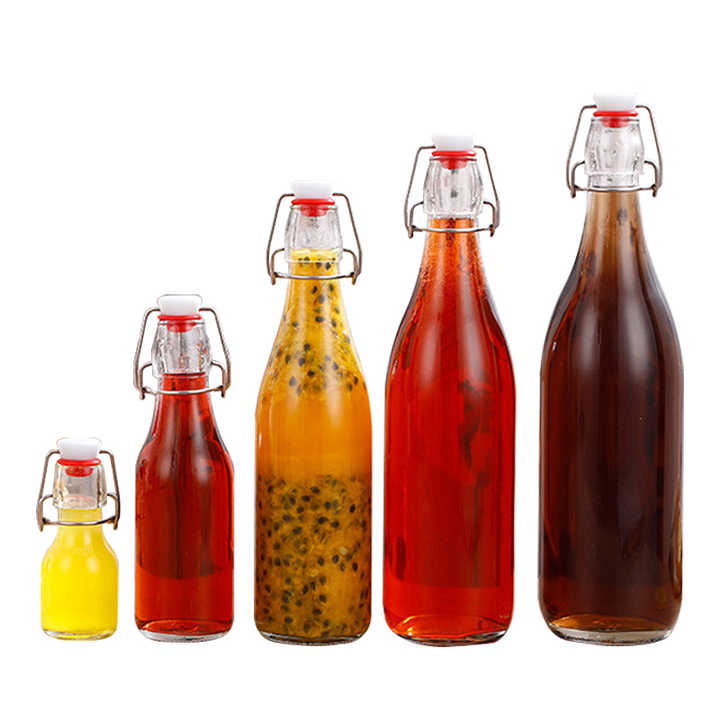
- Share: 750 mL champagne-style, 1 L swing-top for refillables.
- Finishes: 26 mm crown for higher carbonation; 38-400 for still/low-carb.
- Notes: CO₂ + acids = crown-friendly; verify pressure specs and cap liner compatibility.
Cold brew & ready-to-drink coffee/tea
- Single-serve: 8–12 oz for coffee; 16 oz for tea.
- Concentrates: 32 oz (946 mL) and 1 L.
- Finishes: 28-400 / 38-400; some brands use swing-tops for differentiation.
- Notes: Oxygen control matters—consider closures with oxygen scavenger liners.
Beer
- Single-serve: 12 oz (355 mL) in the US; 330 mL in EU/APAC; 500 mL popular in Germany/UK.
- Share/specialty: 650 mL (22 oz) “bomber” (less common now), 750 mL cork & cage for saisons and sours.
- Finishes: 26 mm crown (standard), 29 mm for champagne-style 750 mL.
- Notes: Pressure-rated beer glass with standard long- or short-neck; amber preferred for light-blocking.
Wine & wine-based drinks
- Standard: 750 mL (most SKUs); 375 mL half bottle; 187 mL single-serve piccolos; 1.5 L magnum.
- Finishes: Cork (traditional), 30×60 mm ROPP screw-cap finish (BVS), crown for pét-nat.
- Notes: Bottle weight varies dramatically (lightweight ~360–420 g vs. premium >700 g). Consider sustainability targets.
Spirits & RTD cocktails
- Core: 750 mL (US), 700 mL (EU/UK migration), 1 L, 1.75 L handle.
- Miniatures: 50 mL airline/minis; 200 mL flasks.
- RTD cocktails: 200–355 mL; 250 mL is popular for EU parity; 375 mL “apéro” share.
- Finishes: Bar top (T-stopper) with cork/synthetic shank; 28-400 / 33-400 ROPP; GPI 2000 series for bar tops.
- Notes: Heavier bases and shoulders convey premium. Verify tax-stamp and tamper-evidence needs per market.
Water (still & sparkling)
- On-premise glass: 330 mL, 500 mL, 750 mL, 1 L.
- Finishes: 26 mm crown (sparkling), 28-410/ROPP twist for still; swing-top 750 mL for premium.
- Notes: Sparkling requires pressure-rated bottles; flint (extra white) for high-clarity aesthetics.
Sauces, mixers & culinary beverages
- Mixers: 200 mL, 500 mL, 750 mL, 1 L.
- Culinary drinks (broths/tonics): 12–16 oz, 500 mL, 750 mL.
- Finishes: 28-400, 38-400, or specialty pourers.
- Notes: Viscosity dictates mouth size; hot-fill capable glass where applicable.
Common Bottle Sizes by Category
| Category | Common Single-Serve | Share/Family | Go-To Finishes |
| CSD & Craft Soda | 12 oz (355 mL); 330 mL | 500 mL, 750 mL, 1 L | 26 mm crown; 28-400/410 twist |
| Juice & Smoothie | 8–12 oz; 330 mL; 16 oz | 750 mL, 1 L, 32 oz | 38-400/485; sometimes 28-400 |
| Dairy & Plant Milks | 8 oz; 12 oz | 1 L; 32 oz; 64 oz | 38-400/485 |
| Functional & Shots | 2–3 oz | 6–10 oz | 18–24 mm finishes; droppers |
| Kombucha | 12 oz; 16 oz | 750 mL; 1 L | 26 mm crown; 38-400 |
| Cold Brew & Tea | 8–12 oz; 16 oz | 32 oz; 1 L | 28-400; 38-400; swing-top |
| Beer | 12 oz; 330 mL | 500 mL; 650 mL; 750 mL | 26 mm crown; 29 mm (750 mL) |
| Wine | 187 mL; 375 mL | 750 mL; 1.5 L | Cork; 30×60 mm ROPP |
| Spirits & RTD | 50 mL; 200–355 mL | 700/750 mL; 1 L; 1.75 L | Bar top; 28–33 mm ROPP |
| Water | 330 mL; 500 mL | 750 mL; 1 L | 28-410; 26 mm crown; swing-top |
Neck Finishes & Closures
Glass beverage bottle size is only half the story; finish standards lock you into certain caps and line tooling. Here are workhorse finishes for beverages:
| Finish | Typical Closure | Where Used | Notes |
| 26 mm Crown | Pry-off or twist crown | Beer, CSD, kombucha | High-pressure tolerance; needs crowners |
| 28-400 / 28-410 | Plastic/metal screw | Still water, tea, cold brew | 410 has deeper threads; check liner spec |
| 38-400 / 38-485 | Plastic screw (TE options) | Hot-fill juices, dairy | Wider mouth, good for viscous fills |
| 30×60 ROPP (BVS) | Aluminum roll-on | Wine (screw-cap) | Requires ROPP capping head |
| Bar Top (e.g., GPI 2000) | T-stopper with shank | Spirits, liqueurs | Tamper bands & shank size matter |
| 29 mm Crown | Crown & cage | 750 mL sparkling, beer | Higher retention; often with wire cage |
| Swing-top | Mechanical ceramic/PP | Premium water, craft | Reusable; heavier glass typically |
Regional Standard Nuances
- US vs EU spirits: US historically standardizes on 750 mL; EU/UK increasingly 700 mL. If exporting, consider dual-SKU strategy.
- Beer: 330 mL dominates in EU/APAC; 355 mL (12 oz) rules in the US; 500 mL is common in Germany/UK.
- Wine: 750 mL is globally standard, but small formats (187 mL, 250–375 mL) are rising for single-serve and airline compliance.
- Returnable markets: In parts of Europe and LATAM, standardized returnable bottles dictate geometry and weight, sometimes limiting unique silhouettes.
Practical Engineering: Height, Diameter, and Label Panels
Sizes alone don’t guarantee line compatibility—diameter affects conveyor rails and pack-outs; height interacts with filler heads; label panel defines your artwork real estate.
- 12 oz long-neck beer: Ø ~61–66 mm; height ~230–245 mm.
- 16 oz wide-mouth juice: Ø ~70–74 mm; height ~170–190 mm.
- 750 mL wine (Burgundy vs Bordeaux): Burgundy tends to Ø ~81–85 mm with sloping shoulders; Bordeaux Ø ~74–77 mm with straight shoulders and taller height.
Request supplier drawings (with tolerances) for your shortlisted bottles and verify against your filler, labeler, and case packer.
Case packs, Palletization & Logistics
Common case counts and pallet patterns shape freight cost and warehouse planning:
| Size | Typical Case Pack | Pallet (US 40×48″) | Notes |
| 12 oz (355 mL) beer/soda | 24 | 80–100 cases | Heavier glass lowers high stack counts |
| 330 mL | 24 | 90–110 cases | EU pallets (1200×800 mm) differ |
| 16 oz (473 mL) | 12 | 90–120 cases | Often 12-packs to manage weight |
| 750 mL wine/spirits | 6 or 12 | 56–80 cases | Premium bottles = lower per-pallet yield |
| 1 L | 12 | 48–72 cases | Check max pallet height/weight limits |
Exact counts vary by bottle diameter, divider style, and shipper carton geometry. Always test transport simulation (vibration, drop, compression) with your chosen glass + closure + case.
Lightweighting vs Premium Weight
Within any given size, glass weight swings widely:
- 12 oz beer: ~180–230 g lightweight vs ~260–300 g standard.
- 750 mL wine: ~360–420 g eco-light vs >700 g premium.
Trade-offs: Lightweight cuts cost and carbon but can increase breakage in high-speed lines or long distribution chains. Premium-weight signals luxury but raises freight cost and sustainability concerns. Many brands now target mid-weight + recycled content (PCR cullet) for balanced performance.
Decoration & Closure Pairing by Size
- Small-format (2–10 oz): Screen printing or full-wrap labels with strong color saturation; consider child-resistant or tamper bands for functionals.
- Mid-format (12–16 oz): Pressure-sensitive labels on cylindrical panels; embossing on shoulder/base for brand equity; crowns or 28/38 finishes.
- 750 mL & 1 L: Hot-foil, applied ceramic labels (ACL), punt depth for spirits/wine cues; bar tops or BVS screw enhance unboxing ritual.
Decoration choices should respect label panel flatness, glass curvature, and condensation behavior (especially for cold beverages).
Compliance and Fill Method Impact on Size
Size selection must align with fill process:
- Hot-fill: Drives larger mouth finishes (e.g., 38-485), vacuum panels, and extra headspace; common in juices/teas.
- Carbonated: Demands pressure-rated bottles, crown finishes, and precise glass distribution.
- Cold-fill / tunnel pasteurization: Balances bottle strength with heat exposure; check annealing specs.
- Aseptic: Offers more freedom on geometry; still requires strict finish tolerances.
Label-claim sizes (e.g., 12 oz) must meet regulatory net contents rules; check local metrology standards for nominal/average system compliance.
Choosing Your Bottle Size
- Clarify your use occasion: Single-serve on-the-go (8–12 oz) vs. share-at-home (750 mL–1 L).
- Match the fill method: Carbonated (26 mm crown), hot-fill (38-485), still cold-fill (28/38-400).
- Plan shelf blocking & price tier: 12 oz is familiar for CSD; 16 oz signals value in coffee/tea; 750 mL connotes premium in wine/RTD.
- Check line compatibility: Height, diameter, and finish with your filler, capper, labeler, and case packer.
- Weigh sustainability vs heft: Target a weight that meets performance and brand cues.
- Futureproof SKUs: If exporting, consider 700 mL + 750 mL spirits families, or 330 mL + 355 mL for beer/soda.
- Prototype & transit test: Validate with full packaging (closure + liners + cartons + dividers).
- Lock supply chain: Confirm availability of matching closures (liners, bar tops), shrink bands, and TE components.
Example Size Families to Streamline Sourcing
- CSD/craft soda: 12 oz crown + 355 mL twist; add 330 mL crown for EU.
- Juice/tea: 12 oz and 16 oz (38-400); add 1 L family for multi-serve.
- Kombucha: 12 oz/16 oz crown; 750 mL crown & cage for premium.
- Cold brew: 10–12 oz for RTD; 32 oz or 1 L for concentrate.
- Beer: 12 oz US, 330 mL EU, 500 mL for select markets; 750 mL specialty.
- Spirits: 50 mL mini, 200 mL flask, 700/750 mL, 1 L, 1.75 L.
Building a coherent size family reduces artwork complexity, carton SKUs, and change-over times, making operations—and wholesale negotiations—smoother.
Across beverage categories, a handful of bottle sizes repeat for good reasons: they match consumer expectations, retail schematics, and packaging line standards. For US mass retail, 12 oz (355 mL), 16 oz (473 mL), and 750 mL remain foundational. Globally, 330 mL, 500 mL, 700 mL, and 1 L are equally critical.
Your best choice balances brand story, fill process, distribution realities, and sustainability goals—then locks into a finish standard that your closures, machinery, and suppliers can support reliably.