Glass vs Plastic Honey Jars: Which Offers Better Shelf Appeal and Freshness?
Glass honey jars generally offer better shelf appeal and better freshness than plastic, but plastic still has a place for specific use scenarios like lightweight shipping, squeeze bottles, and budget brands. Let’s unpack why.
Why Packaging Matters So Much for Honey
Honey is a premium, naturally long-lasting product, but its perceived value and even its practical shelf life are heavily influenced by packaging:
- Visual appeal: Do the jars catch the eye and communicate “high quality”?
- Freshness & protection: Does the container protect color, aroma, and flavor?
- Handling & convenience: Is it easy to pour, squeeze, or store?
- Brand story: Does the material match the brand’s positioning: artisanal vs budget, eco-chic vs convenient, etc.?
Glass and plastic jars answer these questions very differently.
Shelf Appeal: How Glass and Plastic Look on the Shelf
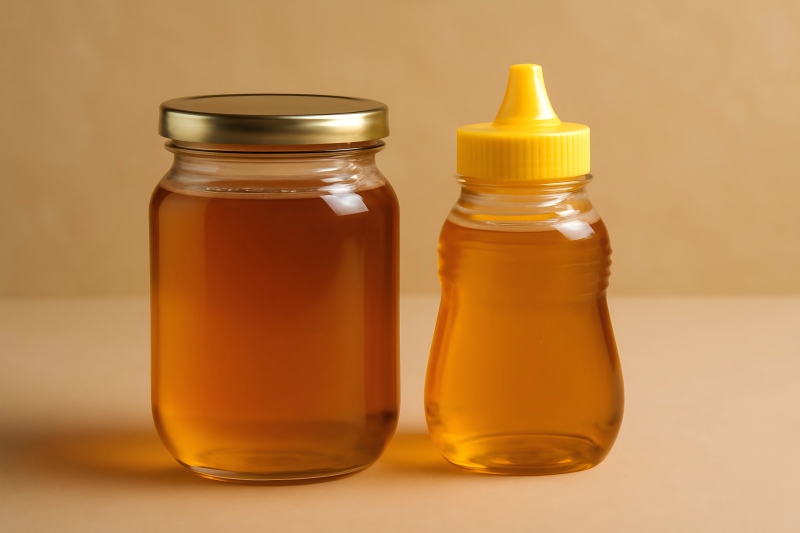
Glass Honey Jars: Premium, Clear, “Real Honey” Feel
Glass has some natural advantages when it comes to shelf appeal:
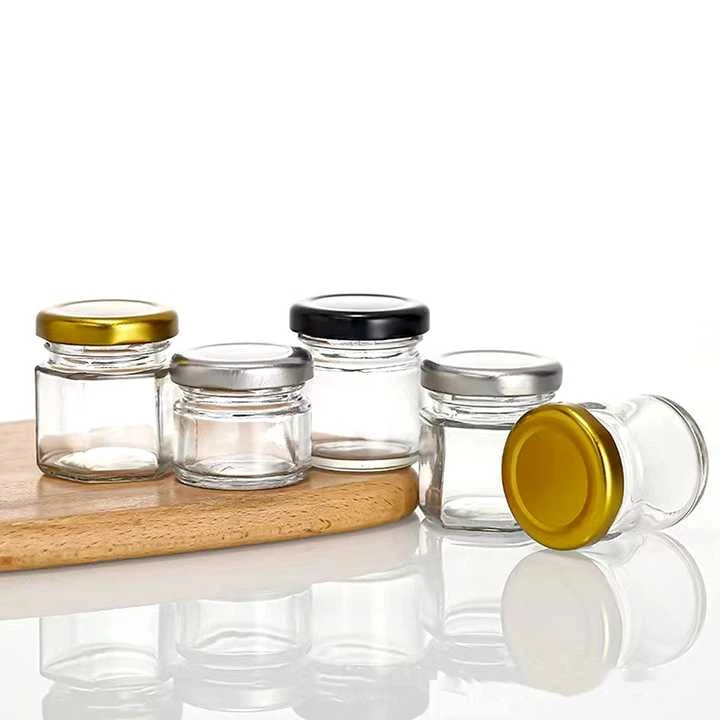
Transparency and brilliance
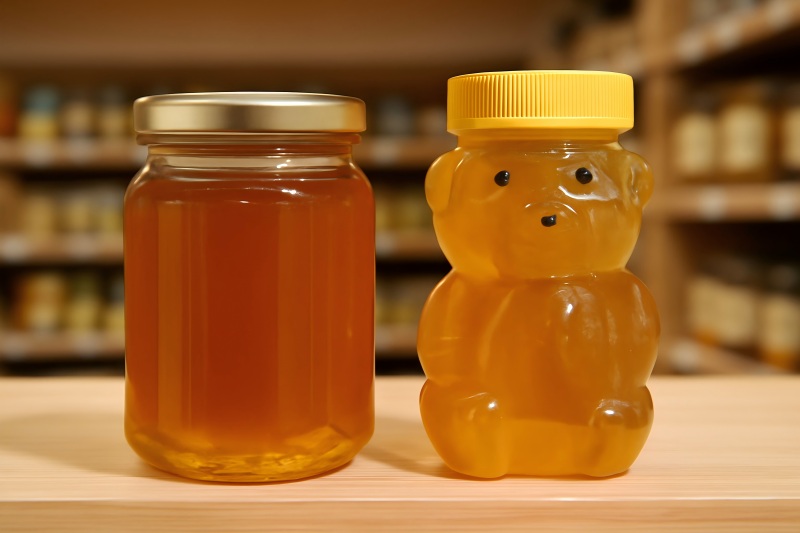
Clear glass shows off the golden color and viscosity of honey with high clarity. It refracts light and makes honey look rich and luxurious. This visual effect is hard to fully match with most plastics, which can look slightly dull or have a bluish/whitish tint.
Perception of quality and purity
Consumers often associate glass with:
- Higher quality
- Better flavor protection
- More “natural” or “authentic” products
- For gourmet, monofloral, organic, or “raw” honey, glass jars instantly signal premium positioning.
Heavier, more substantial feel
The weight of glass makes the jar feel more “serious” and gift-worthy. For specialty or gift packaging (holiday sets, premium retail shelves, farmer’s markets), this heft helps justify a higher price point.
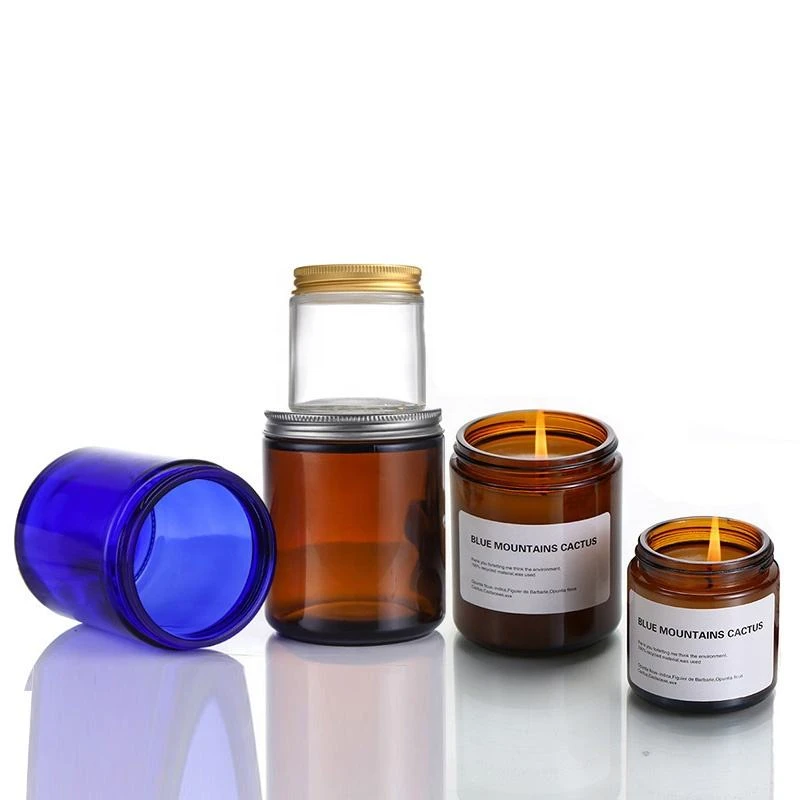
Decoration and branding flexibility
Glass pairs beautifully with:
- Paper or film labels
- Embossed logos
- Foil stamping on labels
- Wooden or metal caps
- Together, these details build a strong, upmarket brand image.
Plastic Honey Jars: Practical, Modern, Child-Friendly
Plastic (especially PET and squeezable plastics like LDPE) has its own strengths:
Shapes and functionality
Plastic jars can be molded into:
- Classic round jars
- Bear-shaped bottles
- Hexagonal or hive-inspired forms
- Flat, space-saving designs
Squeeze bottles are particularly popular for everyday use because they reduce mess and allow better control over how much honey is dispensed.
Lightweight and casual
The lightness of plastic feels more “on-the-go” and casual rather than premium. For supermarket brands, kids’ products, or foodservice packs, this can be an advantage.
In-mold labeling and shrink sleeves
Plastic bottles can use 360° shrink sleeves or in-mold labels, giving you:
- Full-body graphics
- Vivid brand colors
- This creates a strong visual impact on crowded shelves, even if it looks less “natural” than a simple glass jar.
Shelf Appeal Verdict
If your brand wants “premium, natural, artisanal, giftable” → Glass wins.
If you emphasize “convenient, family-friendly, modern, affordable” → Plastic can compete strongly, especially as a squeeze bottle.
Freshness and Product Protection: Glass vs Plastic
Honey is naturally shelf-stable, but packaging still matters for:
- Aroma retention
- Flavor changes over time
- Moisture and oxygen exposure
- Light exposure
Glass: Inert and Almost Impermeable
Glass has some key performance advantages:
Barrier to oxygen and moisture
Glass is essentially non-permeable to gases and water vapor under normal conditions. Once properly sealed with a good cap and liner, it helps keep:
- Moisture out (important in humid climates)
- Aroma and flavor compounds in
Chemical inertness
Glass doesn’t react with honey or absorb its components. It doesn’t leach chemicals. This is important for:
- Long storage periods
- High-temperature processes (like hot filling), when handled correctly
- As a result, flavor and aroma remain closer to how they were when packed.
Good performance with hot-filling
Many producers fill honey warm to reduce viscosity. Glass jars designed for hot filling can handle these temperatures without deforming, as long as proper thermal care is taken.
Plastic: Good Performance, but Some Trade-Offs
Common plastics for honey jars include PET (rigid, clear) and LDPE/PP (squeezable). They do reasonably well with honey, but have some limitations:
Permeability to oxygen and aromas
Most plastics are slightly permeable to gases over time. This doesn’t suddenly spoil honey, but:
- Aromatic compounds can gradually escape.
- External odors (from storage conditions) can slowly migrate in.
- For long-term storage (e.g., 12–24 months), glass generally maintains honey’s sensory quality better.
Interaction with light and color stability
Clear plastic, like clear glass, allows light to hit the honey. Over time, this can:
- Darken honey
- Affect flavor
- Both materials can be tinted (amber, smoky) or stored in boxes, but glass with a darker tint usually provides a more stable long-term light barrier.
Heat resistance
Plastic jars can deform under high temperatures or if the honey is filled too hot. PET has limits on filling temperatures, and squeezable plastics can warp if mishandled. Glass is more temperature-tolerant when used correctly.
Freshness Verdict
For maximum long-term flavor and aroma preservation → Glass is usually better.
For normal shelf life (e.g., within a year) in everyday retail conditions → Quality plastics can perform adequately, especially for fast-moving products.
Consumer Perception of Freshness
Freshness isn’t only chemistry; it’s also psychology.
Glass and “Perceived Freshness.”
Consumers often think:
- “Glass = no chemicals leaching.”
- “Glass = better seal.”
- “Glass = premium, authentic, minimal processing”
Even if plastic performs acceptably in lab tests, many buyers trust glass more for “natural” foods like honey, olive oil, and jams. This perception strongly influences:
- Repeat purchases
- Price tolerance
- Brand loyalty
Plastic and Convenience: A Different Kind of Freshness
On the other hand, plastic enhances the day-to-day freshness experience by:
- Reducing exposure during use (narrow outlets and no need to open a wide mouth each time)
- Allowing better control of pour, so lids and rims stay cleaner
- Being safer for children and outdoor use (less risk of shattered glass)
For families that go through a bottle quickly, the practical convenience of plastic can feel “fresher” because the product is used up before any noticeable quality loss.
Practical Considerations: Costs, Logistics, and Safety
Weight, Transport, and Breakage
Glass:
- Heavier, which increases shipping costs
- Breakable, needs more protective packaging (dividers, cushioning)
- Not ideal for e-commerce if the packaging is not robust
Plastic:
- Much lighter → lower freight cost and carbon footprint per unit shipped
- Impact-resistant → fewer breakage losses in transport and handling
- Better for big online orders and bulk foodservice packs
Production and Filling Line Considerations
Glass jars:
- Require careful handling on the line to avoid breakage
- May run at slightly lower speeds depending on setup
- Work well with traditional capping systems (metal lug caps, twist-off lids)
Plastic jars and bottles:
- Often run at higher speeds on modern filling lines
- Easily integrated with squeeze-cap and flip-top closures
- More flexible for different shapes and volume sizes
Safety for End Users
- Glass: Feels safer in terms of chemical inertness, but can shatter if dropped.
- Plastic: No breakage hazard, safer around kids and outdoors, but some consumers worry about chemicals and microplastics (even when materials are food-grade).
Sustainability and Brand Image
Glass: Recyclable and Reusable
- Fully recyclable in most regions (where glass collection is available).
- It can be reused by consumers for storage, DIY, or crafts, which adds perceived value.
- Pairs well with eco-friendly brand messages: “plastic-free,” “zero-waste,” “refillable.”
However, because of its weight, glass manufacturing and transportation require a lot of energy.
Plastic: Lightweight but Controversial
Lightweight plastic means lower transport emissions per unit, which is a real environmental benefit.
Many plastics (like PET) are technically recyclable, but:
- Recycling rates vary widely between regions.
- Consumers increasingly associate single-use plastic with pollution and environmental harm.
For brands that emphasize sustainability, using plastic requires clear communication:
- Recyclable logos
- Proper disposal instructions
Possibly complemented with refill stations or larger bulk formats
Eco-Friendly Positioning Verdict
- Eco/organic/zero-waste honey → Glass is more aligned with customer expectations.
- Mass market, cost-sensitive retail → Plastic can be acceptable but may require stronger messaging around recycling and responsible sourcing.
Summary Comparison Table
| Factor | Glass Honey Jars | Plastic Honey Jars |
| Shelf Appeal | Premium, natural, gift-worthy, heavy feel | Modern, practical, can be playful (bear shapes, etc.) |
| Transparency & Color Display | Very clear, high brilliance | Clear but often slightly duller than glass |
| Freshness & Aroma Retention | Excellent barrier, very good long-term protection | Good for normal shelf life, some permeability |
| Hot Filling Compatibility | Strong (with proper jar design & handling) | Limited by plastic type and temperature resistance |
| Consumer Trust | High for natural foods, seen as “safer/inert.” | Mixed; some worry about plastics, but accepted for daily use |
| Handling & Convenience | Heavier, less portable, no squeezing | Lightweight, squeezable, great for precise dosing |
| Breakage Risk | Can shatter if dropped | Impact-resistant, safer for kids, and for outdoor use |
| Transport & Logistics | Higher shipping cost & requires more protective packing | Lower freight cost, less damage during transit |
| Sustainability Image | Recyclable, reusable, fits eco-premium positioning | Lightweight & recyclable in theory, but perception is sensitive |
| Ideal Use Cases | Premium retail, gifts, organic/specialty honey | Mass market, squeeze bottles, foodservice, travel packs |
Which is fresher and appealing on the Shelf?
If you look at shelf appeal and freshness only, glass generally comes out ahead:
- Shelf Appeal: Glass communicates premium quality, purity, and craftsmanship. It makes honey look beautiful and supports higher price points.
- Freshness: Glass offers a superior barrier against oxygen and moisture, helping maintain aroma and flavor for longer, especially in long storage or slower-moving SKUs.
However, plastic isn’t “wrong”—it’s just optimized for different priorities:
- Everyday convenience
- Squeezable, child-friendly formats
- Lightweight shipping and lower breakage
- High-volume, cost-sensitive retail channels
How to Choose Your Honey Brand
Ask yourself:
Who is your target customer?
Health-conscious, gift buyers, gourmet shoppers → Lean toward glass.
Busy families, kids, and everyday users → Add plastic squeeze bottles to your lineup.
How long will the product sit on the shelf?
Long shelf life or slow turnover → Glass for better long-term quality.
Fast-moving product → Plastic can be sufficient and more economical.
What is your brand story?
“Artisanal,” “raw,” “farm-to-table,” “eco-friendly” → Glass supports this narrative.
“Convenient,” “family pack,” “value for money” → Plastic fits well.
Which channels are you selling in?
Specialty stores, gift shops, farmer’s markets → Glass jars, maybe with embossing or special closures.
Supermarkets, e-commerce, wholesale → A mix: glass for premium lines and plastic for everyday/value SKUs.
For pure shelf appeal and long-term freshness, glass honey jars are usually the better choice. For practicality, convenience, and cost-effective distribution, plastic honey jars still play an important role—especially in squeeze formats.
Many successful honey brands actually use both: glass jars to anchor their premium image and plastic bottles to capture everyday, on-the-go consumption.