How to Choose the Right Bottles for Olive Oil: A Complete Buyer’s Guide
Choosing bottles for olive oil is about much more than appearance. The container you choose affects freshness, shelf life, brand perception, transport cost, and bottling efficiency—and once a format is set, changing it later is costly and disruptive.
This guide walks through each key decision, from oil type and target market to material, color, shape, closures, branding, regulations, production, logistics, sustainability, and supplier cooperation, ending with a practical checklist to turn a vague idea into a clear, production-ready bottle specification.
Start With Your Olive Oil Product
Before you look at any catalog of oil bottles, you need to define what you are putting inside them and who will buy them. Packaging decisions that work for a budget cooking oil in supermarkets will not be suitable for a premium, single-estate extra virgin.
Extra Virgin vs Virgin vs Refined
Extra Virgin Olive Oil (EVOO)
Highest quality, most sensitive to oxidation and light. It needs strong protection, a premium appearance, and often smaller bottle sizes to preserve freshness after opening.
Virgin Olive Oil
Higher tolerance to handling and storage conditions than EVOO, but still benefits from protective packaging and clear quality cues on the shelf.
Refined and Blended Oils
Often targeted at price-sensitive segments and high-volume cooking. Packaging may prioritize cost, large formats, and ease of pouring over ultra-premium aesthetics.
The more delicate and expensive the oil, the more important protection, perceived quality, and controlled dispensing become in your bottle choice.
Sensory Profile and Shelf Life Expectations
An intensely aromatic, fresh-pressed EVOO that loses its character quickly needs strong protection from light and oxygen. A more neutral, everyday oil may tolerate slightly less protection if budgets are tight.
Ask yourself:
- What shelf life do you promise your customers?
- Will your oil face long export journeys, hot climates, or long storage?
- How often will your buyers open and close the bottle?
These answers influence bottle material, color, closure type, and size.
Target Market and Sales Channels
Your bottle must also fit your market positioning:
- Retail supermarkets: Familiar formats (500–750 ml), strong shelf presence, clear branding and information.
- HoReCa / foodservice: Larger formats (1–5 L) for kitchens, robust containers that handle intensive use.
- Gourmet shops and gift sets: Distinctive shapes, smaller sizes, premium decoration.
- Online sales and export: Packaging must survive long transport, rough handling, and temperature variation.
Define your primary channels and price points before you commit to any specific bottle.
Key Protection Needs of Olive Oil
Olive oil’s worst enemies are light, oxygen, and heat. Your bottle is part of your defense system.
Light Exposure
UV and visible light accelerate oxidation, turning fresh, vibrant oil into a flat or rancid product. Clear bottles look beautiful but may require sleeves, boxes, or shaded display to prevent damage. Dark glass, metal, or boxed formats offer better inherent protection.
Oxygen Ingress
Even if filling is perfect, oxygen can still enter through closures or permeable materials. For long shelf life, especially with EVOO, you want:
- Low-permeability materials (glass, metal, or high-barrier plastics).
- Closures that seal reliably and minimize air exchange.
- Headspace and fill-level control to reduce initial oxygen content.
Heat and Storage Conditions
Bottle choice cannot fully control temperature, but heavy, dark containers can buffer sudden changes and discourage storage in direct sunlight. If you export to hot regions, packaging robustness becomes even more important.
Choosing the Right Bottle Material
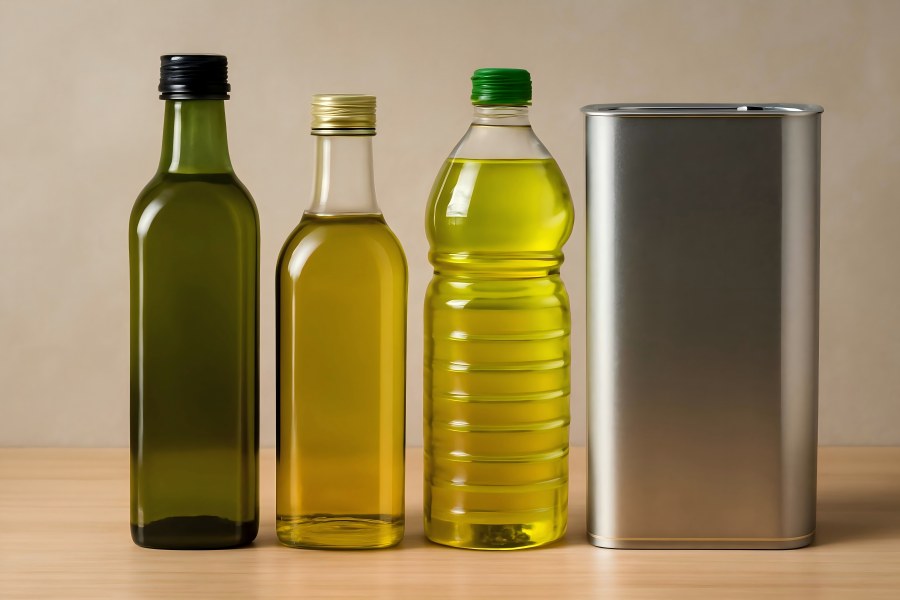
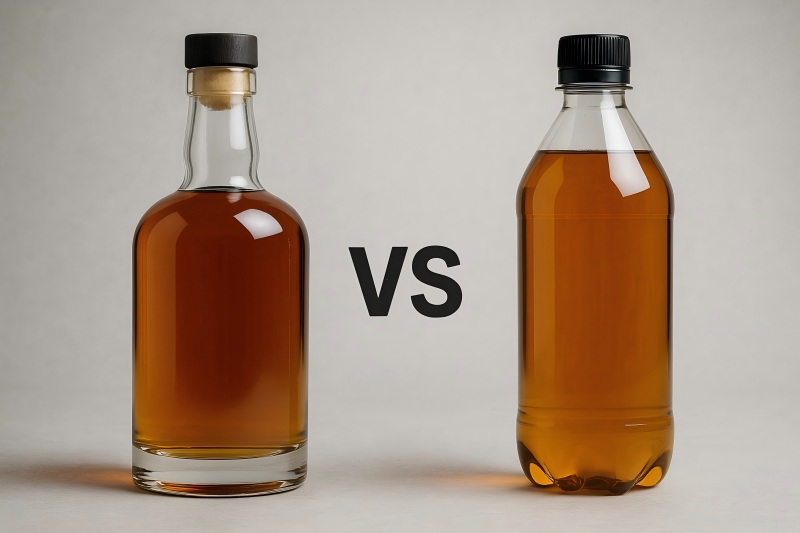
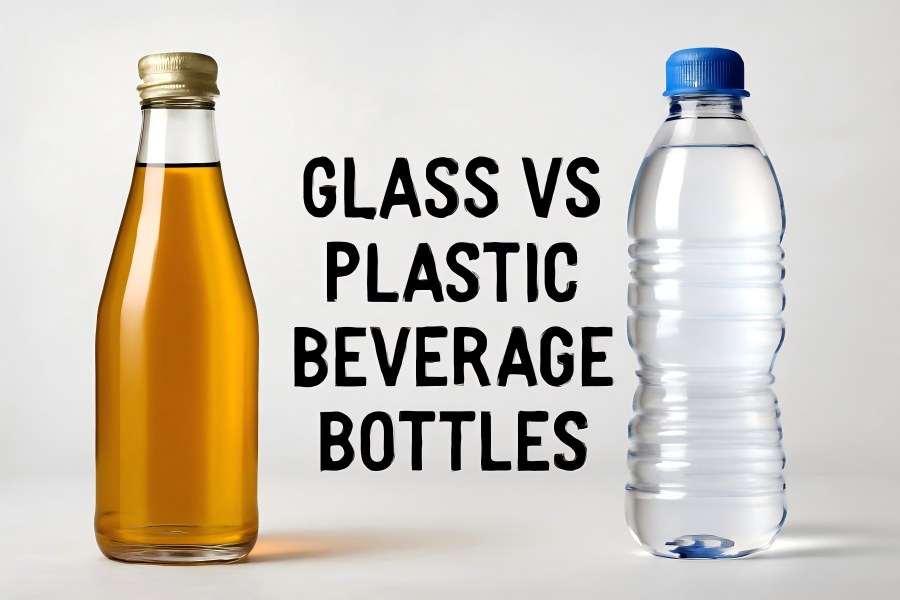
Bottle material has a huge influence on product protection, cost, weight, and perception. Most olive oil producers will consider glass, plastic (usually PET), metal cans, or newer flexible systems like bag-in-box.
Glass Bottles
Glass is the classic choice for olive oil, especially premium products.
Advantages:
- Excellent barrier to oxygen and moisture.
- Non-reactive and chemically inert.
- High perceived value and premium look.
- 100% recyclable, often seen as environmentally friendly.
Limitations:
- Heavy, increasing freight cost and carbon footprint per liter.
- Breakable, requiring careful handling and packaging.
- May need color or decoration to protect from light.
PET and Other Plastics
High-quality PET bottles are common in mass-market olive oil and blended edible oils.
Advantages:
- Lightweight and shatter-resistant.
- Lower transport cost and easier handling for consumers.
- Can be designed with ergonomic grips and squeezable features.
Limitations:
- More permeable to oxygen and light than glass or metal.
- May require special barrier layers or additives for higher protection.
- Market perception can be more “everyday” and less premium.
Metal Containers (Tinplate Cans)
Tinplate cans are widely used for larger volumes and export packs.
Advantages:
- Complete light protection.
- High robustness for transport and storage.
- Strong branding opportunities with all-around printing.
Limitations:
- Need food-grade internal coatings to avoid metal–oil interaction.
- Harder for consumers to see remaining volume.
- May be perceived as bulk rather than premium retail format.
Bag-in-Box and Pouch Systems
Bag-in-box systems use a flexible inner bag and an outer carton. They are gaining popularity for foodservice and online sales.
Advantages:
- Excellent oxygen protection when paired with the right film and valve.
- Oil is dispensed without air entering the bag, extending freshness after opening.
- Lightweight, cube-efficient, and relatively robust for shipping.
Limitations:
- Perceived as less traditional than glass.
- Inner bag and tap must be carefully specified for food contact and performance.
- Often used for larger volumes rather than small retail bottles.
Material Comparison Table
This straightforward comparison will assist you in reducing your options:
| Material | Protection Level (Light/Oxygen) | Typical Volumes | Perceived Positioning | Main Advantages | Main Limitations |
| Dark Glass | High / High | 250 ml: 1 L | Premium, gourmet | Excellent barrier, premium look | Heavy, fragile |
| Clear Glass | Low / High | 250 ml: 1 L | Premium/standard | Product visible, recyclable | Poor light protection |
| PET Plastic | Low–Medium / Medium | 1 L: 5 L | Everyday, value | Light, shatterproof, low cost | Lower barrier, less premium image |
| Metal Cans | Very High / High | 1 L: 5 L | Bulk, professional | Robust, full light protection | Requires internal coating, opaque |
| Bag-in-Box | High / High | 2 L: 10 L | Modern, practical | Great shelf life, efficient logistics | Less traditional, complex specification |
Use this table alongside your product positioning and target markets to decide which material family fits best.
Bottle Color and Light Protection
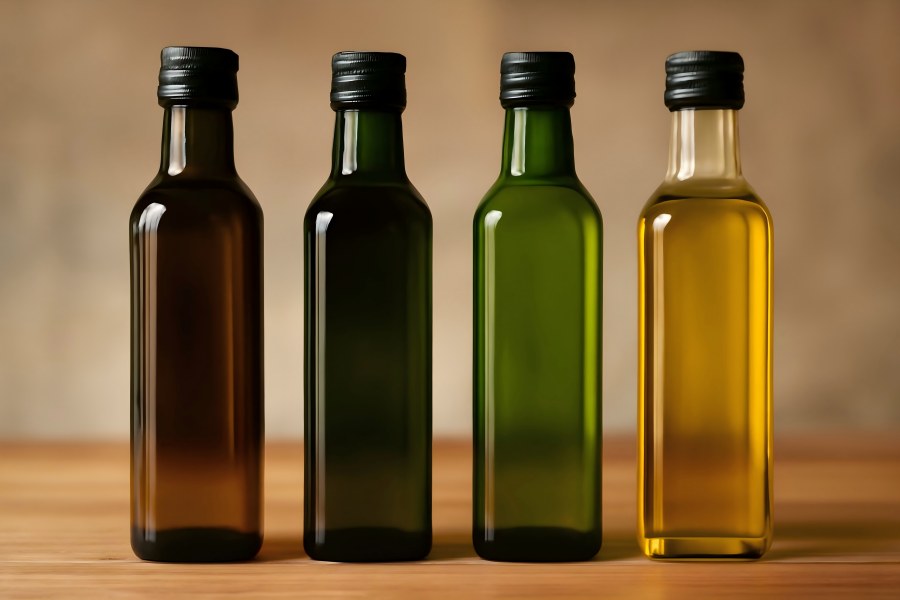
Once you know your material, color is your next shield against light.
Why Dark Glass Is Common
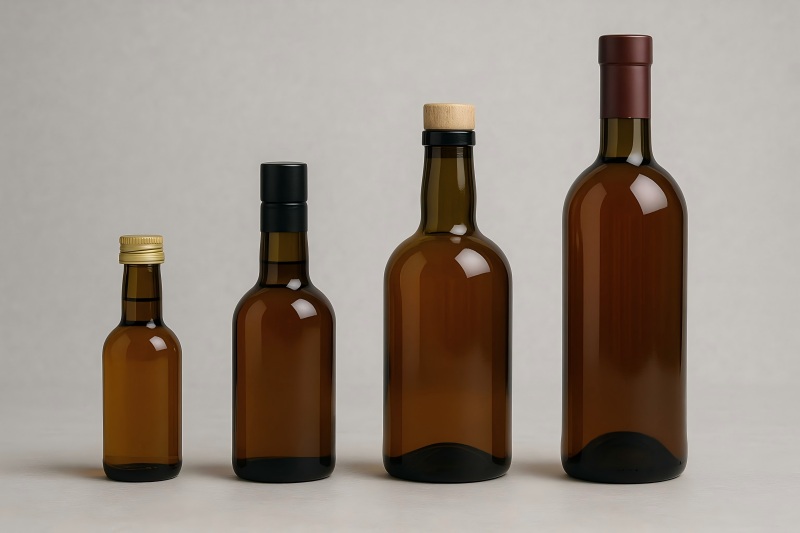
Most premium EVOO producers prefer dark green or amber glass because it significantly reduces UV and visible light entering the bottle. This helps preserve flavor, aroma, and nutritional compounds over the shelf life.
Green vs Amber vs Flint
Green Glass
Traditional for olive oil and wine. Provides moderate light protection and a familiar premium look.
Amber/Brown Glass
Offers stronger UV protection than green and is ideal for very sensitive, high-value oils or hot, bright climates.
Flint (Clear) Glass
Showcases color and clarity of oil, which can be important for marketing. However, it offers minimal light protection and should be combined with sleeves, cartons, or shaded display.
Using Sleeves, Labels, and Cartons
Even clear or light-colored bottles can be protected by:
- Full or partial shrink sleeves.
- Large wrap-around labels.
- Display cartons or boxes for retail.
If your brand identity depends on showing the oil’s color, use supplementary packaging to protect the product during storage and transport, even if the bottle on the shelf looks more exposed.
Color vs Protection Table
| Bottle Color | Light Protection Level | Typical Use Cases | Notes |
| Amber | High | Premium EVOO, hot climates, export markets | Strong UV barrier, darker appearance |
| Dark Green | Medium–High | Standard and premium EVOO | Balance of protection and traditional look |
| Light Green | Medium | Everyday olive oil blends, regional brands | Some protection but not ideal for strong light |
| Clear (Flint) | Low | Gift packs, transparent branding, short shelf life | Needs external protection for long shelf life |
Bottle Shape and Ergonomics
Shape is not only a branding element; it also affects consumer handling, filling-line stability, and packing efficiency.
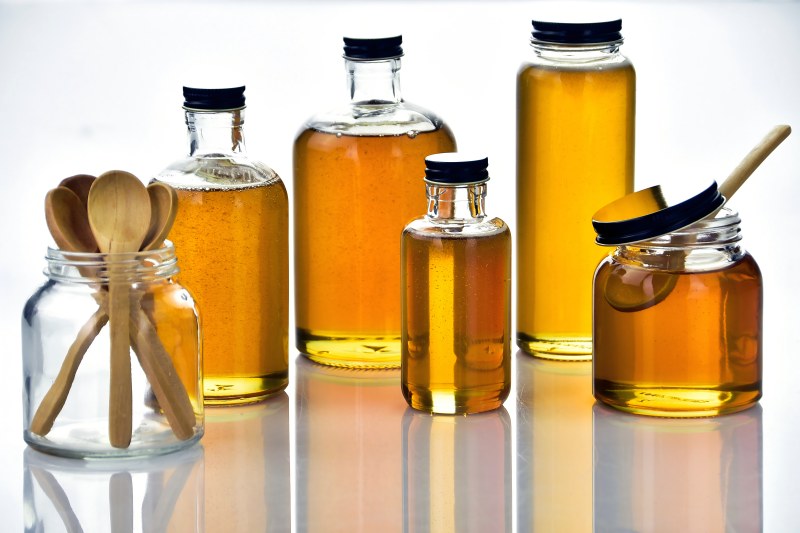
Classic Olive Oil Bottle Shapes
Common shapes include:
- Dorica: Tall, round, elegant silhouette, often used for premium oils.
- Marasca: Slim, square cross-section, space-efficient in cartons.
- Bordeaux-style or wine-style: For brands that want to echo wine aesthetics.
- Round or “bellied” bottles: Softer appearance, strong shelf presence.
Each shape communicates a slightly different message: traditional vs modern, premium vs everyday, regional vs international.
Grip, Pour Control, and Handling
Consider:
- Can consumers comfortably hold the bottle with wet or greasy hands?
- Does the neck or body provide a secure grip?
- Do slight indentations or shoulders improve control during pouring?
Especially for 750 ml and 1 L retail bottles, ergonomics can strongly influence perceived quality and repeat purchases.
Shelf Presence and Branding
Your bottle should stand out without causing problems:
- Unique shoulders, base designs, or embossings can reinforce brand identity.
- However, overly complex shapes may be difficult to run on standard filling and labeling equipment.
- Strive for a balance between distinctiveness and operational practicality.
Stability on Lines and Shelves
Tall, narrow bottles look elegant but can be more prone to tipping on fast lines or in transport. Check:
- Base design: is it flat and stable?
- Center of gravity: is the bottle too top-heavy when filled?
- Carton and tray design: do bottles support each other during transport?
Capacity and Format Selection
Bottle size affects freshness after opening, price-per-unit, and how consumers use your product.
Typical Retail Sizes
Common retail sizes include:
- 250 ml: For premium oils, gifting, and sampling.
- 500 ml: A popular compromise size for households.
- 750 ml: Frequently utilized in markets with considerable olive oil consumption.
- 1 L: For families and heavy home use, but opened bottle may last longer, so freshness must be considered.
Foodservice and Bulk Formats
Professional kitchens and food manufacturers often prefer:
- 2–3 L PET or cans: For frequent usage with manageable weight.
- 5 L cans or bag-in-box: For high-volume operations where storage space and cost are critical.
Single-Serve and Sample Bottles
Small bottles (20–100 ml) can be used for:
- Hotel amenities and minibar offerings.
- Tasting sets and gift packs.
- Promotional campaigns and subscription boxes.
Matching Bottle Size to Consumption Rate
A key rule: the bottle should be small enough that oil is consumed before quality declines significantly after opening. For very expensive EVOO, smaller bottles often make more sense.
Size vs Segment Table
| Bottle Size | Typical Channel | Consumer Type | Key Benefits |
| 20–100 ml | Gifts, tasting, hotels | Sampling, hospitality | Trial, controlled portions |
| 250 ml | Gourmet retail | Premium buyers, small households | High freshness, premium positioning |
| 500 ml | Mainstream retail | Average households | Balanced price and usage |
| 750 ml | High-consumption markets | Olive oil–centric households | Good value, fewer purchases |
| 1 L | Retail and foodservice | Families, heavy users | Economical, convenient |
| 2–5 L | Foodservice, bulk retail | Professional kitchens, large families | Low cost per liter, less packaging |
Neck Finish, Closures, and Pouring Systems
The closure is a critical part of your bottle. It protects the oil, controls pouring, and communicates quality and safety.
Common Neck Finishes
Different bottles have standardized neck finishes that determine which closures fit. Before approving a bottle design, confirm:
- Neck diameter and thread profile.
- Compatibility with your capping machines.
- Availability of tamper-evident closures with that finish.
Closure Types
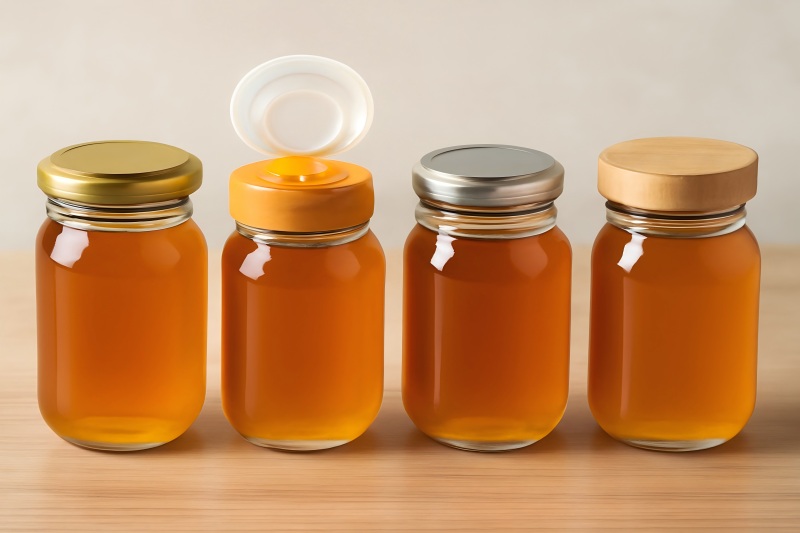
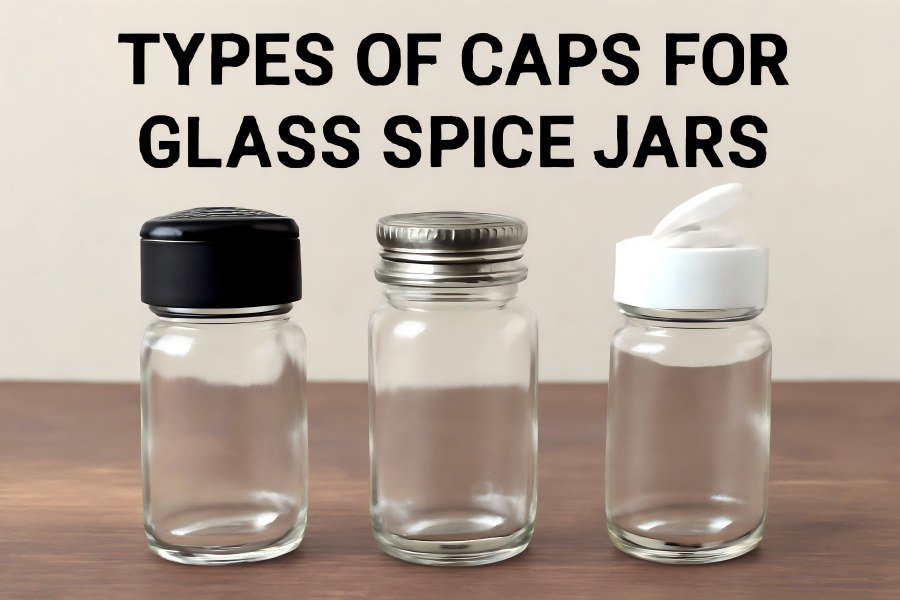
Screw Caps (ROPP or Plastic)
- ROPP (Roll-On Pilfer-Proof) aluminum caps are common in wine and olive oil.
- Plastic screw caps are lightweight and economical.
- Both can integrate tamper-evident bands and pourers.
T-Top Stoppers and Corks
- Offer a traditional, artisanal look.
- Often used on premium or gift bottles.
- Require careful control to avoid leakage and oxidation.
Non-Refillable and Anti-Fraud Closures
- Prevent refilling empty bottles with lower-quality oil.
- Especially important in markets with strict authenticity regulations or in HoReCa settings.
Built-in Pourers and Drip-Control
Olive oil is often poured directly from the bottle onto salads, bread, or pans. Built-in pourers can:
- Reduce dripping and mess.
- Control flow rate for precise dosing.
- Improve user experience and perceived quality.
Many producers combine a screw cap with an integrated pourer that stays in the neck.
Tamper-Evident Features
Tamper-evident designs help ensure safety and build consumer trust:
- Breakable bands or rings on caps.
- Heat-shrink capsules around neck and closure.
- Foil or induction seals on the bottle mouth.
Your closure choice must align with local regulations on tamper evidence and with your brand’s promise of authenticity.
Branding, Decoration, and Labeling
Your bottle is a mini billboard for your brand. Decoration should support your story and meet regulatory needs.
Aligning Design With Brand Story
Think about how your bottle expresses:
- Origin (Mediterranean, single estate, regional PDO).
- Production method (organic, cold-pressed, first harvest).
- Positioning (premium gourmet vs everyday cooking oil).
Shape, color, label design, and closure style all contribute to your brand’s narrative.
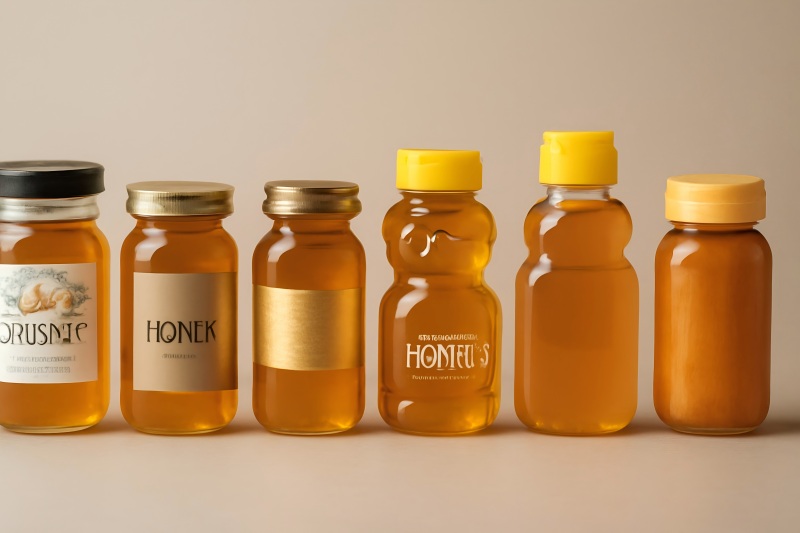
Label Types
Common label options include:
- Front and back labels: Classic configuration with clear storytelling on the front and technical info on the back.
- Wrap-around labels: Efficient for cylindrical bottles and high-speed application.
- Film labels: Durable and moisture-resistant, suitable for export and heavy handling.
Embossing, Debossing, and Direct Printing
For premium products, you might add:
- Embossed logos or text on the shoulder or base.
- Debossed brand icons or seals.
- Direct printing on the glass instead of paper labels.
These methods can make your bottle easily distinctive, but they also raise the cost of production and tooling.
Space for Information
You must reserve enough area for:
- Product name and grade.
- Net volume.
- Origin country.
- Batch code and the best-before date.
- Nutritional information where required.
- Certifications (organic, PDO/PGI, fair trade, etc.).
Plan label dimensions and layout early so that important text remains legible and compliant with local regulations.
Regulatory and Food-Contact Compliance
Packaging must comply with food safety and labeling regulations in all markets where your oil is sold.
Food-Grade Requirements
Ensure that:
- Glass, coatings, plastics, and closures are certified for food contact.
- Any internal coatings in metal cans are suitable for oils, with tested migration limits.
- Adhesives, inks, and varnishes on labels are compliant.
Ask your bottle and closure providers for supporting documents, such as test reports and declarations of conformance.
Labeling Rules
Requirements differ between regions, but often include:
- Mandatory nutrition panels above certain bottle sizes.
- Clear indication of olive oil category (extra virgin, virgin, etc.).
- Origin statements and harvest or bottling dates where applicable.
- Allergen declarations when blends or flavorings are used.
Your bottle size and label surface must be sufficient to present this information clearly.
Traceability and Batch Coding
You may need to add:
- Laser or inkjet-printed batch codes.
- Best-before dates.
- Production plant identifiers.
Make sure the bottle surface is suitable for your chosen coding technology, and plan where the code will appear so it’s visible but not disruptive.
Production Line and Operational Considerations
The most beautiful bottle is useless if it cannot run reliably on your filling line.
Compatibility With Filling and Capping Equipment
Check with your engineering team and suppliers:
- Can the filler handle the bottle shape and height range?
- Are change parts required, and how much do they cost?
- Is the closure type compatible with existing cappers, orienters, and cap feeders?
Pre-production trials or pilot runs can prevent expensive surprises later.
Tolerances and Dimensional Accuracy
Bottles must fall within tight tolerances for:
- Height and diameter.
- Neck finish dimensions.
- Base flatness and weight.
Poorly controlled dimensions lead to mis-capping, label misalignment, and unstable bottles on conveyors.
Changeovers and SKU Complexity
Offering too many bottle formats can:
- Increase changeover times and reduce line efficiency.
- Complicate inventory management for bottles, closures, and labels.
- Confuse consumers with too many similar options.
It’s often better to choose a small, well-thought-out family of bottles that covers your main markets.
Cleaning and Handling
Decide whether:
- Bottles will be rinsed or sterilized in-house before filling.
- You need returnable bottles with washing cycles.
- Special handling equipment is required for fragile or heavy formats.
These decisions influence both capital investment and operating cost.
Logistics, Packaging, and Cost Factors
Even perfect packaging can fail if it’s too expensive to transport or prone to damage.
Weight and Cube Efficiency
Heavier bottles increase:
- Shipping cost per liter.
- Carbon footprint per unit.
- Strain on manual handling and pallet loads.
Your goal is to balance protection and aesthetics with realistic transport costs.
Secondary Packaging
Secondary packaging options include:
- Corrugated cartons with or without dividers.
- Shrink-wrapped trays for retail.
- Display-ready packaging for supermarkets.
These must protect the bottles, optimize pallet patterns, and be easy to handle in warehouses and retail outlets.
Palletization and Storage
Consider:
- How many bottles per layer and per pallet.
- Whether you use standard pallet sizes (e.g., 1200×1000 or 1200×800).
- Stacking height limits in your warehouse and along the supply chain.
Small changes in bottle diameter or height can significantly alter pallet efficiency.
Breakage and Loss
Glass and fragile closures increase risk of:
- Breakage in transit.
- Leaks that damage other products and packaging.
- Returns and claims from distributors.
Ask suppliers for data on typical breakage rates and design secondary packaging accordingly.
Logistics and Cost Table
| Factor | Impact on Cost and Performance | What to Consider |
| Bottle Weight | Freight cost, pallet load, handling | Lightweighting vs perceived quality |
| Bottle Height | Pallet layers, shelf fit | Retail shelf standards, warehouse limits |
| Shape & Diameter | Carton design, pallet pattern | Maximize bottles per pallet without compromising stability |
| Material Fragility | Breakage, returns, insurance | Protective packaging, handling procedures |
| Secondary Packaging | Labor, material, and waste | Display-readiness, recyclability, automation level |
Sustainability and Environmental Impact
Sustainability is increasingly a key buying criterion for consumers and trade customers.
Recyclability and Reuse
Glass is widely recycled and often perceived as eco-friendly, but heavy. PET can also be recycled, but rates vary by region. Metal cans are recyclable and efficient for transport. Bag-in-box reduces material per liter but raises questions about multi-material recycling.
Lightweighting and Material Reduction
You can improve sustainability without changing materials by:
- Reducing glass thickness where feasible.
- Optimizing bottle shape to maintain strength with less material.
- Choosing compact pack formats that reduce wasted space.
Use of Recycled Content
Some markets value bottles that include recycled glass (cullet) or recycled PET. Verify that using recycled content does not compromise bottle strength, color, or food-contact safety.
Communicating Sustainability
If you make real sustainability improvements, highlight them on labels, websites, and marketing materials—without overshadowing quality and authenticity messages. Buyers increasingly expect proof, such as certifications or lifecycle assessments.
Working With Bottle Suppliers
A good bottle supplier is a long-term partner, not just a vendor.
Stock Bottles vs Custom Molds
- Stock bottles offer lower cost, faster availability, and lower minimum order quantities.
- Custom molds allow unique shapes and branding, but require investment in tooling and higher volumes to be economical.
Many brands start with stock bottles and move to custom designs once volumes and brand recognition grow.
Lead Times and Forecasting
Bottle production, especially custom glass, can have long lead times. Work with your supplier to:
- Share forecasts and seasonal patterns.
- Plan safety stocks for peak seasons.
- Avoid shortages that disrupt production.
Quality Control and Support
A reliable supplier should offer:
- Certificates of analysis and dimensional reports.
- Support for line trials and technical problem-solving.
- Clear specifications for pallets, cartons, and handling.
Regular communication and occasional site visits help keep quality levels consistent.
Practical Bottle Selection Checklist
To move from theory to a real bottle choice, use a simple checklist:
Define your product and market:
- Oil type (EVOO, virgin, refined, flavored).
- Price segment and target consumers.
- Main sales channels (retail, HoReCa, online, export).
Set protection requirements:
- Required shelf life and export journey length.
- Expected storage conditions and climate.
- Sensitivity of your oil’s flavor and aroma.
Choose material and color:
- Glass, PET, metal, or bag-in-box?
- Dark, green, or clear for your brand and protection?
- Sustainability goals and recyclability.
Select shape and size:
- Classic olive oil form or distinctive design?
- Bottle capacities for each channel (250 ml, 500 ml, 1 L, 5 L, etc.).
- Handling, pouring, and shelf stability.
Specify closures and pourers:
- Screw caps, T-tops, or anti-fraud systems?
- Built-in pourers for clean dispensing?
- Tamper-evident features and capping compatibility.
Plan branding and labels:
- Space for all mandatory information.
- Front-facing brand story and design elements.
- Embossing, debossing, or direct printing if needed.
Check compliance and operations:
- Food-contact safety documentation.
- Line trials and changeover implications.
- Coding, cleaning, and quality control.
Evaluate logistics and cost:
- Pallet patterns and transport cost per liter.
- Breakage risk and secondary packaging design.
- Total cost of ownership, not just bottle price.
Align sustainability goals:
- Recyclability and recycled content.
- Lightweighting opportunities.
- Honest communication about environmental performance.
Confirm supplier partnership:
- Lead times, minimum orders, and forecasting.
- Technical support and problem-solving.
- Long-term capacity for growth and new SKUs.