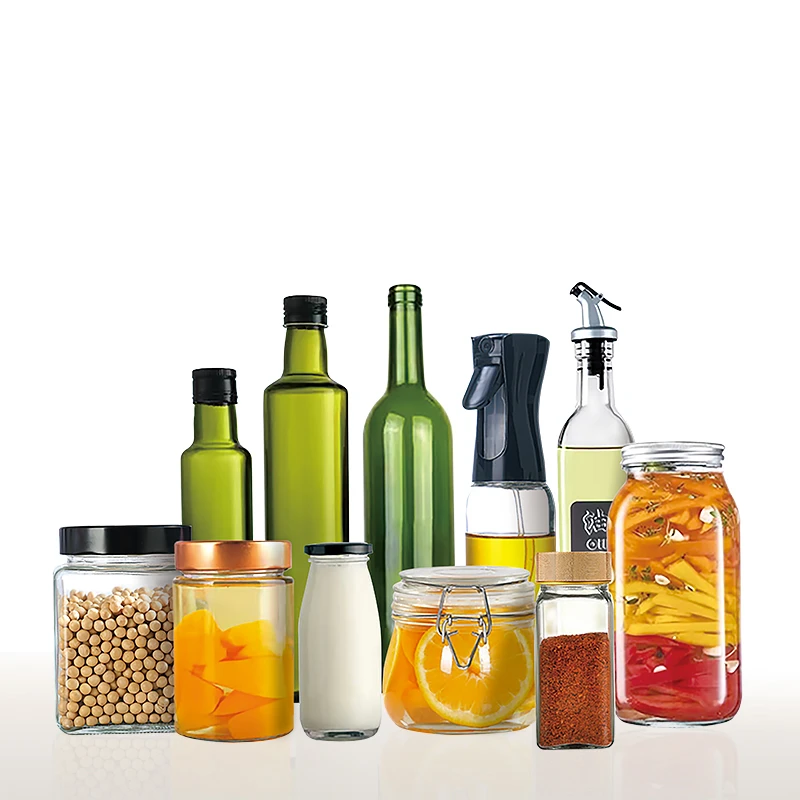
Innovations in Glass Honey Jar Closures: From Twist-Off Lids to Wooden Caps
While often overlooked, the closure of a glass honey jar is crucial. It impacts shelf life, convenience, brand perception, and sustainability. Recent innovations, such as flip-tops, tamper-evident seals, and eco-friendly wooden caps, offer both functional benefits and branding opportunities.
Why Closures Matter for Honey Packaging
Preservation, Safety & Shelf Life
Honey is hygroscopic and sensitive to contamination. The primary role of a jar closure is to create an airtight seal that limits exposure to air, moisture, and external contaminants — critical for preserving honey’s flavor, aroma, and quality over months or years.
Moreover, closures can offer tamper-evidence: built-in mechanisms (e.g., break-away rings, seal liners) show if a jar has been opened, boosting consumer trust and compliance with food safety standards.
User Experience and Practicality
For customers, the closing is frequently their first and most frequent point of contact. A closure that’s easy to open and reseal improves user experience. On the branding side, the choice of closure influences perceived value: a heavy metal lid might feel premium; a wooden cap might evoke artisanal or natural qualities.
Branding, Aesthetics & Sustainability
Beyond function, closures contribute to a brand’s story. Premium honey jars may use metal, matte, or wood-finish lids to communicate richness, modernity, or earthiness, respectively.
With rising consumer interest in environmentally friendly packaging, wooden lids — often from bamboo or sustainably sourced wood — have gained traction. These lids are biodegradable, renewable, and convey a natural, eco-conscious brand image.
Given these multiple stakes — preservation, convenience, aesthetics, sustainability — it’s no surprise the closure domain has seen meaningful innovation. Below, we explore the evolution in three phases: from traditional twist-off lids to newer closure technologies and then to eco- and design-oriented wooden caps.
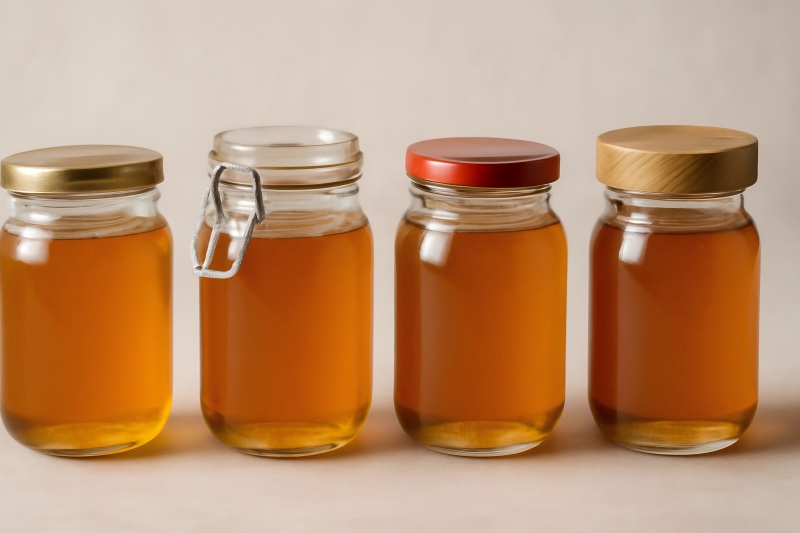
The Traditional Standard: Twist-Off / Screw Lids
For decades, the standard closure for glass honey jars has been some form of screw-on or twist-off lid.
Mechanics & History
- The principle dates back to the invention of the screw-cap closure: a lid with threads matching those on the jar’s neck. As the lid is twisted on, a gasket or liner inside compresses against the rim, creating an airtight seal.
- This system became widely popular due to its simplicity, reliability, and suitability for large-scale production. It became a go-to for preserves, jams, sauces — and naturally, for honey.
Advantages
- Airtight preservation: A properly applied twist-off lid maintains vacuum and keeps air and moisture out — essential for honey longevity.
- Convenience: It’s easy to open or reseal by hand without tools — a big plus for both retailers and end users.
- Cost-effectiveness and standardization: Twist-off lids are widely available in many sizes and finishes, easy to machine-apply in high-speed production lines, making them economical for large-scale honey producers.
Limitations
- Perceived as “ordinary”: As packaging aesthetics have become more important, plain metal screw caps may not communicate a premium or artisanal feel. Many brands now feel that twist-off lids detract from the premium or natural image they want.
- Tampering & freshness perception: Without specialized tamper-evident features, consumers may doubt whether the honey has been opened before.
- Low differentiation potential: It’s hard to distinguish a twist-off-capped jar from others on the shelf purely by its closure, limiting branding potential.
Given these limitations, innovators in packaging began experimenting with enhanced and alternative closures for honey jars.
Beyond the Lid: New Closure Innovations (Flip-Tops, Tamper Seals & Functional Caps)
In recent years, the market has seen several innovations that build on — or depart from — the classic screw lid, combining practicality with improved user experience and value perception.
Flip-Top / Snap-Open Closures
One notable example is the move by some honey producers to adopt flip-top closures instead of plain screw caps. For instance, Breitsamer Honig announced a switch from screw caps to a flip-top closure — aiming to reduce issues like the lid getting stuck, which can happen when thick honey hardens around threads.
Why flip-top works for honey jars:
- Offers single-handed access — ideal for people using honey at the table or in the kitchen, where one hand may be occupied.
- Minimizes the risk of the lid capping onto sticky threads, making usage smoother and more user-friendly.
- Can combine with a tight internal seal (gasket/liner) to preserve freshness.
- Flip-top jars reflect how packaging is not just about sealing, but about everyday usability — especially for viscous products like honey.
Tamper-Evident / Vacuum-Seal Closures (“Button” or Safety Lids)
Some closures go further than basic sealing — they communicate safety and freshness to consumers. “Button lid” jars, for example, feature a pop-up button or visual cue that indicates whether the vacuum seal is intact. Once the seal is broken, the button pops up, alerting the buyer that the jar may have been opened or exposed.
Benefits include:
- Consumer trust: A visible seal assures customers the product is fresh and unopened.
- Extended shelf life: The vacuum seal helps slow oxidation or moisture ingress, preserving honey’s quality.
- Suitability for industrial packaging: Such lids integrate well with automated sealing machines — enabling high-speed production while maintaining safety standards.
These closures show how packaging is evolving with increased regulatory demand for safety and higher consumer expectations around product quality transparency.
Aesthetics and Sensory Experience
As highlighted in recent packaging-industry commentary, the closure is often the first physical interaction consumers have with a product: the feel of the lid, the sound when opening, and the visual impression all contribute to perceived value.
In this light, lids have become a key element of brand storytelling. Premium metal lids (gold, matte black) or textured finishes suggest richness; minimalistic or wood-like lids suggest natural or artisanal quality — a meaningful differentiation for high-end honey.
Still, as consumer awareness toward sustainability grows, functional aesthetics alone are no longer enough. This brings us to one of the most significant recent innovations: wood-based closures.

The Rise of Wooden / Bamboo Caps: Sustainable, Stylish, Functional
In the last few years, wooden lids — often made from bamboo or other sustainable wood — have gained momentum as closures for glass jars, including honey jars.
Why Wooden Lids Are Attractive
- Environmental sustainability: Wood is biodegradable and renewable. Choosing wood over metal or plastic reduces reliance on non-renewable materials and decreases packaging waste.
- Natural, premium aesthetics: Wooden lids provide a warm, earthy, rustic feel — appealing especially to consumers who associate honey with nature, purity, and artisanal practices. They help position honey as a premium, craft product rather than a standard commodity.
- Moisture regulation & freshness: Wood — being slightly porous — can help moderate moisture and air exchange better than rigid plastic, potentially reducing mold or condensation risks in certain use-cases. Some wooden lids also pair with silicone or rubber liners to maintain airtight seals.
- Branding opportunity: Wooden lids are often easy to customize — through engraving, embossing, or labeling — aligning with brand narratives of authenticity, sustainability, and craft.
Given these advantages, wooden caps are increasingly favored by boutique honey producers, small-scale beekeepers, and any brand hoping to communicate naturalness, quality or sustainability.
Practical Considerations
That said, wooden lids require careful design and manufacturing:
To ensure food safety and proper sealing, wooden lids must often include an inner liner or seal — typically silicone or food-grade rubber — to prevent air ingress and moisture contamination. Many suppliers offer wooden lids with such liners.
Compatibility with jar necks and threads must be maintained; many wooden lids are designed as screw caps (twist-on), so they fit the same jar necks as metal lids.
From a production standpoint, wooden lids may cost more than basic metal or plastic caps; machining, sourcing, and sealing functions often require more attention, especially in high-volume operations.
What This Means for Honey Producers & Packaging Decision-Makers
Given your background as a manufacturer and supplier of packaging, this trend in closures presents both challenges and opportunities. Here are key implications:
1. Tailor Closure to Product Positioning
If your honey is positioned as a commodity, traditional twist-off metal caps may suffice. But if you’re marketing premium, artisanal, or “natural/organic” honey, wooden caps or flip-top closures can significantly elevate the perceived value. The closure becomes part of your brand narrative.
2. Align Closure with Functionality and Shelf Life Needs
For long-term storage, export, or ensuring freshness over time, closures that provide airtight, tamper-evident seals (e.g., twist-off with gasket, button lids, or wooden lids with liners) are essential. If you expect frequent use (kitchen, table), flip-top or easy-open caps may enhance consumer convenience.
3. Prepare for Manufacturing & Supply Chain Implications
Switching to wooden lids or specialized closures may require different supply chain management — sourcing sustainable wood, ensuring food-grade sealing liners, and verifying compatibility with your existing glass jars or bottling lines. Production equipment (fillers, cappers) may need adjustment.
4. Leverage Closures as a Branding Tool
Closures are more than functional; they are a silent brand ambassador. A well-chosen closure can convey authenticity, sustainability, premium quality — and justify a higher shelf price. Investing in closure design can pay off through brand differentiation.
What the Future May Bring: Emerging Trends & Predictions
Given current consumer trends (sustainability, product transparency, premiumization) and packaging technology developments, here are some plausible directions for the future of honey jar closures:
- Hybrid closures: Combining materials — e.g., metal rims + wooden tops + silicone liners — delivering both airtight sealing and natural aesthetics. Already, some suppliers offer such hybrid “wood-look” or bamboo-top screw caps.
- Functional closures for dispensing: For honey sold in larger jars or for convenient kitchen use, we may see more jars featuring ergonomic dispensing lids (e.g,. drip-less flip tops, internal spoons, dual-cap systems) for ease of use.
- Smart tamper-evident and freshness indicators: As supply chains and food-safety regulations evolve, closures with built-in freshness indicators or tamper-evident seals (vacuum button lids, break-away bands, tamper-proof liners) may become standard even in artisanal honey.
- Sustainable, circular packaging systems: With growing environmental pressure, more producers will adopt closures that emphasize reusability, recyclability, and biodegradable materials — wood, glass, silicone — or integrate reusable cap-and-jar combo systems.
Glass honey jar closures have evolved from simple metal screw caps to innovative designs. Flip-tops improve usability, vacuum and tamper seals enhance safety and shelf life, and wooden or bamboo caps combine sustainability with aesthetics. Choosing the right closure is as crucial as selecting the jar, aligning with product positioning and brand values to maximize both functionality and shelf appeal.