The Process of Designing a Custom Glass Diffuser Bottle: From Concept to Creation
In an era where brand identity and product experience are just as important as function, the art of designing custom glass diffuser bottles has emerged as a crucial differentiator for lifestyle and fragrance brands worldwide.
From initial concept and brand strategy to final production and delivery, creating a custom glass diffuser bottle involves a comprehensive, multi-stage process that blends creativity, engineering precision, and manufacturing mastery.
Understanding the Importance of Custom Glass Packaging
Custom glass diffuser bottles represent more than containers for fragrance oils — they are ambassadors of brand identity. In a crowded market where consumers are increasingly drawn to products that reflect personal taste and style, bespoke diffuser bottles serve as visual and tactile points of connection. They help brands tell a story, evoke emotion, and create an immersive experience long before the first scent is released into the air.
A thoughtfully designed diffuser bottle does more than look attractive — it enhances usability, reinforces quality perception, and drives brand loyalty. For this reason, brands today invest significant time and resources into the design process, partnering closely with packaging specialists to ensure their vision is communicated clearly and faithfully from concept to creation.
Stage 1: Concept Initiation
Every custom diffuser bottle begins with an idea. Whether inspired by a brand’s heritage, a seasonal collection, or consumer insights, the concept initiation stage is where creativity and strategy converge.
Brand Identity and Market Positioning
Design teams first examine the brand’s identity, values, and target audience. Questions such as “What emotions should the product evoke?”, “What differentiates this diffuser from competitors?”, and “How should the bottle reflect the brand’s story?” guide early discussions. These insights inform key design parameters, including aesthetics, functionality, and cost.
At this stage, brands may also conduct competitor analysis to identify prevailing trends and gaps in the market. Understanding what others are doing — from shape profiles and material finishes to color palettes and labeling styles — provides valuable context for positioning a new diffuser bottle design.
Creative Brainstorming and Mood Boards
With brand strategy in place, creative teams embark on brainstorming sessions to visualize potential directions. These sessions often result in mood boards that compile imagery, color swatches, typographic inspirations, texture samples, and material concepts. Mood boards act as visual references that align stakeholders on the design language before any technical work begins.
Some design teams explore overarching themes — minimalist modernity, vintage elegance, organic forms, architectural influences, or bespoke artisan touches. Each theme carries different implications for bottle shape, glass thickness, surface texture, and even cap design.
Stage 2: Design Development
After the initial concept direction is selected, the design moves into development mode, where creativity takes on tangible form.
Sketching and 2D Renderings
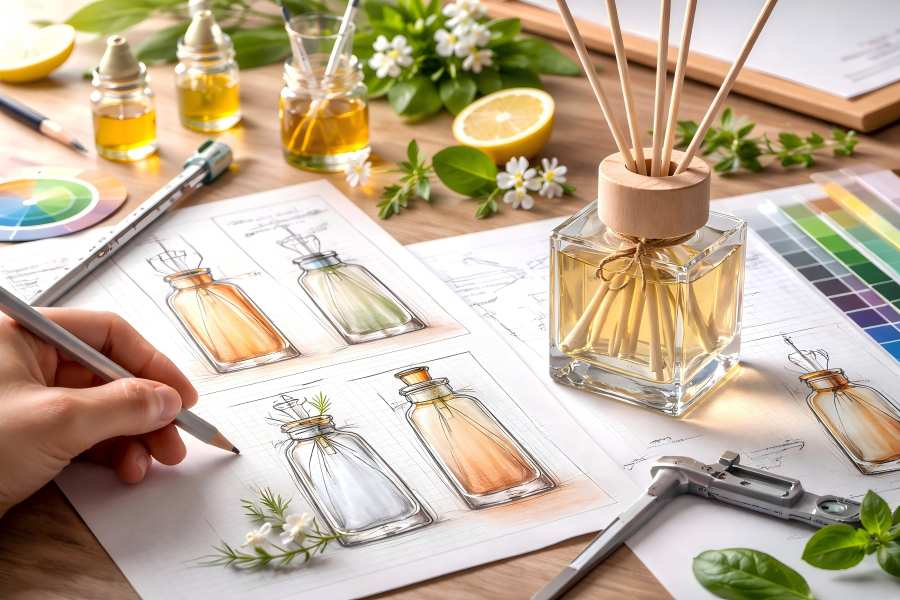
Designers produce hand-sketches and digital 2D renderings to explore bottle proportions, silhouette variations, and overall visual balance. These sketches illustrate how the bottle looks from multiple angles and how design elements — such as neck height, shoulder curvature, and base radius — interact to create a unified form.
During this phase, designers experiment with scale, symmetry, and ergonomics. They consider how the bottle will feel in the user’s hand, how the diffuser reeds will sit inside the neck, and how surface treatments — such as frosted glass, embossing, or screen printing — will impact the overall aesthetic.
Material Considerations and Feasibility
Glass, as a material, offers timeless elegance but comes with technical constraints. Designers must consider glass clarity, thickness variation, weight, and compatibility with fragrance oils. Certain shapes and intricate features may be visually stunning but could introduce manufacturing challenges or compromise structural integrity.
Collaborating with materials specialists and engineers at this stage ensures that concepts are grounded in feasibility. Suggestions may include slight modifications to sharp angles, adjustments to wall thickness, or alternative finish options that maintain aesthetics without compromising manufacturability.
3D Modeling and Virtual Simulation
After preliminary ideas are polished, computer-aided design (CAD) software is used to translate them into intricate 3D models. These virtual models allow teams to examine the design in photorealistic detail, evaluate proportions with precision, and simulate how light interacts with the glass surfaces.
3D renderings also facilitate better communication with stakeholders and production partners. Brands can virtually approve designs, explore color options, and refine details like labeling placement and cap fit before incurring tooling costs.
Stage 3: Prototyping
With a finalized 3D design, the next crucial step is prototyping — creating a physical sample that brings the bottle concept off the screen and into the real world.
Rapid Prototyping with 3D Printing
One of the first prototyping methods involves 3D printing components or scaled models of the diffuser bottle design. While 3D printing doesn’t produce a final glass product, it provides designers with a tangible representation of size, proportions, and ergonomic feel.
These initial prototypes help detect design issues that may not be evident in digital models. Designers can feel how the bottle sits in the hand, how easy it is to hold, and whether any features need refinement before glass-specific prototyping begins.
Hand-Blown and Molded Glass Samples
The next level of prototyping moves into glass production. Skilled glass artisans may hand-blow sample bottles using the finalized design as a reference, or manufacturers may create preliminary molds to produce sample pieces.
These glass prototypes give the most realistic impression of the final product. Teams can assess clarity, thickness, surface finish, and how design elements — such as embossing or integrated grips — translate in glass. Adjustments at this stage may involve small tweaks to ensure the bottle performs well in both aesthetics and function.
Stage 4: Tooling
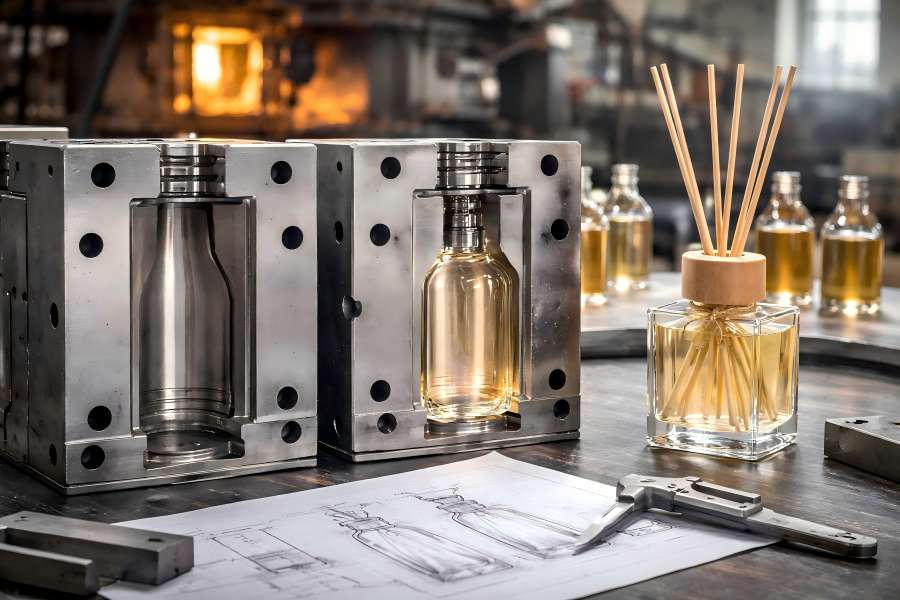
Once a prototype is approved, production readiness begins with tooling — creating the specialized equipment and molds that will manufacture the diffuser bottles at scale.
Mold Design and Engineering
Tooling for glass production requires precision engineering. Mold designers use the approved 3D model to create steel molds that will shape molten glass into the desired form. These molds are designed to endure high temperatures and frequent cycles, guaranteeing a constant level of output quality.
Tooling engineers also integrate features that facilitate efficient production, such as vents for air release, smooth internal surfaces to minimize stress points, and allowances for glass shrinkage during cooling.
Testing Molds and Trial Runs
Molds are rigorously tested prior to full-scale manufacture. Trial runs help assess how raw glass material flows into the mold, how consistent the final shapes are, and whether any imperfections arise in wall thickness or surface texture.
During trial production, teams analyze each sample for conformity to design specifications. Adjustments to molds may be made to correct issues like uneven cooling, minor distortions, or subtle dimensional variances. Once the tooling is fully optimized, molds are certified for mass production.
Stage 5: Production
With tooling ready, the production of custom glass diffuser bottles begins. This stage transforms raw materials into finished bottles through a carefully controlled manufacturing process.
Raw Material Selection and Quality Control
Glass production starts with selecting high-quality raw materials, typically including silica sand, soda ash, limestone, and other additives that determine glass clarity and strength. The composition is critical — even slight variations can affect color, transparency, and physical properties.
Before entering the furnace, raw materials are inspected for consistency and cleanliness. Quality control at this stage ensures that contaminants like iron particles — which can tint clear glass — are minimized, especially for brands seeking pristine, crystal clear bottles.
Melting and Forming the Glass
In a furnace, raw materials are heated at temperatures more than 1,500 degrees Celsius until they melt into a uniform molten glass. Skilled technicians then use automated or semi-automated forming processes to shape the glass into bottles.
The blow and blow or press and blow procedures are frequently employed in the creation of custom bottles. The blast and blow method creates the first part by dropping a gob of molten glass into a blank mold and blowing air into it.
After that, the parison is sent to a final mold where compressed air is used to create the final shape of the bottle. The press and blow method presses the glass into an initial shape before final blowing, often resulting in more uniform wall thickness.
Annealing
Following formation, bottles pass through an annealing lehr, which is a temperature-controlled chamber that cools the glass gradually. This process relieves internal stress and improves durability. Proper annealing is essential; bottles that cool too quickly are prone to cracking or shattering.
Once annealing is complete, bottles are inspected for visual defects, structural integrity, and dimensional accuracy. Automated vision systems often assist human inspectors in identifying flaws such as bubbles, warping, or surface inconsistencies.
Stage 6: Finishing
With the core bottle formed, finishing processes bring the design to life and elevate the product to premium standards.
Surface Treatments and Coloring
Depending on the intended appearance, glass diffuser bottles can have their surfaces treated in a number of ways:
Frosting: Chemical or sandblasted frosting creates a matte, diffused surface that conveys elegance and softens light reflection.
Tinting: Colored glass — whether subtle hues or bold shades — enhances visual appeal and aligns with brand color schemes.
Coating: Specialty coatings can enhance scratch resistance by adding gloss, texture, or protective layers.
Each treatment is carefully selected to complement the fragrance concept and market positioning of the product.
Decoration Techniques
Decoration adds visual interest and brand messaging. Common techniques include:
Screen Printing: Applying colored inks directly onto the glass surface for logos, patterns, and brand elements.
Hot Stamping: Transferring metallic foils that add luxury accents in gold, silver, or custom metallic tones.
Etching: Creating subtle engraved designs that offer a refined and tactile aesthetic.
Decoration is not only an aesthetic choice but also reinforces brand recognition and communicates product quality at first glance.
Closure and Accessories
The cap or closure of a diffuser bottle plays a crucial role in both function and design harmony. Options might include:
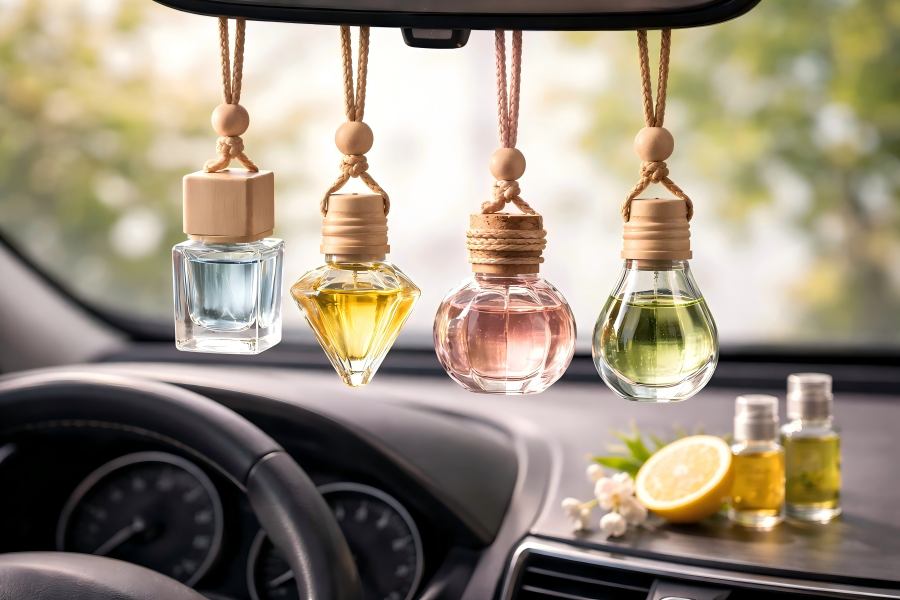
Wooden Caps: Offering a natural, premium feel that contrasts beautifully with glass.
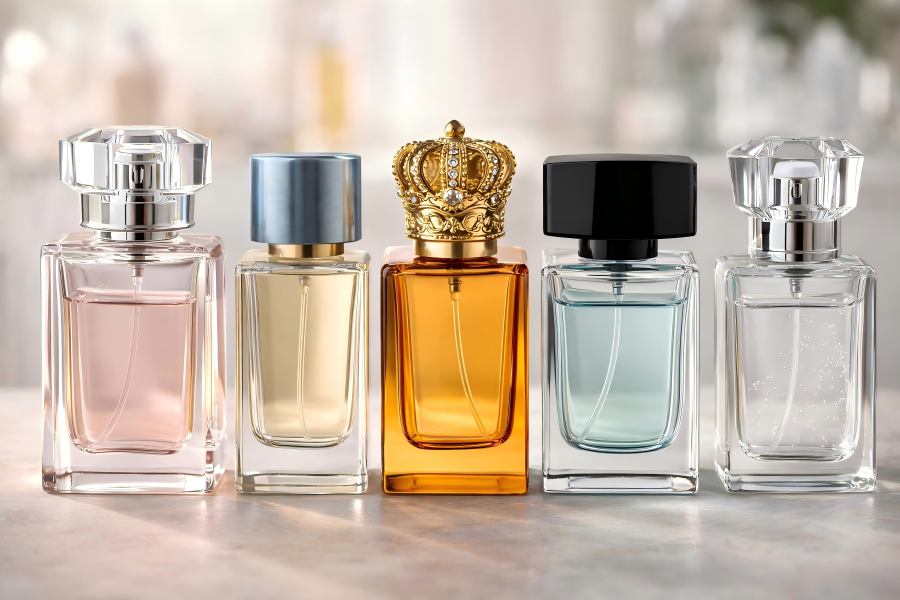
Metal Caps: Providing sleek, contemporary finishes in brushed or polished metal.
Custom Shapes: Unique designs that echo the bottle silhouette and extend the brand story.
Diffuser reeds, often made from rattan or synthetic blends, are selected for their ability to wick fragrance effectively and complement the overall design.
Stage 7: Quality Assurance
Before products reach shelves, they undergo rigorous quality assurance (QA) checks to confirm they meet all standards.
Visual and Functional Inspection
QA teams evaluate each bottle for:
Clarity and Color Consistency: Ensuring uniform appearance across batches.
Dimensional Accuracy: Verifying neck finishes fit caps and accessories perfectly.
Surface Quality: Checking for scratches, pits, or other imperfections.
Some brands also conduct performance tests, such as verifying how fragrance disperses through reeds, how securely closures fit, and how bottles perform under various temperature conditions.
Packaging Integrity Tests
Protective packaging is critical for fragile glass products. Custom packaging is tested for durability, cushioning efficiency, and transport resilience. In order to absorb shocks and stop movement during transportation, bottles are frequently packaged with inserts, sleeves, or protective covers.
Stage 8: Packaging and Logistics
Once approved, finished diffuser bottles are prepared for shipment. Packaging and logistics planning ensures products arrive safely and on schedule.
Custom Outer Packaging
Many brands opt for custom outer packaging that enhances the unboxing experience. Packaging design may include:
Branded boxes: These have logos, color schemes, and narrative components that support the brand’s identity.
Instruction Inserts: Detailing how to use and maintain diffuser bottles effectively.
Eco-Friendly Materials: Sustainable choices including minimum plastics, biodegradable wrapping, and recycled cardboard.
Inventory and Distribution Planning
Production teams coordinate with logistics partners to manage inventory and distribute products efficiently. This includes warehouse storage, order fulfillment, and international shipping arrangements if products are sold globally.
Brands increasingly leverage real-time tracking systems to monitor shipments and ensure transparency throughout the supply chain.
Stage 9: Launch and Market Reception
After months of collaboration and meticulous execution, custom glass diffuser bottles are ready for launch.
Marketing and Retail Strategy
Effective product launches combine visual assets, engaging storytelling, and targeted marketing campaigns. High-quality photography, lifestyle visuals, and compelling product descriptions help communicate the value of custom packaging to consumers.
Retail strategies may include in-store displays, online showcases, influencer partnerships, and promotional events that introduce the product to core audiences.
Consumer Feedback and Iteration
Post-launch feedback offers valuable insights for future iterations. Brands monitor consumer reviews, social media engagement, and sales trends to understand how the product resonates. Feedback may highlight opportunities for refinement in design, packaging, or performance — feeding into the next cycle of innovation.