The Science of Coffee Storage: Borosilicate Glass Jars, Degassing Valves, and Preservation Engineering
Coffee loses its flavor and freshness way faster than most folks realize. Air, light, moisture, and time all chip away at those oils and compounds that make your cup taste amazing.
The container you pick really matters for how long your beans stay fresh.
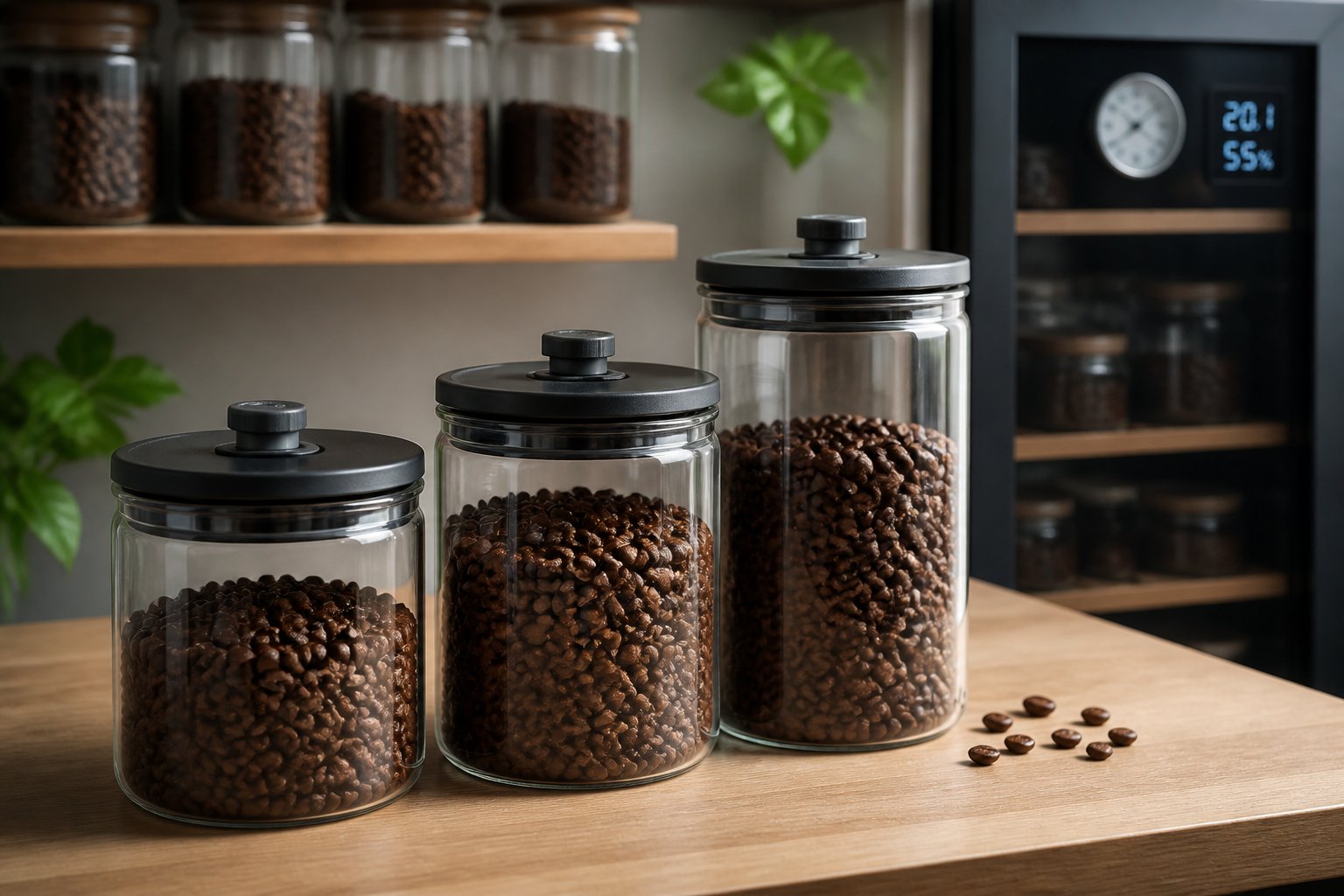
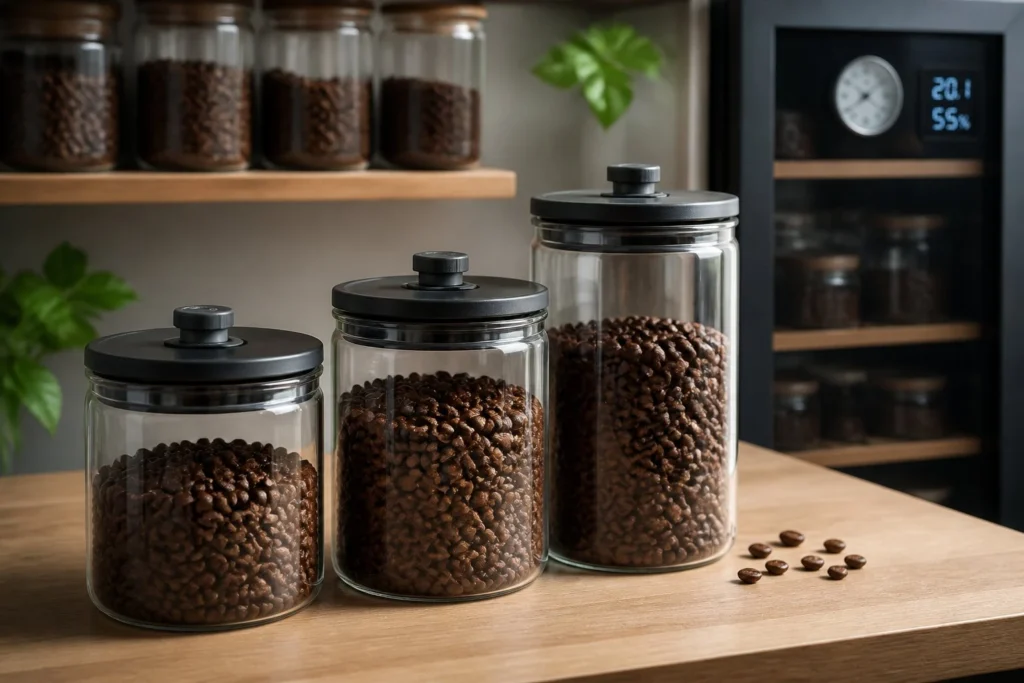
Borosilicate glass jars with degassing valves protect coffee from the four main causes of degradation better than standard bags or plastic containers. These specialized storage solutions use material science and engineering to give your beans a longer shelf life.
They combine the benefits of a non-porous, inert material with a bit of cleverness—managing the natural CO₂ that roasted beans give off.
Knowing how different storage methods actually work helps you make better choices for your coffee. The right jar or canister protects your investment and keeps every cup tasting great.
Key Takeaways
- Coffee breaks down when exposed to air, light, moisture, and heat, all of which ruin flavor compounds.
- Borosilicate glass jars with one-way valves stop oxidation while letting roasted beans naturally release CO₂.
- Good storage keeps coffee fresh much longer than standard bags or plastic bins.
The “Big Four” Coffee Degradation Factors
Four main factors work against your roasted coffee and chip away at its freshness. Knowing these helps you protect your beans and stretch out their shelf life.
Oxygen is the biggest threat to coffee freshness. As soon as air hits your beans, oxidation kicks in and starts breaking down the oils and flavor compounds.
This chemical process makes your coffee taste flat and boring. Nobody wants that.
Moisture is another big one. Coffee soaks up water from the air, and even a little bit can trigger chemical reactions that ruin flavor.
Wet beans might even get moldy, which is just gross and unsafe.
Light speeds up the breakdown of coffee oils. Sunlight and even regular kitchen light cause photodegradation, destroying the delicate flavor molecules in your beans.
Leave your coffee out in the light, and it loses complexity fast.
Heat makes every bad thing happen faster. High temps accelerate oxidation and break down those tasty oils in no time.
| Factor | Effect on Coffee | Result |
|---|---|---|
| Oxygen | Oxidation of oils | Flat, stale taste |
| Moisture | Chemical breakdown | Loss of flavor, mold risk |
| Light | Photodegradation | Destroyed flavor compounds |
| Heat | Faster reactions | Rapid quality loss |
All four of these factors can work together and ruin your coffee. Good storage is all about keeping your beans away from air, light, moisture, and heat.
Why Traditional Bags or Plastic Containers Fall Short
Most coffee comes in packaging that just isn’t built for long-term freshness. Standard bags and plastic containers let oxygen sneak in, which quickly damages your beans.
Oxygen transmission rate tells you how much air gets through the packaging. Regular plastics have high rates, so they don’t really protect your coffee.
Your beans need high-barrier materials to stay fresh, but most packaging just doesn’t cut it.
Even coffee bags with resealable zippers still let air seep through the bag walls. The zipper keeps it closed, but oxygen can still sneak in.
Some companies use metalized film or modified atmosphere packaging to help, but even these have limits. Once you open the bag, that protective atmosphere is gone.
Coffee packaging materials should block oxygen, light, and moisture all at once. Most standard bags or containers fail at one or more of these jobs.
Plastic containers let in light, which breaks down coffee oils. Paper bags breathe too much, so your beans get exposed to air and humidity.
The packaging your coffee arrives in is fine for shipping and short-term storage. But it’s not meant for the weeks or months you might keep beans at home.
Article Roadmap: From Material Science to Practical Storage
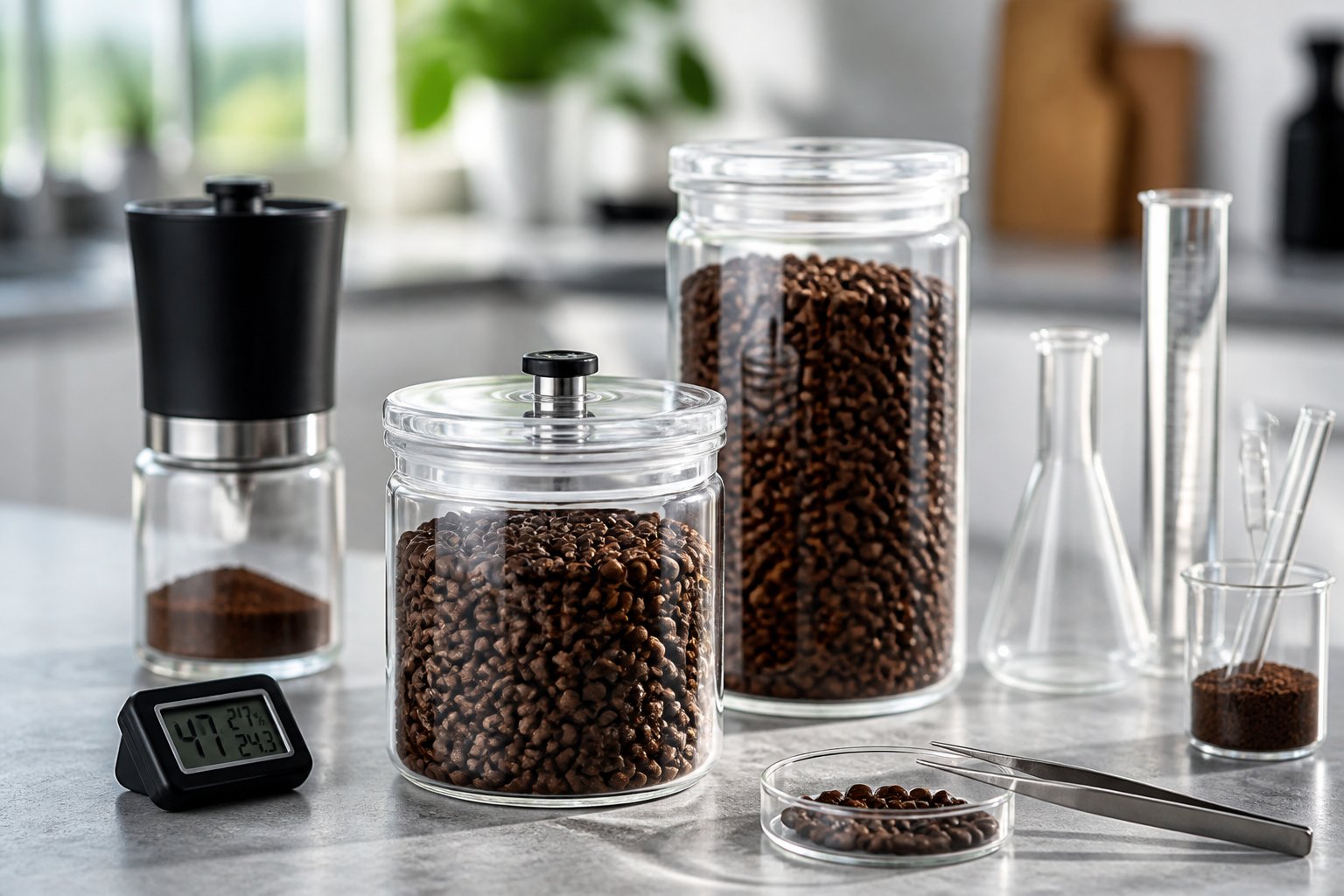
This article breaks down coffee storage into clear, bite-sized parts. You’ll see how science connects to the storage jars you use every day.
What You’ll Discover
The article covers three main areas that all work together to keep your coffee fresh:
- Material science basics – Why borosilicate glass is different from regular glass, and why that matters for your coffee.
- Gas release mechanics – What happens to beans after roasting, and how degassing valves come into play.
- Storage engineering – How to mix the right materials and features for the best freshness.
The Path Through This Article
You’ll start with the chemistry and physics behind coffee going stale. Light, oxygen, moisture, and heat all attack coffee in their own special ways.
Next, you’ll see why borosilicate glass makes such a good storage material. Its thermal stability and non-reactive nature protect beans better than most alternatives.
The article then looks at degassing valves and their role in coffee preservation. You’ll get a sense of when you need them and when you can skip them.
Finally, you’ll get some real-world advice on picking and using storage containers. This part connects all the science to your daily coffee habit.
Material Science: Why Glass Is the Ideal Vessel for Coffee Beans
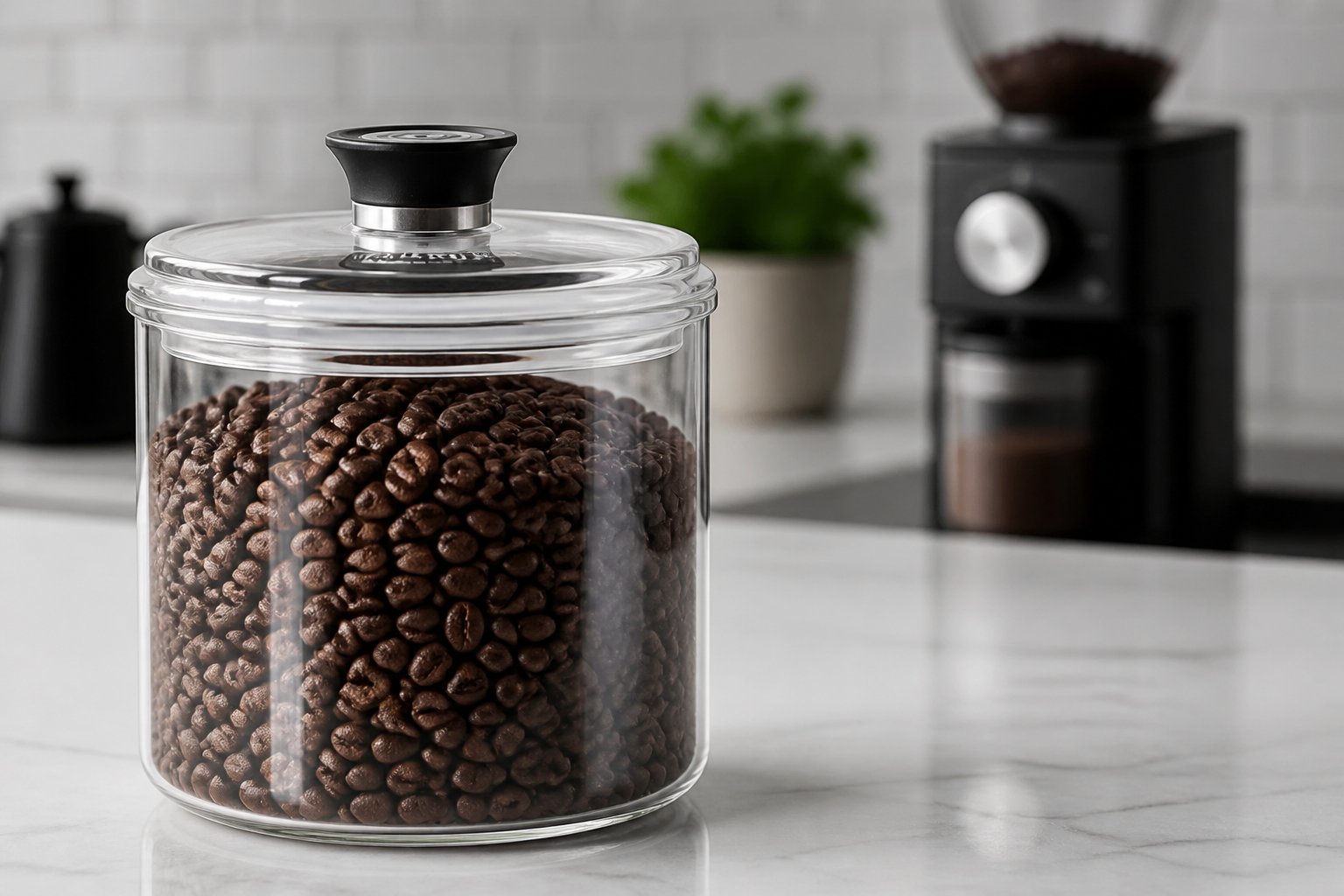
Glass containers give coffee beans better protection because they don’t transfer odors, resist chemical reactions, and keep a tight seal way better than plastic or metal. The type of glass and the seal you pick will decide how long your coffee stays fresh.
Borosilicate vs. Soda-Lime Glass
Borosilicate glass uses silica and boron trioxide, so it’s really tough against temperature changes. You can move a borosilicate jar from your freezer to the counter without worrying about cracks.
This glass also expands less with heat, so it’s less likely to break. Soda-lime glass is what you find in most households—it’s cheaper, but not as strong under temperature swings.
If you pour hot coffee near a soda-lime jar, it might crack from the sudden heat. For coffee storage, borosilicate glass just lasts longer and handles daily use better.
It keeps its seal over time because it doesn’t warp or weaken when things heat up.
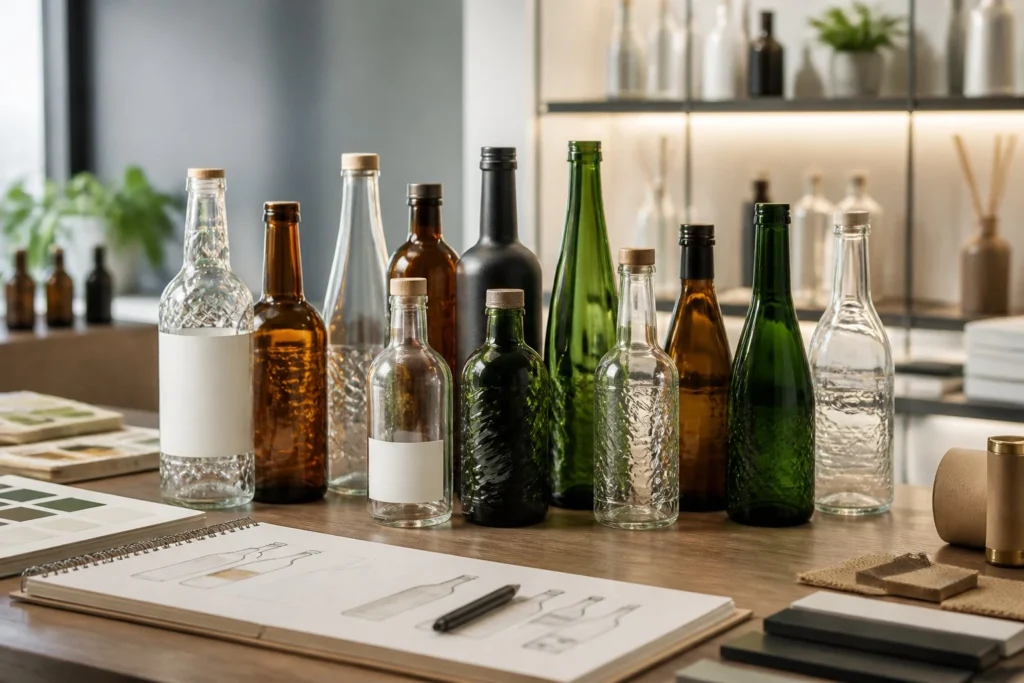
Clear Glass vs. Amber/UV-Blocking Glass
Clear glass lets you see your beans and check their condition. But, light exposure can zap the oils and make beans stale faster.
UV rays break down the organic compounds that give coffee its flavor. Amber or UV-blocking glass filters out those harmful wavelengths.
Darker jars block almost all UV rays but still let you peek inside. The amber color comes from minerals added during manufacturing.
If you stash your coffee in a dark cupboard, clear glass is fine. But if your jars sit in the open or near a window, UV-blocking glass keeps your beans fresher for weeks longer.
Airtight Integrity & Gasket Materials
A good seal keeps oxygen away from your beans. Glass jars with clamp-down lids or threaded caps create this airtight barrier.
The seal depends on the gasket between the lid and the jar. Silicone gaskets last longer than rubber and don’t pick up coffee oils or odors.
They stay flexible for years and keep sealing well. Rubber gaskets dry out and crack after a year or so.
Check your gasket every few months—press on it. If it feels hard or you see cracks, swap it out right away. A bad gasket lets air in, and that’ll ruin your coffee’s flavor fast.
Degassing & Freshness Technology: Understanding One-Way CO₂ Valves
Fresh roasted coffee gives off carbon dioxide for days, and one-way degassing valves solve the issue of pressure building up while keeping oxygen out.
The Chemistry of the Degassing Phase
When you roast beans, heat triggers reactions that load them up with carbon dioxide. This CO₂ keeps escaping for 7 to 14 days after roasting.
Peak degassing happens in the first 24 to 48 hours. Beans release the most gas early, but the process drags on for weeks.
If the gas can’t escape, pressure builds up inside a sealed jar. That can make the lid pop off—or worse, the jar could break.
Even if the jar survives, too much internal pressure can mess up the beans. A one-way degassing valve lets CO₂ out but blocks oxygen from getting in.
The valve uses a tiny silicone disc or rubber membrane that opens only when pressure inside the jar gets higher than outside. When CO₂ pushes outward, the valve opens for a second and lets the gas out. When outside air tries to get in, the valve stays sealed.
Degassing Glass Jars vs. Standard Sealed Glass Jars
Standard sealed glass jars trap all gases inside. If you store fresh roasted coffee in these jars, you’ll notice the package swelling within hours.
The lid can bulge or even pop off the container. That’s not great for your kitchen—or your coffee.
Coffee degassing valves prevent these issues. A jar with a degassing valve keeps pressure normal and still protects your coffee from oxygen.
You get an airtight seal but avoid the risks of trapped CO₂. It’s a simple fix that makes a real difference.
Here’s what happens with each storage method:
| Storage Type | CO₂ Management | Oxygen Protection | Pressure Issues |
|---|---|---|---|
| Standard Glass Jar | Trapped inside | Good (if sealed) | Package swelling, possible rupture |
| Glass Jar with Degassing Valve | Released continuously | Excellent | No pressure buildup |
| Open Container | Released freely | None | No pressure issues, but coffee goes stale |
Coffee degassing valves cost a bit more than standard lids. Still, they help keep coffee fresh by limiting oxygen during those first couple weeks after roasting.
Glass Coffee Jar Styles and Functional Applications
Each jar style walks a line between looks and function. Some focus on moisture control, others on removing air—there’s a lot going on for such a simple object.
Minimalist Borosilicate Jars with Bamboo/Wooden Lids
These jars combine thermal-resistant borosilicate glass and lids made from bamboo or wood. The glass won’t crack from temperature swings, and the wood lid helps buffer moisture, stopping condensation inside.
Wood grain can soak up tiny humidity changes. That makes these jars decent for storing coffee for 2-4 weeks.
Most have silicone gaskets between the lid and the glass rim. The gasket blocks oxygen but still lets you open the jar easily every day.
Key specifications:
- Wall thickness: 2-3mm borosilicate glass
- Seal type: Silicone O-ring or flat gasket
- Capacity range: 250ml to 1000ml
You’ll get the best results if you keep these jars at room temperature, away from sunlight. The bamboo or wood lid needs an occasional wipe to prevent oil and fingerprints from building up.
Retro Stainless-Steel Clamp Jars (Mason Style)
Wire-bail clamp jars use a lever and rubber gasket to clamp the lid down tight. The stainless steel clamp applies even pressure, squeezing the gasket for a strong seal.
These jars keep coffee fresh for 4-6 weeks. Unlike screw lids, the clamp doesn’t wear out as quickly, so the seal holds up after lots of use.
The glass body is usually thick—3-4mm—which helps block light. Clear glass needs to be kept somewhere dark, but amber jars filter out some UV light.
You can fit degassing valves in the lids, which is handy for freshly roasted beans. The valve lets CO₂ out without letting oxygen in during that first week.
Vacuum-Pump Glass Canisters
These canisters come with a pump—either built-in or separate—that removes air from the jar. You work the pump by hand or with a button to lower the pressure by 60-80% and cut down on oxygen inside.
The vacuum seal keeps coffee fresh for 6-8 weeks by slowing oxidation. Some lids have pressure indicators so you know when to re-pump.
Vacuum strength comparison:
| Pump Type | Pressure Reduction | Re-pump Frequency |
|---|---|---|
| Manual hand pump | 60-70% | Every 5-7 days |
| Electric pump | 75-85% | Every 10-14 days |
These containers use reinforced borosilicate glass built for negative pressure. Don’t try this with regular glass—it might crack under vacuum, so construction really matters here.
Practical Storage Guide and Common Misconceptions
Whole beans last a lot longer than ground coffee. Freezing coffee in glass jars? That takes some care, or you risk moisture damage and cracked jars.
Shelf-Life Comparison: Whole Beans vs. Ground Coffee
Whole beans stay fresh for 2-4 weeks after roasting if you store them right at room temperature. Ground coffee loses its punch much faster—its flavor window drops to just 1-2 weeks.
Grinding exposes tons of surface area to oxygen. That speeds up oxidation by up to 5 times compared to whole beans.
For the best flavor, buy whole beans and grind only what you need. If you have to buy ground coffee, go for smaller bags and use them up within a week.
Key Storage Times:
- Whole beans (sealed container): 2-4 weeks peak freshness
- Ground coffee (sealed container): 1-2 weeks peak freshness
- Whole beans (opened bag): 1-2 weeks
- Ground coffee (opened bag): 3-5 days
Can Glass Jars Be Frozen (Freezing Coffee)?
You can freeze coffee in borosilicate glass jars, but regular glass might crack from thermal shock. Borosilicate glass is just tougher when it comes to temperature swings.
Let your coffee cool to room temperature first if it’s freshly roasted. Divide beans into small batches you’ll use in a week or so, since thawing and refreezing brings in moisture and hurts quality.
Leave about an inch of space at the top of the jar for expansion. Seal it tight, and let the jar warm up to room temperature before opening—that way, condensation doesn’t form on the beans.
Frozen whole beans can stay fresh for 2-3 months without much flavor loss. It’s a good trick for long-term storage, but for everyday use, a sealed jar at room temp is just easier.
Sustainability & Brand Value (B2B & Retail Strategy)
Coffee roasters have to balance reducing waste and keeping their coffee top-notch. Packaging decisions shape both your eco footprint and how customers see your brand.
Sustainability and Zero-Waste Packaging
Borosilicate glass jars give you a reusable option that ditches single-use waste. You can refill these hundreds of times—they don’t wear out quickly, so your packaging footprint shrinks.
More specialty coffee roasters are switching to glass storage for sustainability. These jars work well for refill programs where customers bring back empties for a discount or swap. That creates a closed-loop system and cuts down on new packaging.
Material comparison for sustainability:
| Material | Reuse Cycles | Recyclability | Carbon Footprint |
|---|---|---|---|
| Borosilicate Glass | 500+ | 100% | Low (long-term) |
| Bio-based Plastics | 1-5 | Limited | Medium |
| Traditional Plastic | 1-3 | 30-50% | High |
Glass is the responsible choice without sacrificing storage quality. Unlike bio-based plastics, which still break down and shed particles, glass stays inert. Customers notice this sustainability right away—it’s visible in the packaging.
Visual Merchandising & Shelf Appeal
Clear glass jars let customers see the beans, boosting shelf appeal. You can show off bean quality, roast level, and freshness with nothing hidden.
The material itself gives off a premium vibe—no need for fancy graphics. Borosilicate glass signals quality and eco-friendliness to your market. Adding features like metal lids with degassing valves is a nice touch for function and looks.
Key visual advantages:
- Product visibility: Customers can check freshness before buying
- Brand differentiation: Glass pops out next to flexible packaging
- Clean aesthetic: Minimal labels keep the focus on the coffee
Specialty roasters use these jars to create a consistent brand look. The uniform shapes line up on shelves, but the beans inside keep things interesting.
Conclusion: Choosing the Right Storage Solution for Your Coffee
Your coffee storage really depends on how you buy and drink your beans. Fresh roasted coffee gives off carbon dioxide for days. If you buy direct from a roaster, you’ll want a container with a degassing valve.
Borosilicate glass jars are a solid pick for most home brewers. They don’t hang onto old smells or oils. The glass stays clear so you can check your bean stash at a glance. Plus, they’re tough against thermal shock.
Here are some features to look for in a storage jar:
- Airtight seal to block oxygen
- Opaque or dark material to keep out light
- One-way valve if you’re storing fresh roasted beans
- Right size for how fast you use your coffee
Go for smaller jars if you drink coffee slowly. Every time you open the jar, more oxygen gets in. A half-full jar means more air exposure than a full one.
Keep your coffee somewhere cool and dark. Room temperature is fine. Skip the fridge or freezer unless you’re storing beans for months.
The best storage fits your coffee habits. Weekly drinkers need different jars than monthly buyers. Think about how quickly you use your beans when picking jar sizes. Storage matters just as much as bean quality.
Frequently Asked Questions
Coffee storage is all about using the right mechanisms and materials to protect beans from going stale. Knowing how valves work, why material matters, and what environmental factors ruin coffee helps you make smarter choices.
How does a one-way degassing valve work in coffee storage containers?
A one-way degassing valve lets carbon dioxide escape but keeps oxygen out. Freshly roasted beans give off CO₂ for days through degassing.
The valve has a flexible disc or membrane. When CO₂ builds up, it pushes the disc open just enough to let gas out. Once the pressure drops, the disc closes again, sealing out air.
This setup stops the container from bursting. It also keeps oxygen from spoiling your coffee.
Why do many coffee bags include a valve and a resealable zipper?
Coffee bags use both features for different reasons. The valve handles the first few days after roasting, when beans release the most CO₂.
The resealable zipper lets you open and close the bag without ruining the seal. After you open it, the zipper keeps air out between uses.
Together, these features keep coffee fresher longer—first during degassing, then while you’re using it. The valve works nonstop, and the zipper is just practical for daily life.
Is storing coffee in a glass jar safe for preserving flavor and aroma over time?
Glass jars work well for coffee if they seal tight and block light. Clear glass lets in light, which breaks down oils and flavors.
Store glass jars in a dark spot, like a pantry or cabinet. Amber or opaque glass is better than clear for blocking light.
The jar has to seal tightly to keep oxygen out. Mason jars with rubber gaskets and clamp lids are a solid choice for this.
What are the advantages of borosilicate glass jars compared with plastic or stainless steel for coffee storage?
Borosilicate glass doesn’t absorb odors or oils from whatever you stored before. That means your coffee won’t pick up weird flavors from old contents. Plastic containers, on the other hand, can hang onto smells and sometimes leach chemicals over time.
This glass handles sudden temperature changes better than regular glass. You can take it from the fridge to a warm spot without worrying about cracks.
Borosilicate glass is non-reactive and chemically inert. It just sits there, not messing with your coffee oils or acids—so the taste stays true.
Stainless steel blocks all light, but if the metal’s cheap, it might add a metallic note to your coffee. Borosilicate glass stays neutral and lets you see how much coffee you’ve got left.
How do oxygen, light, heat, and humidity affect coffee freshness during storage?
Oxygen starts oxidation, breaking down the oils and aromas in your coffee beans. That leads to stale, flat flavors and strips away complexity.
Light, especially UV rays, speeds up chemical reactions that ruin coffee quality. It breaks down the cell structure, and beans lose flavor much faster.
Heat just makes everything worse. Once temperatures creep above 70°F, oils go rancid quicker and those delicate compounds evaporate.
Humidity brings in moisture, which can cause mold and staleness. Coffee beans soak up moisture from the air, and that damages their structure and taste.
What is the 15-15-15 rule for coffee, and how should it influence storage practices?
The 15-15-15 rule says coffee quality drops off at 15 days after opening, 15 weeks after roasting, and 15 months after production. It’s a pretty handy way to keep track of when your coffee’s at its best.
Once you open a bag, you’ve got about 15 days before the flavor starts to fade. Honestly, it’s better to buy what you’ll actually drink in that time instead of going for a huge bag just because it’s on sale.
Whole beans stay good for around 15 weeks after roasting if you store them right—airtight container, always. Ground coffee doesn’t last nearly as long since more air hits it, and that just speeds up the decline.
Try to keep coffee away from its four biggest enemies: air, light, heat, and humidity. Toss it in a sealed container, stash it somewhere dark and cool, and you’ll get way more out of every cup.