The Ultimate Glass Honey Jar Handbook: Science, Styles, and Sustainability Guide
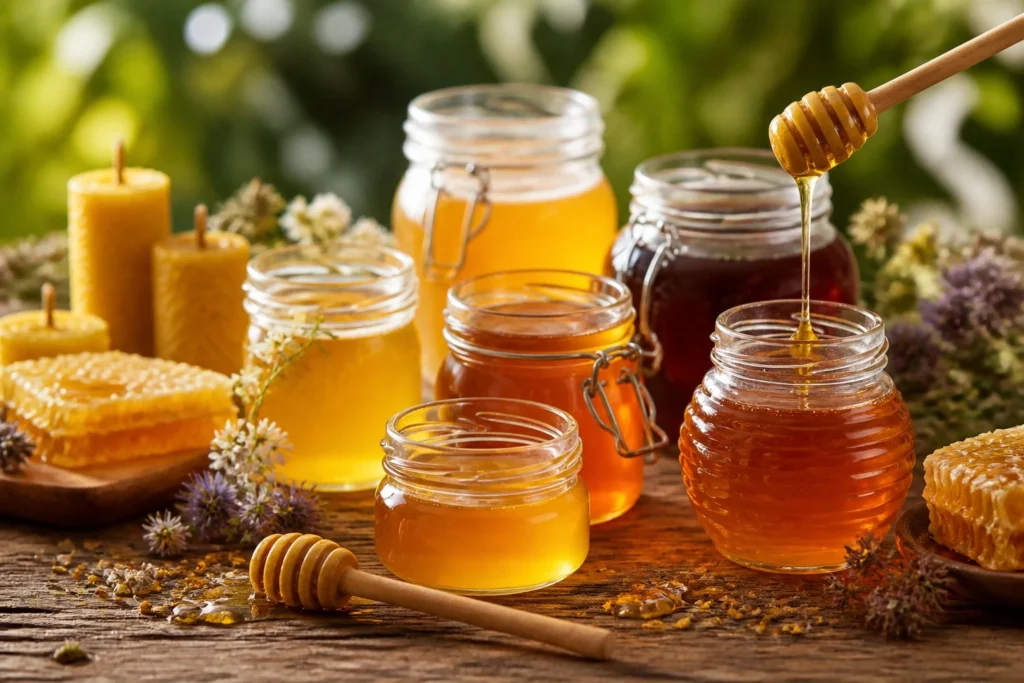
Glass honey jars do more than just hold honey. They protect its flavor, extend its shelf life, and can even boost its market value.
The right glass container keeps honey fresh by blocking moisture and preventing crystallization. It also preserves the natural enzymes and antioxidants that make honey special.
Whether you’re a beekeeper, a small business owner, or just someone who buys honey often, knowing how jars work helps you make better choices.
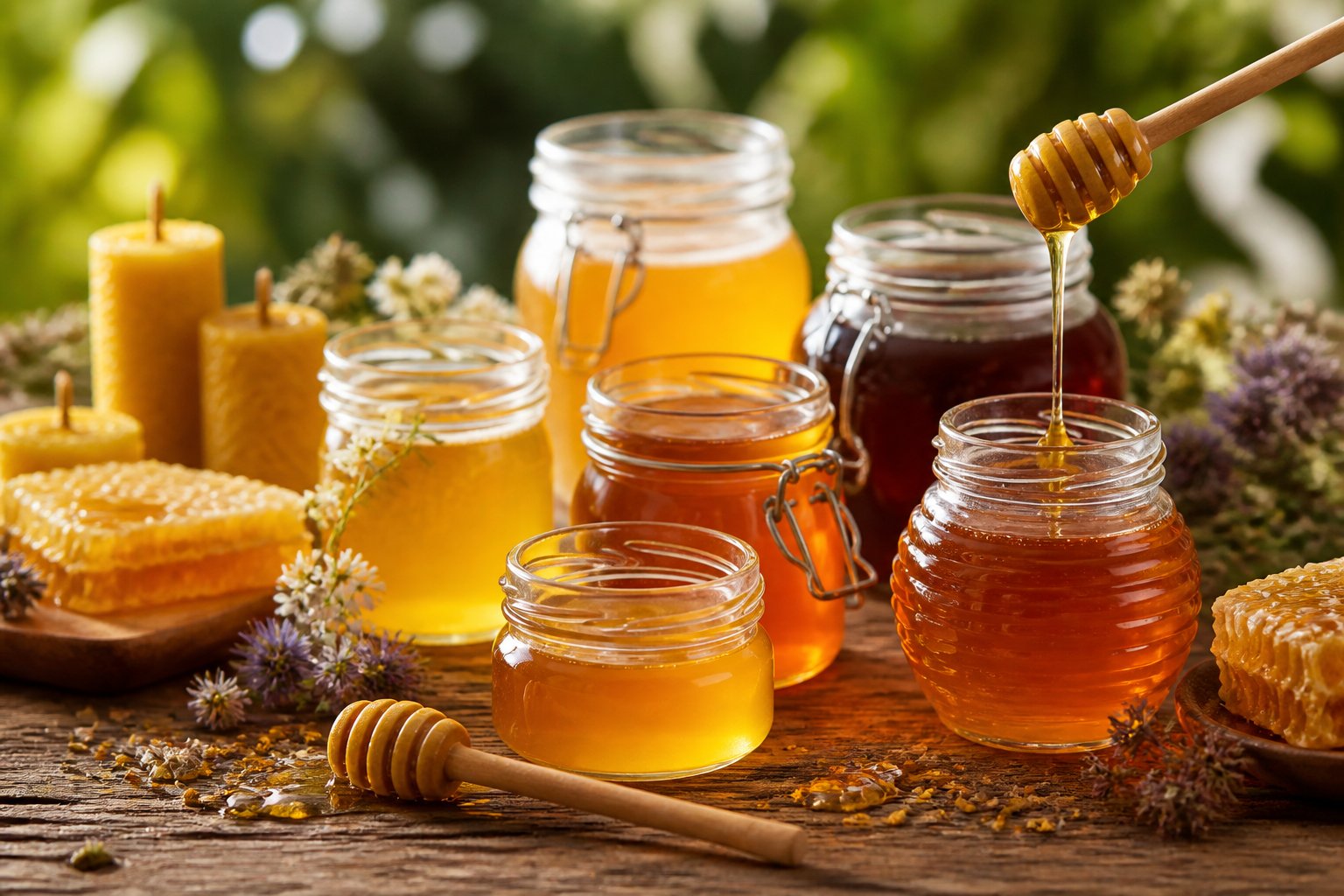
This guide covers everything you need to know about glass honey jars. You’ll get into the science behind glass, explore different jar styles, and find out how to pick containers that fit your needs.
We’ll also dig into sustainable practices and creative ways to reuse jars after the honey’s gone.
Key Takeaways
- Glass jars preserve honey better than plastic by blocking moisture and maintaining quality over time
- Different jar styles serve specific purposes from retail display to bulk storage and gifting
- Choosing the right container affects both product shelf life and how customers perceive your brand’s value
The Evolution of Honey Packaging: From Traditional Clay Pots to Modern Glass Technology
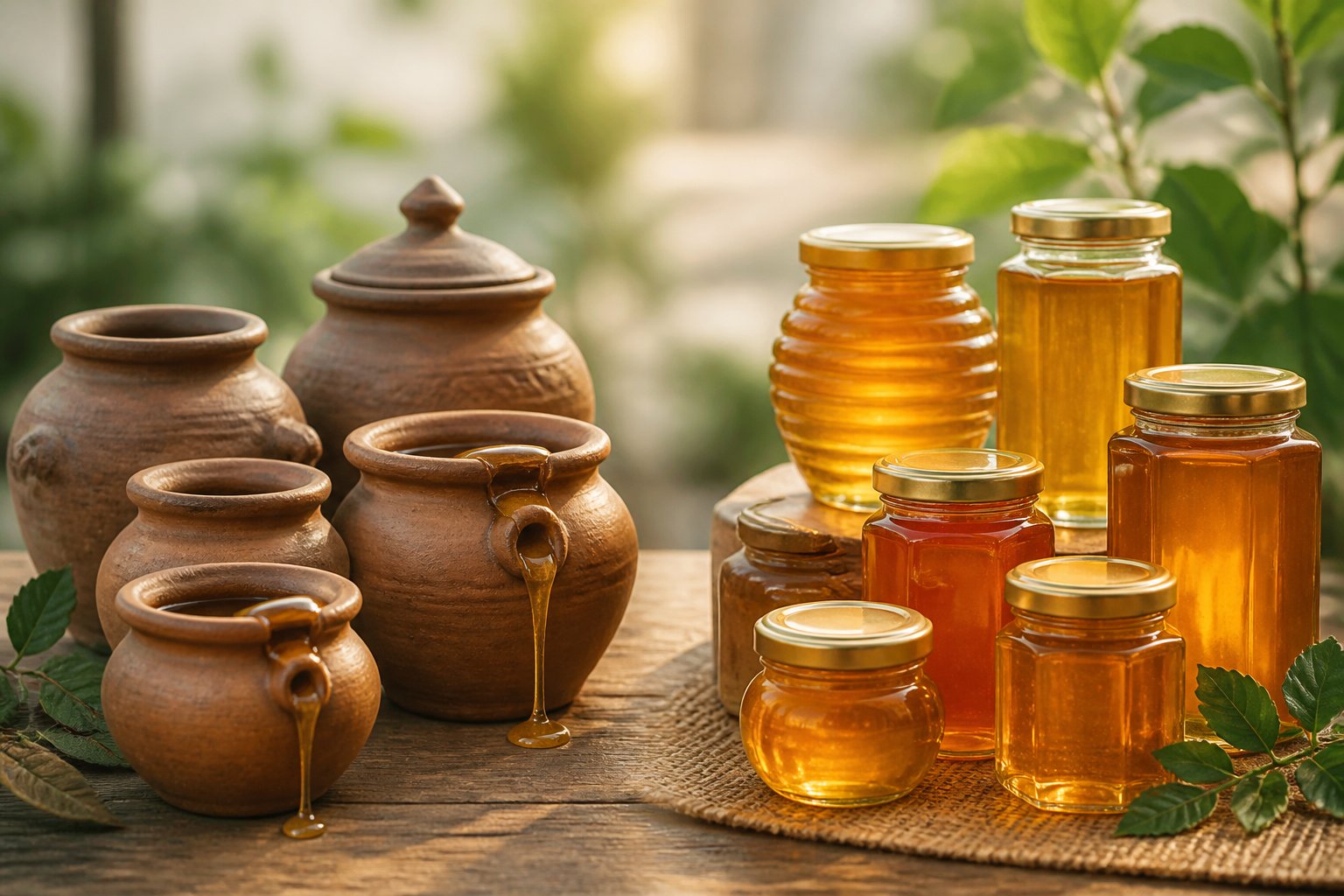
Humans have stored honey for thousands of years. The containers we use have changed a lot over time.
In ancient civilizations, people used clay pots and earthenware containers to keep honey fresh. These materials were easy to find and shape, making them practical for early beekeepers.
Clay containers worked well because they protected honey from light and kept it cool. But they were heavy and broke easily.
As societies advanced, people started experimenting with new storage methods. The move to glass packaging marked a big turning point.
Glass jars offered clear advantages over traditional materials. You could see the honey’s color and quality without opening the container.
Glass doesn’t absorb odors or flavors, so your honey always tastes pure.
Key Benefits of Glass Honey Jars:
- Transparent for easy inspection
- Non-reactive with honey’s natural acids
- Reusable and easy to clean
- Protects against moisture and contamination
Today, honey is usually presented in glass jars, though some producers still use plastic containers or ceramic bowls.
Modern beekeepers prefer glass because it keeps honey’s quality high for longer. Glass doesn’t interact with honey’s enzymes or natural properties.
While traditional beekeeping methods that use clay pots and plastic containers still exist in some regions, glass has become the standard in commercial honey production.
Why Container Selection Directly Dictates Shelf Life and Brand Premium
The container you pick for honey packaging affects how long your product stays fresh. Glass jars provide an airtight seal that keeps moisture out.
This matters because honey absorbs water from the air, which can lead to fermentation.
Key factors influenced by container choice:
- Moisture barrier – Glass blocks humidity completely
- Light protection – Dark or amber glass shields honey from UV damage
- Chemical stability – Glass doesn’t react with honey’s natural acids
- Temperature resistance – Quality glass handles heat without breaking down
Your container choice also shapes how customers see your brand. Premium glass jars signal quality and can justify higher prices.
| Container Feature | Impact on Shelf Life | Impact on Price Point |
|---|---|---|
| Standard clear glass | 12-24 months | Budget to mid-range |
| Amber/dark glass | 18-36 months | Mid to premium |
| Designer shapes | 12-24 months | Premium to luxury |
The weight and clarity of your glass jar communicate value before customers even taste the honey. Thin, lightweight containers suggest mass production.
Heavy glass with custom shapes or embossing makes your product feel artisanal. Your honey packaging protects the product and helps build your brand identity.
The right glass jar keeps honey fresh for years and helps your product stand out in specialty stores.
Cheap containers might save money at first, but they can cost you in spoilage and lost premium pricing later on.
Article Roadmap: Science, Design, Sourcing Selection, and Upcycling
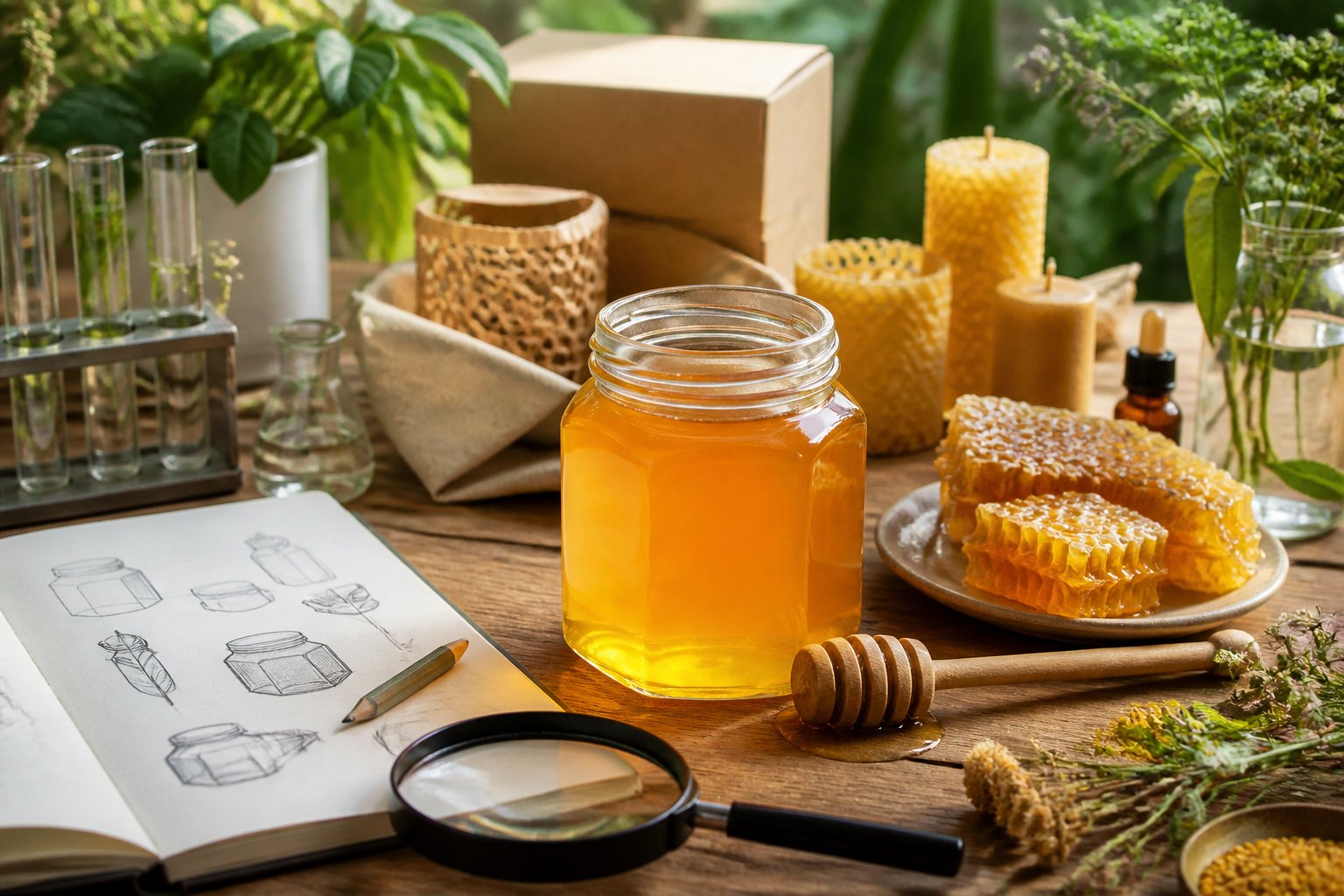
This handbook breaks down everything about glass honey jars into four main areas. Each section gives you practical info you can use right away.
The Four Core Topics
You’ll learn about the science behind why glass works so well for honey storage. This covers how glass protects honey from moisture and light.
The design section explores different jar styles and shapes. You’ll see how jar design affects both function and appearance on your shelf or table.
When it comes to sourcing, you’ll find tips on choosing quality jars. This includes what to look for in glass thickness, seal types, and lid materials.
The last topic covers upcycling your empty honey jars. Like upcycling other items, you’ll get ideas for reusing glass jars instead of tossing them.
What You’ll Gain
| Topic | Key Benefit |
|---|---|
| Science | Understand proper honey storage |
| Design | Choose the right jar style |
| Sourcing | Select quality containers |
| Upcycling | Reduce waste creatively |
You can read straight through or skip to the topics that interest you most. The info applies whether you’re a beekeeper, honey seller, or just someone who loves honey at home.
The Science of Preservation: Why Glass Is the Ultimate Guardian of Honey
Glass honey jars protect your honey in three main ways. They create an impermeable barrier, block moisture and air, and handle the heat needed to reverse crystallization without releasing anything harmful.
Chemical Inertness & Zero Contamination
Glass doesn’t react with honey’s natural acids and enzymes. Unlike plastic, glass maintains a neutral relationship with your honey.
Your honey contains organic acids with pH levels between 3.2 and 4.5. These acids can interact with some storage materials, but glass stays stable.
Preserving honey in glass containers has been done for generations because glass doesn’t transfer any flavors, odors, or compounds.
Plastic containers may release BPA, phthalates, or other chemicals that change your honey’s taste and purity. Glass jars remove this risk entirely.
The silica-based structure of glass is chemically inert, so it won’t break down or react no matter how long you store your honey.
Barrier Properties & Moisture Control
Honey is hygroscopic—it soaks up moisture from the air. When honey’s water content rises above 18.6%, fermentation can start as natural yeasts become active.
Glass creates a full barrier against moisture. Your honey stays at its original water content when you store it in a properly sealed jar.
Plastic containers are semi-permeable and let tiny amounts of moisture pass through over time. The impermeability of glass also blocks oxygen transfer.
Oxygen exposure can degrade certain enzymes and antioxidants in honey. Glass helps maintain these compounds at their best levels.
Decrystallization & Thermal Resistance
Crystallization is natural—glucose in honey forms solid crystals over time. You can reverse this by gently heating the honey to 95-104°F.
Glass honey jars handle these temperatures without changing or releasing chemicals. You can place glass containers in warm water baths again and again without harming them.
Plastic containers may warp, crack, or leach chemicals when heated. Glass also tolerates temperature swings without expanding or contracting much.
This thermal stability means your glass honey jars keep their seal through seasonal changes in your pantry or storage area.
Classic & Modern: Glass Honey Jar Styles and Applications
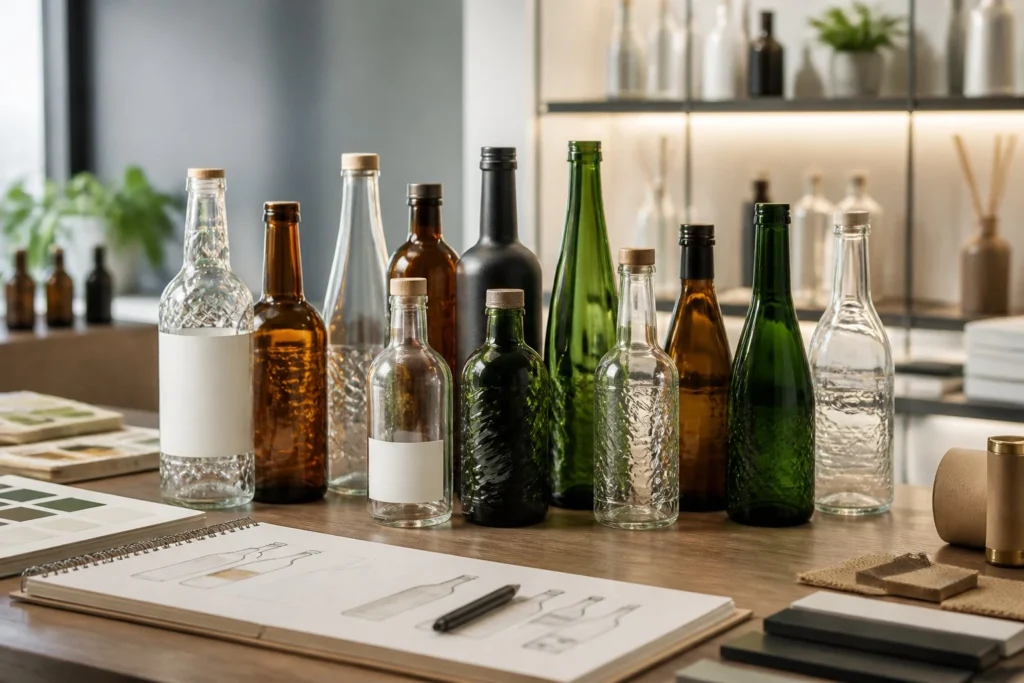
Glass honey jars come in traditional designs that have been around for decades and new shapes that focus on both looks and function. The closure systems you pick affect freshness, ease of use, and how everything looks on your shelf.
Traditional Icons
Queenline jars are probably the most recognizable honey containers in North America. These cylindrical glass jars have wide mouths and smooth sides, so you can label and stack them easily.
You’ll see queenline jars in sizes from 1 oz up to 5 lbs. The 1 lb (16 oz) jar is what most stores use for retail honey sales.
The classic bear-shaped jar is another icon, though it’s usually for novelty and not bulk storage. Hexagonal glass honey jars have a traditional vibe but look a bit fancier on the shelf.
The six-sided shape keeps them from rolling and gives a premium feel that a lot of small beekeepers like.
Traditional round jars with shoulders and necks are still popular too. They come in different heights and widths, so you can pick one that suits your honey’s thickness and your label style.
Modern & Functional Designs
Modern glass honey jars go for clean lines and a simple look. Square and rectangular jars save shelf space and have a modern style, which is great for specialty food shops.
These shapes also give you flat surfaces if you want bigger labels or direct printing.
Straight-sided jars with no shoulders have gotten more popular because they’re easier to fill and empty. You’ll find these in both round and angular styles.
Some newer jars include drip catchers or textured grips, which is just smart design.
Wide-mouth Mason-style jars are showing up more in honey packaging too. They’re versatile for both storage and serving.
Clear glass is still the go-to, but some producers are switching to tinted amber or green glass to shield honey from light.
Closure Systems & Fitment
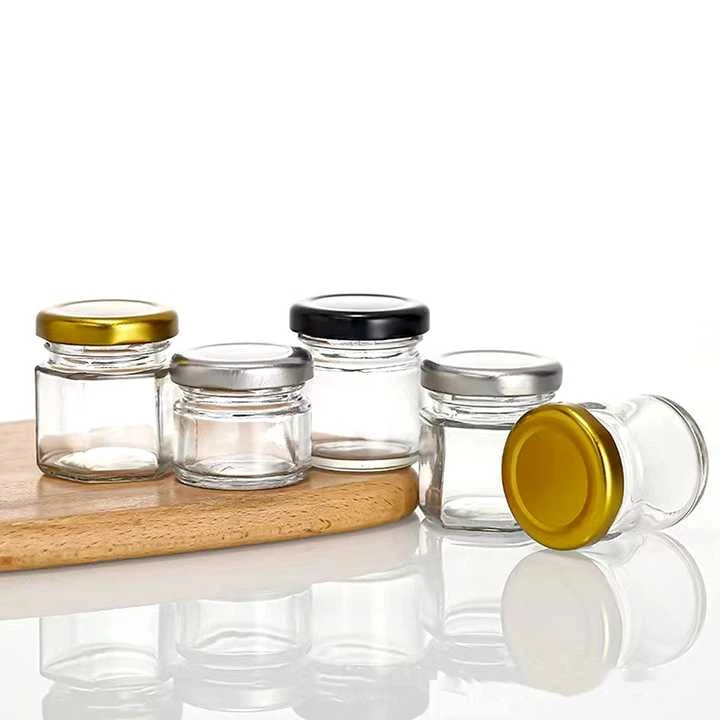
Most honey jars use metal lug caps. They seal tight and come in different colors and finishes.
You can pick from 38mm, 58mm, 63mm, or 70mm caps, depending on your jar’s mouth size.
Cork stoppers give a rustic look but don’t seal as well as metal. They’re best for decoration or short-term storage.
Flip-top wire bails are reusable and have a classic style, but they cost more upfront.
Plastic snap-on lids are cheap, but they don’t keep honey fresh as long as metal caps do.
In-Depth Comparison: Glass vs. Plastic (PET/HDPE)
Glass and plastic containers each have their own perks for honey storage. They differ in safety, environmental impact, and cost. Your best option really depends on your needs and how long you plan to store honey.
Comprehensive Evaluation Matrix
Glass honey jars keep honey safe from chemicals and flavor changes. Honey in glass keeps its taste for years since glass doesn’t react with it at all.
Plastic containers made from PET or HDPE are lighter and cheaper. They won’t break easily during shipping or handling, which is a plus.
But plastic can slowly absorb honey’s aroma, so after 12-18 months, you might notice a change in flavor.
| Factor | Glass | Plastic (PET/HDPE) |
|---|---|---|
| Chemical Safety | Zero leaching | Minimal leaching (FDA approved) |
| Flavor Preservation | Excellent long-term | Good short-term (under 18 months) |
| Weight | Heavy | Light (50-70% lighter) |
| Breakage Risk | High | Low |
| Cost | Higher upfront | Lower upfront |
| Reusability | Unlimited cycles | 3-5 cycles before degradation |
Temperature resistance is a big deal here. Glass jars can take heat up to 400°F without any trouble.
Plastic softens at 140-180°F, so it’s not great for hot filling or sterilization.
Decision Matrix: When to Choose Glass vs. Plastic
Pick glass if you want to store honey for more than two years or if recyclability matters to you. Glass is also the way to go for premium honey where looks and purity count.
Plastic works for short-term storage, commercial use, or when weight is an issue. HDPE is good for crystallized honey since you can squeeze it out, while PET is fine for liquid honey in stores where breakage could be a problem.
Budget matters too. Glass costs 2-3 times more at first but you can reuse it over and over. Plastic makes sense if you need disposable containers or want to save on shipping.
Commercial Sourcing & Branding Strategies (B2B & Retail Guide)
Getting the right honey jars means knowing the weight specs, following labeling rules, and packing shipments to avoid breakage.
The Capacity & Weight Conversion Pitfall
Glass honey jars use different measurement systems, which can be confusing. A 12 oz jar refers to fluid ounces (volume), not weight.
Since honey is thicker than water, a 12 fl oz jar holds about 18 oz of honey by weight.
Suppliers often list jars by brimful capacity, not what you can actually fill. You need to leave about 1/4 inch of headspace below the rim.
A jar listed as 16 oz might really hold only 14-15 oz of honey once it’s filled properly.
Common jar sizes and actual honey weights:
| Listed Jar Size | Actual Honey Weight |
|---|---|
| 8 fl oz | 11-12 oz |
| 12 fl oz | 17-18 oz |
| 16 fl oz | 23-24 oz |
Always ask for sample jars and fill them with honey before making a big order. That way, you avoid label mistakes or complaints about jars being underfilled.
Label Design & Transparency Balance
Your label has to include the net weight, ingredients, producer name, and address. The FDA says you need net weight in both metric and imperial units, and it should go on the main display panel.
Custom jars with embossed designs can make it tricky for labels to stick. Always test your label on the actual jar you’ll use.
Paper labels can bubble if jars are refrigerated, which is a pain.
Shoppers want to see the honey’s color and clarity, so don’t cover more than 60% of the jar’s front with your label. Put nutrition facts, batch numbers, and your brand story on the back.
Use water-resistant label materials if your jars might get wet at the farmers market or in the fridge. Vinyl and BOPP labels hold up better than regular paper.
Logistics & Damage Prevention Packaging
Glass breakage during shipping can cost you 2-5% of your product’s value. Corrugated dividers are a must for shipping 12 or more jars—each one needs its own cell in the box.
Bubble wrap by itself isn’t enough. You need at least 2 inches of cushioning on all sides of the box.
Use crumpled paper, foam inserts, or molded pulp trays between jar layers to add protection.
Effective packaging materials ranked by cost:
- Corrugated dividers with newspaper cushioning (cheapest)
- Honeycomb paper wrap with cardboard separators
- Custom molded pulp trays (most protective)
Mark boxes as “FRAGILE – GLASS” on at least two sides. For retail partners, double-check their receiving dock rules—some stores want certain pallet setups or have weight limits for shipments.
Circular Economy & Upcycling
Glass honey jars really fit into the circular economy idea. You can clean them and turn them into useful household items, cutting down on waste.
How to Easily Clean Residue and Sticky Labels
To get labels off, soak your empty honey jar in hot water with dish soap for 20-30 minutes. The heat loosens the glue, so most labels peel off in one piece.
For stubborn sticky spots, mix baking soda and cooking oil into a paste and rub it on. Let it sit for 10 minutes, then scrub with a sponge or cloth.
The oil breaks down the glue, and the baking soda gives you some gentle grit.
You can also use rubbing alcohol or white vinegar on a cotton ball to wipe away leftover glue. Just rub in circles until it’s gone.
If there’s dried honey inside, fill the jar with warm water and a tablespoon of white vinegar. Let it soak overnight, then wash as usual. This dissolves crystallized honey without harsh cleaners.
Top 5 Creative Home Upcycling Ideas
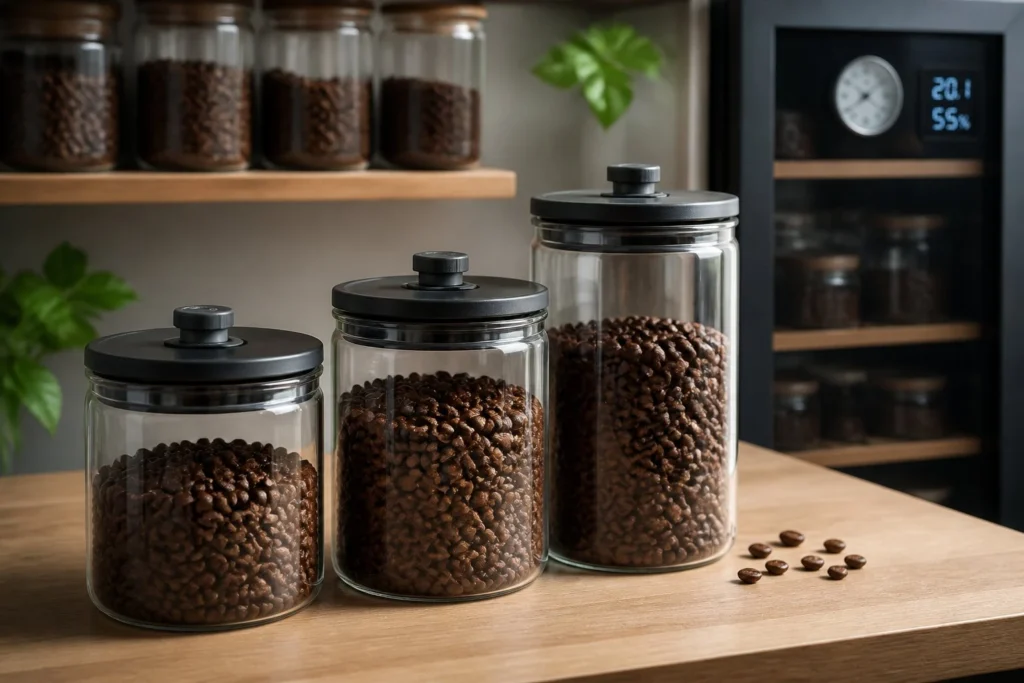
Turn clean honey jars into storage for dry foods like rice, pasta, or coffee beans. The seal keeps food fresh, and you can see what’s inside.
Use them as drinking glasses for water, juice, or iced tea. The wide mouth makes them easy to fill and clean—dishwasher safe, too.
Start a tiny herb garden by poking holes in metal lids and filling jars with potting soil. Line them up on a sunny windowsill for fresh herbs.
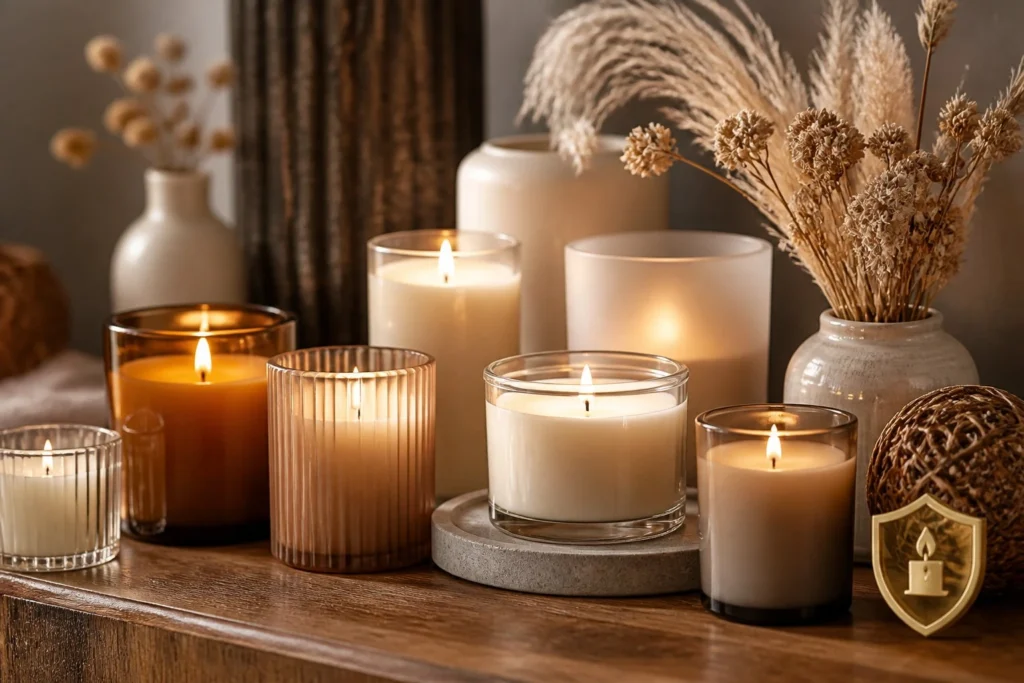
You can make candle holders by dropping in tea lights or small pillar candles. Add sand, pebbles, or dried flowers for a decorative touch.
Organize bathroom stuff like cotton balls, Q-tips, bath salts, or homemade scrubs. The clear glass lets you see what’s inside while keeping things dry.
Ultimate Environmental Advantages of Glass
Glass jars have less environmental impact than plastic because you can reuse them endlessly. Plastic eventually breaks down into microplastics, but glass keeps its quality wash after wash.
The circular economy approach to sustainable packaging keeps materials in use for longer. Upcycling glass jars means you don’t need to buy new containers, which cuts down on landfill waste.
Glass is 100% recyclable and becomes new glass without losing quality. Efficient recycling and upcycling strategies help shift us toward more sustainable habits.
Reusing glass jars saves energy compared to recycling. Making new glass takes crazy high heat—about 2,600°F—while cleaning old jars just needs hot water and soap.
Glass doesn’t leach chemicals into food or drinks, so it’s safe for acidic foods, hot liquids, and long-term storage.
Conclusion: Choosing the Right Vessel for Your Honey
Glass honey jars are still the best choice for home storage. They protect honey from moisture and keep it fresh for years.
Think about how much honey you use before picking a jar. Small jars work if you don’t eat honey fast, while bigger jars are better for families or if you go through honey quickly.
Key factors to consider:
- Size: 8 oz to 16 oz covers most households
- Opening width: Wide mouths make scooping easier
- Glass thickness: Thicker glass helps prevent breaks
- Lid type: Airtight seals keep moisture out
Clear glass lets you see the honey’s color and texture. Amber or colored glass blocks light if you store jars out in the open.
Look for jars you can reuse and recycle. Good glass honey jars last for decades if you take care of them. You can refill them from bulk honey or use them for other foods.
The right jar should match your storage space and habits. Countertop storage needs different features than pantry storage, so pick jars that fit your kitchen.
Price matters, but durability saves you money in the long run. A solid jar pays for itself over years of use. Plastic containers can mess with the honey’s taste and just don’t last as long.
Your honey deserves decent storage. Glass jars give you protection, visibility, and sustainability. Pick the size and style that fits how you actually use honey at home.
Frequently Asked Questions
Glass containers do a great job protecting honey from moisture and contamination. The right jar can actually help keep honey tasting fresh for years.
Your choice of material affects how quickly honey crystallizes. If you care about sustainability, there are options that cut down on environmental impact.
Should honey be stored in glass or ceramic containers?
Glass really is the better choice for honey storage. It doesn’t soak up moisture or odors, and you can see exactly how much honey is left.
Ceramic containers work if they’re properly glazed, but unglazed ceramic is a problem. It’s porous and can pull moisture from the honey, which might lead to fermentation later.
With glass, you can check on your honey without opening it. It’s easy to spot crystallization or color changes right through the jar.
Is it better to store honey in glass jars or plastic jars?
Glass jars beat plastic when it comes to storing honey. Plastic can absorb honey’s natural acids and sometimes leach chemicals back into the honey, which isn’t great for taste or purity.
Glass doesn’t react with honey and seals out air and moisture more effectively. Plastic scratches easily, and those scratches can trap bacteria.
Food-grade plastic is fine for short-term use. If you want to keep your honey for a year or longer, glass is the safer bet.
What features define the best jar for storing honey long-term?
The best jars have an airtight seal to keep out moisture and stop fermentation. A wide mouth helps you scoop out honey and makes cleaning way easier.
Amber or dark-colored glass blocks out light, which protects honey’s nutrients. If you use clear glass, just keep it in a dark cupboard or pantry.
Look for jars with smooth interiors. No grooves or ridges means less honey gets stuck, and cleaning’s a breeze.
How does container material influence honey crystallization and flavor stability?
Container material doesn’t make honey crystallize, but it does change how fast it happens. Glass keeps a steadier temperature than plastic, which slows down crystallization. Big temperature swings will speed it up, though.
Some metals react with honey’s acids and mess with the flavor. Glass and food-grade stainless steel don’t react, so the taste stays the same.
The quality of the seal is huge. If a jar doesn’t seal well, moisture gets in, dilutes the honey, and can kick off fermentation. That leads to weird flavors and changes in the honey’s chemistry.
What styles and closures of glass honey jars are most practical for everyday use?
Metal screw-on lids are the most dependable for daily use, especially if they have a rubber or silicone gasket. They’re easy to open and close, even if your hands are sticky.
Flip-top glass jars with wire bails and rubber gaskets are handy too. You can open them one-handed, but honey sometimes makes the gasket sticky.
Cork stoppers look nice, but they don’t seal as well. They’re okay if you’ll use the honey up quickly, but for longer storage, go with a threaded lid.
Wide-mouth jars beat narrow-neck bottles for practicality. You can fit a spoon or dipper inside, and cleaning up is a lot simpler when the jar’s empty.
What sustainability factors should be considered when choosing glass honey jars?
Glass can be recycled endlessly without losing quality. Unlike plastic, glass doesn’t degrade after each recycling cycle.
Try to find jars made with recycled glass. Some companies use up to 80% recycled content, which is pretty impressive.
This means they use less energy to make new glass. Every bit helps, right?
Pick jars that you can actually reuse for other storage. If you don’t refill them with honey, you might as well keep them for something else.
Standard-sized jars are way easier to repurpose than those odd-shaped ones. It just makes life simpler.
Whenever you can, buy honey in bigger jars. A single 16-ounce jar uses less glass and fewer lids than two 8-ounce jars.
That means less packaging overall. It’s a small change, but it adds up.
Jars made by local glass manufacturers have a smaller carbon footprint. If they’re made closer to home, you avoid all those extra transportation emissions.